

Contents
Danish Psychiatrist Warns of “Cognitive Debt” as AI Dependence Grows
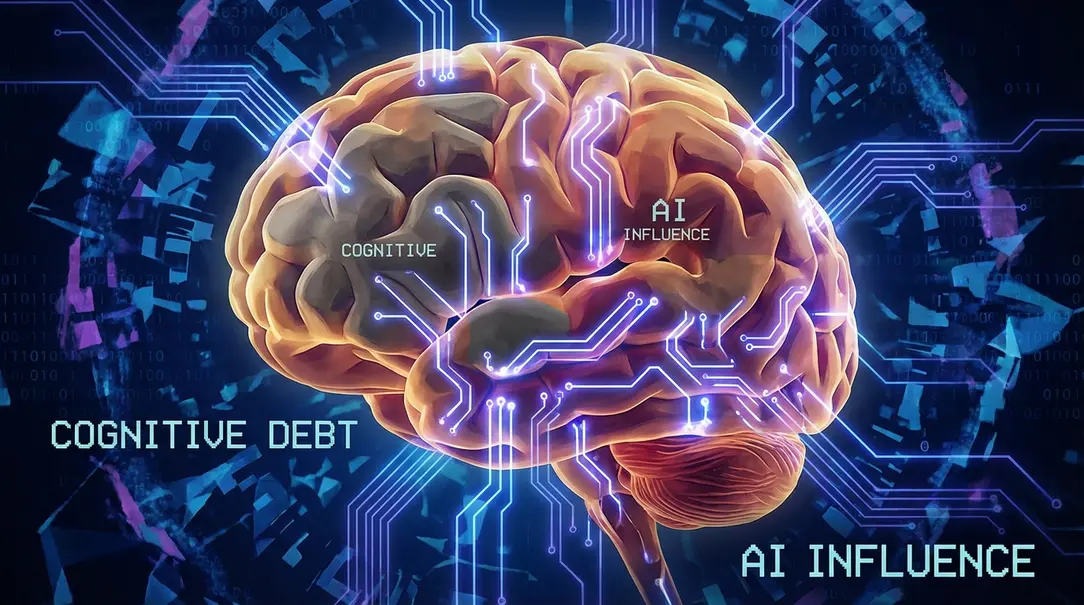
A Danish psychiatrist, Søren Dinesen Østergaard, who previously cautioned about the risks of “AI-driven psychoses,” is once again raising an alarm. This time, he points to a different threat: “cognitive debt,” which he believes could accumulate as scientists and students become increasingly dependent on artificial intelligence tools.
Understanding Cognitive Debt: A Threat to Intellectual Development
Dr. Østergaard, in his latest letter published in a specialist psychiatric journal, highlights that the extensive use of AI chatbots might weaken crucial analytical, research, and writing abilities. His core argument revolves around the nature of human reasoning and learning.
Reasoning: A Learned Skill, Not Innate
Østergaard emphasizes a critical point: scientific reasoning is not an inherent trait but a competency developed over years through dedicated education and practical application. It involves a continuous process of:
- Independent research and information gathering.
- Critical analysis and evaluation of sources.
- Formulating arguments and structuring thoughts.
- Refining writing and communication skills.
He posits that AI tools, which automate tasks like writing, summarizing, and content analysis, could diminish the necessity for this independent intellectual effort. This automation, while seemingly efficient, could bypass the very processes essential for skill development.
The Impact of AI on Intellectual Effort
Østergaard defines this phenomenon as “cognitive debt.” It describes the gradual weakening of competencies that were traditionally honed through active engagement in writing, analyzing sources, and constructing arguments. When AI consistently performs these tasks for us, our own cognitive muscles may atrophy, leading to a reduced capacity for complex thought and problem-solving.
The AlphaFold Example: Human Expertise Still Key
As an illustration, Østergaard references the groundbreaking achievement by Google DeepMind researchers, who utilized the AlphaFold system to predict protein structures. This project was celebrated as a significant breakthrough in applying AI to science and was recognized with a Nobel Prize in Chemistry in 2024.
However, the psychiatrist notes that this achievement was the culmination of many years of scientific and methodological preparation by the human creators, not solely the autonomous operation of the AI tool. He raises a pertinent question: would similar talents develop in the same way if individuals had access to today’s generative AI tools from the very beginning of their education?
This perspective underscores that while AI can be a powerful assistant, it acts as an amplifier of existing human expertise rather than a substitute for foundational learning and experience.
Broader Concerns: Cognitive Offloading
Similar concerns are being voiced by other researchers in cognitive science and neurobiology. They point to the phenomenon of “cognitive offloading,” which involves transferring mental effort to external tools. Historically, this included tools like calculators for mathematical computations or search engines for information retrieval. Today, large language models and other AI tools represent the latest iteration of this trend.

The potential consequence is a weakened working memory, diminished argumentative abilities, and a reduced capacity for independent reasoning, especially if AI is heavily relied upon during the acquisition of new skills. While external tools can augment our abilities, over-reliance can hinder the development of internal cognitive structures necessary for deep understanding and critical thinking.
Mitigating the Risk: Balancing AI and Human Intellect
To prevent the accumulation of cognitive debt, it is crucial to foster a balanced approach to AI integration in education and research. Here are some strategies:
- Active Learning: Prioritize learning methods that require active intellectual engagement, even when AI tools are available.
- Critical Engagement: Teach students and researchers to critically evaluate AI-generated content, rather often than passively accepting it.
- Skill Reinforcement: Ensure educational curricula continue to emphasize fundamental skills in research, analysis, writing, and argumentation.
- Mindful Use: Encourage mindful use of AI as an assistant for ideation, drafting, or summarizing, but not as a replacement for the core cognitive work.
By understanding the potential pitfalls of over-reliance, we can harness AI’s power while safeguarding and strengthening our invaluable human intellectual capacities.
Frequently Asked Questions (FAQs)
Q: What is “cognitive debt”?
A: Cognitive debt is a concept describing the gradual weakening of analytical, research, and reasoning skills due to excessive reliance on AI tools. When AI automates intellectual tasks, individuals may miss out on the practice needed to develop and maintain these cognitive abilities.
Q: How does AI contribute to cognitive offloading?
A: Cognitive offloading occurs when individuals delegate mental effort to external tools. With AI, this involves relying on chatbots or other AI systems to perform tasks like writing, summarizing, or analyzing, thereby transferring the cognitive load from the human mind to the AI.
Q: Can AI still be beneficial for learning and research?
A: Absolutely. AI can be a powerful tool for enhancing productivity, accessing information, and exploring ideas. The key is to use AI strategically as an assistant to augment human capabilities, rather than as a substitute for fundamental learning, critical thinking, and skill development.
Q: What steps can individuals take to avoid cognitive debt?
A: Individuals can avoid cognitive debt by engaging in active learning, critically evaluating AI-generated content, consistently practicing fundamental research and writing skills, and using AI mindfully as a supplementary tool rather than a primary intellectual driver.
About Post Author
