Contents
Apple’s iPhone 18 Series May Ditch Physical SIM Slots, Impacting Global Users
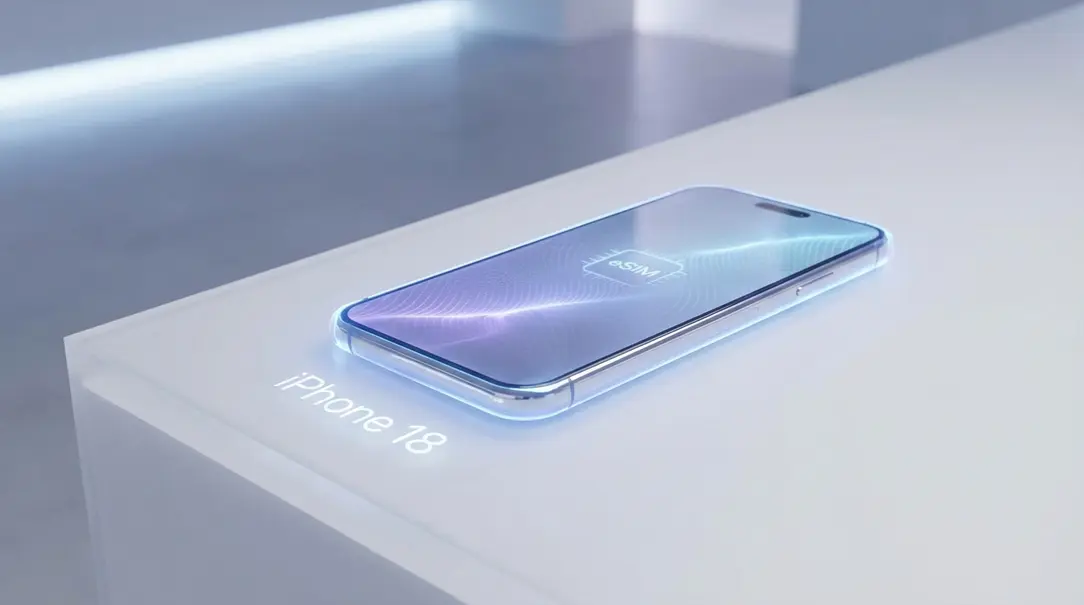
Apple appears to be on the verge of introducing another groundbreaking design change for its devices. Reports suggest that the upcoming iPhone 18 series could eliminate the physical SIM card slot, transitioning to an eSIM-only model in more regions worldwide, including what was previously identified as the European market.
The Rise of eSIM: Apple’s Forward-Thinking Approach
Apple has been a pioneer in integrating eSIM technology into smartphones. For some time, iPhones relying solely on virtual SIM cards have been available in various markets, including the USA, Japan, Mexico, and Saudi Arabia.
Sources indicate that Apple intends to expand this eSIM-only strategy to additional regions with the iPhone 18 models. This means future devices would exclusively utilize eSIMs, requiring users to adapt to a new way of managing their mobile connectivity.
Advantages and User Considerations of an eSIM-Only Design
While moving away from physical SIM cards requires users to adjust, removing the SIM tray offers a significant advantage: freed-up internal space. This valuable space can then be allocated to a larger battery, enhancing the device’s longevity between charges.
A compelling example of this benefit can be seen in the current iPhone 17 Pro Max. While versions in some regions feature a 4823 mAh battery, models in markets where the physical SIM slot has already been removed (such as the US) boast a larger 5088 mAh battery, resulting in extended usage time. Looking ahead, the iPhone 18 Pro Max is rumored to offer an even more substantial battery capacity, potentially ranging from 5100-5200 mAh.
Key Considerations for Users:
- Adaptation Required: Users will need to adjust to managing their cellular plans digitally through eSIM.
- Carrier Support: Availability and ease of eSIM activation depend heavily on local mobile network operators.
- Travel Convenience: While eSIMs can simplify switching local plans when traveling, it requires understanding the process and ensuring destination carriers support eSIMs.
- Device Swaps: Quickly swapping a physical SIM card between devices will no longer be an option.
Anticipated Rollout: iPhone 18 Pro Models First?
Currently, these are speculative rumors. However, if Apple proceeds with this radical change, the iPhone 18 Pro and iPhone 18 Pro Max are expected to be the first models to adopt the eSIM-only design. These premium smartphones could launch as early as Fall 2026. Latest rumors also suggest that the release of the standard iPhone 18 and the successor to the slimmer iPhone 18 Air model might be delayed until 2027.
What is an eSIM?
An eSIM (embedded SIM) is a digital SIM that allows you to activate a cellular plan from your carrier without the need for a physical nano-SIM card. Instead of inserting a tiny plastic card, your phone’s SIM profile is downloaded and stored digitally. This technology offers greater flexibility and security compared to traditional SIM cards.
Frequently Asked Questions (FAQ)
Q: What is an eSIM?
A: An eSIM, or embedded Subscriber Identity Module, is a digital SIM that allows you to activate a cellular plan from your carrier without using a physical SIM card. It’s built directly into your device.

Q: Why is Apple moving to eSIM-only?
A: Apple’s move to eSIM-only is driven by several factors, including freeing up internal space for components like larger batteries, improving water resistance by eliminating the SIM tray opening, and enhancing security by making it harder to remove the SIM if a device is stolen.
Q: Will eSIM-only iPhones work with all carriers?
A: Most major carriers worldwide now support eSIM. However, it’s crucial to verify with your specific mobile network operator whether they offer eSIM services and compatibility with iPhone models before purchasing an eSIM-only device.
Q: What are the benefits of an eSIM-only iPhone?
A: Benefits include potentially larger batteries due to saved internal space, improved water and dust resistance, enhanced security, and the convenience of easily switching carriers or plans digitally without needing a new physical SIM card.
Q: What are the challenges of an eSIM-only iPhone?
A: Challenges can include the need for users to adapt to digital SIM management, potential difficulties when traveling if local carriers don’t widely support eSIM, and the inability to quickly swap a physical SIM between devices.
Q: When might iPhone 18 models without physical SIM slots be released?
A: Current rumors suggest the iPhone 18 Pro and iPhone 18 Pro Max, potentially without physical SIM slots, could be released in Fall 2026. The standard iPhone 18 and the iPhone 18 Air might follow in 2027.
About Post Author