

Contents
Poland’s Digital Services Act Implementation Raises Alarms Over Censorship and Free Speech
A new legal framework designed to bring order to the internet in Poland is drawing significant criticism from the country’s media regulator. The National Broadcasting Council (KRRiT) cautions that, in its current form, the implementation of European Union regulations could inadvertently pave the way for content blocking without proper judicial oversight, potentially causing more harm than good.
Digital Regulation or Administrative Overreach? KRRiT Challenges the Government
Reports indicate that the KRRiT has submitted critical feedback to Poland’s Ministry of Digital Affairs regarding draft legislation intended to introduce the Digital Services Act (DSA) into national law. While the Council acknowledges the necessity of regulating online spaces, it warns that the proposed mechanisms could, in practice, severely undermine the foundations of free public debate and expression.
The core of KRRiT’s concern isn’t the objective of combating illegal online content, but rather the methods the state intends to employ. The draft laws reportedly include provisions that would allow administrative bodies to intervene in access to online published content before a court can review the matter. This approach introduces a significant risk of decisions being made hastily, without thorough analysis, and without due process.
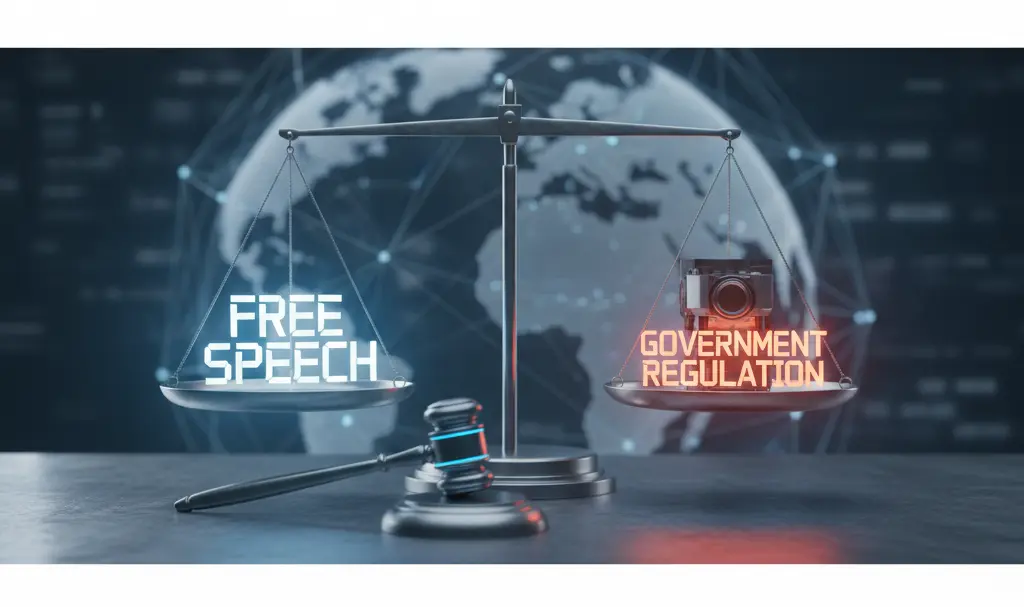
The regulator emphasizes that the internet cannot be subjected to arbitrary supervision. It highlights the delicate balance between protecting users and safeguarding freedom of expression, stressing that new regulations must not overstep this boundary under the guise of security.
Unchecked Content Blocking and Jurisdictional Confusion
The most contentious aspect of the proposed legislation is the idea that administrative officials, rather than independent courts, would determine whether specific content violates the law. KRRiT argues that such determinations often necessitate comprehensive evidentiary proceedings, which public administration bodies are typically not equipped to conduct in a manner that guarantees the full rights of all parties involved.
Furthermore, the draft laws reportedly divide responsibility among various institutions, including the Chairman of KRRiT and the President of the Office of Electronic Communications. In the Council’s assessment, this fragmentation could lead to ambiguity and a dilution of accountability, particularly in cases with potential criminal implications.
KRRiT advocates for an alternative approach: expedited judicial procedures. This would allow for swift responses to unlawful content while preserving independent court review. The Council also points out a paradox within the new regulations: while the scope of duties, investigations, and controls is set to increase, the drafts make no provisions for real personnel or financial reinforcement of the oversight bodies.
Understanding the EU Digital Services Act (DSA)
The Digital Services Act (DSA) is a landmark piece of legislation by the European Union designed to create a safer and more accountable online environment. It aims to protect fundamental rights online, combat illegal content, and ensure transparency and accountability from online platforms. While the DSA sets broad principles for content moderation and platform responsibility, member states are tasked with implementing these rules into their national legal frameworks. KRRiT’s warnings highlight the potential pitfalls when national implementation deviates from the spirit of safeguarding fundamental rights.
Frequently Asked Questions (FAQ)
What is the main concern raised by KRRiT regarding Poland’s Digital Services Act implementation?

KRRiT is primarily concerned that the proposed national laws would allow administrative bodies to block online content without prior judicial review, potentially leading to censorship, arbitrary decisions, and an erosion of free speech protections.
What alternative does KRRiT propose for handling illegal online content?
The KRRiT suggests implementing rapid judicial procedures. This approach would enable quick action against unlawful content while ensuring that independent courts provide the necessary oversight and due process, protecting the rights of all involved parties.
What is the EU Digital Services Act (DSA)?
The EU Digital Services Act (DSA) is a comprehensive EU regulation designed to create a safer and more transparent online environment across Europe. It establishes rules for online platforms regarding content moderation, user protection, and accountability for illegal content and harmful disinformation.
Source: Wirtualne Media, internal elaboration. Opening photo: Generated by Gemini
About Post Author
