

Contents
The Hidden Cost of Recycling: Why Deposit Systems Can Increase Your Waste Bills
Returning empty bottles to a reverse vending machine, retrieving your deposit, and feeling good about contributing to environmental protection. It’s a simple, appealing idea at first glance. However, in numerous communities, this very system is inadvertently leading residents to pay significantly higher waste collection bills.
Deposit-return systems (DRS), designed to incentivize recycling by adding a small, refundable fee to product prices, have been quietly implemented in various regions. While the formal mandates might have a future effective date, their real-world impact often begins to be felt as soon as products with the added deposit appear on store shelves.
Understanding Deposit-Return Systems (DRS)
At its core, a DRS operates on a straightforward principle: a customer pays a small deposit when purchasing a beverage, which is then refunded upon the return of the empty container. In theory, this acts as a direct financial incentive for consumers to recycle, reducing litter and improving the quality of recycled materials.
However, for many consumers, the practicalities introduce new obligations:
- Frozen Capital: The deposit itself represents “frozen cash” that is tied up until the container is returned.
- Time Consumption: Each bottle and can often needs to be processed individually by a machine, potentially adding minutes to a shopping trip, which can be inconvenient for busy individuals.
While consumer complaints often center on convenience, the more substantial financial ramifications are being felt by local governments and municipal waste management systems.
The Unexpected Financial Burden on Local Waste Management
As reported by Forsal, a critical issue quickly emerged in many municipalities: the deposit system effectively diverts the most valuable recyclable materials—plastic bottles and aluminum cans—from local waste streams. These materials previously constituted a significant revenue source for municipal recycling programs.
Historically, income generated from selling these high-value secondary raw materials helped offset the overall operating costs of waste collection and processing for local authorities. With the introduction of a DRS, these valuable items are returned directly to the retailers or designated collection points within the deposit system, bypassing the municipal recycling infrastructure entirely.
Why Residents Are Paying More for Waste Collection
For many local governments, the financial equation is stark. If a waste collection company can no longer sell the profitable plastic and aluminum recovered from curbside yellow recycling bags, it must seek revenue elsewhere. The most common and often only available source is an increase in the waste collection fees paid by residents.
Several municipalities have openly acknowledged that increases in waste collection charges are directly linked to the implementation of the deposit system. The financial buffer provided by the sale of recyclables has vanished, leading to the cost being directly passed on to household budgets.

The municipal waste industry has also voiced strong concerns. Industry representatives warn that local governments could face losses totaling billions of USD in the long term. Without systemic compensation or alternative funding mechanisms, higher waste collection fees are likely to become the norm rather than an exception.
The cumulative effect is a double payment for residents: once at the point of purchase when paying the deposit, and a second time through increased waste collection charges. This escalating cost makes it increasingly challenging for households to manage their everyday expenses.
Frequently Asked Questions (FAQ)
What is a Deposit-Return System (DRS)?
A Deposit-Return System (DRS) is an environmental policy tool where a small, refundable fee (deposit) is added to the price of a beverage container. This deposit is returned to the consumer when the empty container is brought back to a designated collection point, incentivizing recycling and reducing litter.
How do deposit systems impact local waste collection fees?
Deposit systems can impact local waste collection fees because they divert valuable recyclable materials like plastic bottles and aluminum cans from municipal recycling streams. Historically, local governments and waste companies sold these materials to offset collection costs. When this revenue source disappears, waste companies often increase fees charged to residents to cover operating expenses.
Are there any benefits to Deposit-Return Systems?
Yes, DRS offers several environmental benefits, including increased recycling rates for target materials, reduced litter, and improved quality of recycled materials due to less contamination. However, the article highlights potential economic downsides for municipal waste management.
Why are municipalities losing money because of DRS?
Municipalities lose money because the most profitable items to recycle (plastic bottles, aluminum cans) are pulled out of their traditional waste streams and handled by the DRS. This loss of revenue from selling these valuable commodities creates a funding gap that often leads to higher charges for residents’ general waste collection services.
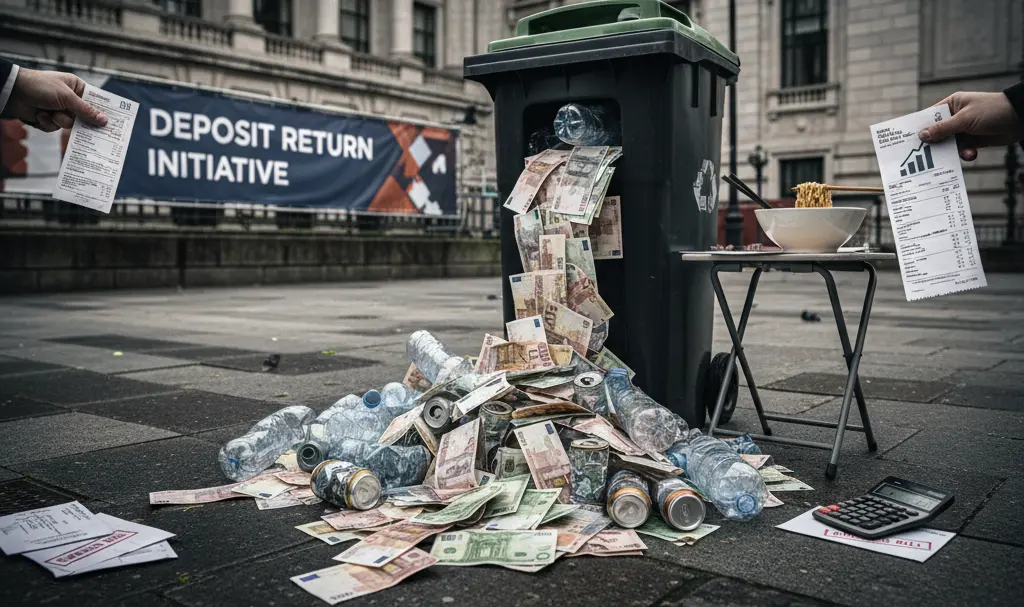
Source: Forsal. Opening photo: Generated by Gemini.
About Post Author
