

Contents
World Record Broken: The Smallest QR Code Ever Created Unveiled
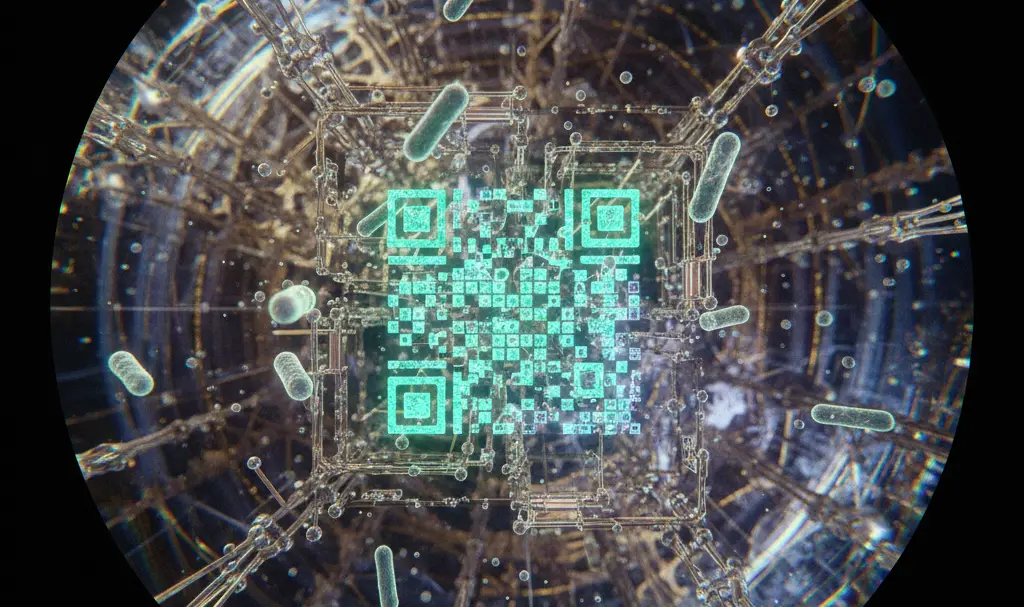
A new Guinness World Record has been set for the smallest QR code ever created, measuring an astonishing 1.98 square micrometers. This makes it smaller than most known bacteria and represents a true masterpiece of nanotechnology. More than just a display of technical virtuosity, this achievement marks a significant step towards innovative methods for marking micro-components and securing data at an unprecedented scale.
The Record-Breaking Microscopic QR Code
The world’s smallest QR code, with precise dimensions of 1.977 μm² (square micrometers), was officially submitted for the record in Vienna, Austria, on December 3, 2025. The groundbreaking work was carried out by a team of distinguished scientists from TU Wien and Cerabyte GmbH, including Erwin Peck, Balint Hajas, Alexander Kirnbauer, Paul Heinz Mayrhofer, Christian Pflaum, Martin Kunze, and Thomas Schachinger.
This minuscule QR code was fabricated by precisely carving into a thin layer of chromium nitride using a focused ion beam. A focused ion beam is a technology commonly used in semiconductor manufacturing and materials science for its ability to mill or deposit materials with nanometer precision. The code itself is composed of 29 x 29 modules, with each individual pixel measuring a mere 49 nanometers. To put its size into perspective, it is indeed smaller than the majority of bacteria.
This new record significantly surpasses the previous one, which was set in June 2024 by the University of Münster in Germany and measured 5.38 μm² with 80 nm pixels. The current record-holder is an impressive 63% smaller. The code was successfully scanned, and its diminutive size was independently verified through calibrated scanning electron microscopy at the University of Vienna. Guinness World Records officially recognized this remarkable feat in February 2026.
Nanoscale Technology: Pushing the Boundaries of Data Density
The scientists behind this project have unequivocally demonstrated that the limits of data storage density are continuously being pushed. The creation of such a microscopic structure demanded the application of advanced lithographic techniques, which are specialized processes for fabricating patterns on thin films with extreme precision, often used in microelectronics.
At this scale, the traditional cameras found in our smartphones are entirely ineffective. The only way to read the information embedded within this tiny code is by employing a scanning electron microscope. While a code smaller than a speck of dust might seem like a mere curiosity to the average user, it holds immense potential in various industries. For example:
- Pharmaceutical Industry: It could serve as an ultra-efficient tool for confirming the authenticity of medications, combating counterfeiting, and ensuring traceability of individual doses.
- Defense Industry: Such codes could be used to invisibly mark micro-components, track sensitive parts, or provide tamper-evident security features for high-value assets.
- Electronics and Micro-components: Enabling unique identification for even the smallest parts in complex systems.
From Microscopic Marvels to Landscape-Sized Art: The Versatility of QR Codes
In stark contrast to these nano-scale achievements, other Guinness World Records demonstrate human creativity on a macro scale, showcasing how QR codes can dominate entire landscapes.
One of the most awe-inspiring achievements was the largest QR code created from agricultural crops in China. This colossal code spanned thousands of square meters and was perfectly readable from an aerial perspective, demonstrating the potential for large-scale interactive art or information dissemination.
Equally spectacular was the creation of the largest “living” QR code, formed by an immense group of people holding umbrellas. Initiatives of this nature demand extraordinary logistics and coordination to ensure the final image is precise enough to be correctly interpreted by scanning devices. These examples highlight the incredible range and adaptability of QR code technology, from the invisible to the monumental.

Frequently Asked Questions (FAQ)
What is the smallest QR code ever recorded?
The smallest QR code measures 1.977 square micrometers (µm²), a new Guinness World Record set by scientists from TU Wien and Cerabyte GmbH in Vienna, Austria.
How was this microscopic QR code created?
It was created by precisely etching a thin layer of chromium nitride using a focused ion beam, a technology known for its nanometer-scale precision. The individual pixels of the code are just 49 nanometers in size.
What are the potential applications for such tiny QR codes?
These ultra-small QR codes could be used for advanced product authentication in critical industries like pharmaceuticals and defense, helping to prevent counterfeiting, secure micro-components, and push the limits of data storage density in extremely confined spaces.
Source: Guinness World Records.
Opening photo: Generated by Gemini.
About Post Author
