

Contents
The Era of Ultra-Cheap Online Shopping is Fading: What You Need to Know
For the past decade, consumers have grown accustomed to the convenience and affordability of online shopping, particularly from platforms originating in China. The year 2026, however, is poised to mark a significant shift in this landscape, largely driven by new regulations from the European Union. When these changes are considered alongside the ethically questionable practices observed on some European auction platforms, it becomes clear that we may be witnessing the gradual conclusion of the era of ultra-low online prices.
E-commerce Giants Clash: Pricing Policies Under Scrutiny
In early February, reports from Wirtualne Media revealed the intricacies of a legal dispute between two major Polish e-commerce platforms, Erli and Allegro. Erli accused its competitor, Allegro, of pressuring sellers to adhere to specific pricing strategies. Allegro allegedly conditioned the promotion of certain sellers’ offers on the prices of their products in other online stores. If prices were lower elsewhere, the seller’s profile would reportedly not receive additional promotional support. Such a scenario would effectively compel sellers to artificially inflate prices at the behest of a single entity.
Allegro swiftly responded to these allegations through a statement from its spokesperson, Marcin Gruszka. The platform emphatically denied the accusations, suggesting that the current situation might be a form of retaliation from Erli, following earlier insinuations that Erli had copied competitor offers.
EU Imposes New Tariffs: A Direct Hit on Non-EU E-commerce
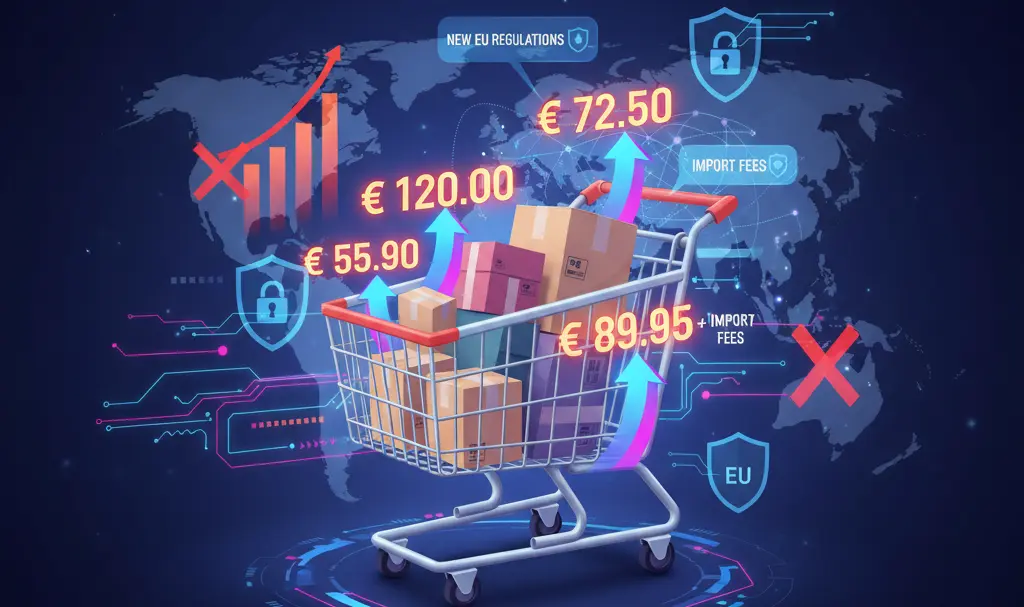
In mid-December of last year (referring to 2025, given the 2026 context), the European Council announced the introduction of a new, permanent customs fee across the European Union, effective July 1, 2026. This new tariff will apply to all small parcels valued under $162 (approximately €150) imported from outside the EU territory. The rate for this new customs duty will be $3.24 (approximately €3) per item.
Previously, these small parcels were exempt from any customs duties, leading to concerns about unfair competition. Crucially, this fee will be applied individually to each item within a parcel, not just per parcel.
Adding to these changes, the mentioned rates are only temporary. In the future, products valued up to $162 will be subject to standard customs duties. The European Union’s action is clearly aimed at non-EU e-commerce giants like Temu, AliExpress, and Shein.
The primary criticism leveled against these platforms concerns the influx of low-value goods flooding the European market. This situation has drawn strong objections from various European manufacturers, including Polish toy producers. As recently as 2024, these manufacturers raised alarms that products from China often lacked required certifications and were offered at dumping prices, making it exceedingly difficult for local businesses to compete fairly.
Affordable Online Shopping: The Rise of Subscription Models
Despite these impending changes, affordable online shopping with free delivery remains possible through services like Amazon. Present in many countries since 2021, Amazon’s platform allows purchases for even small amounts, which are delivered without additional charges for Prime subscribers. While it’s difficult to directly compare the American giant to Chinese platforms that historically offered inexpensive orders without extra requirements, the upcoming customs duties could significantly reshape the market.
Until recently, an Amazon Prime subscription cost around $12.50 annually. However, towards the end of last year (2025), the first price increase in years was announced, raising the annual cost to approximately $17.25. It’s important to note that Amazon’s Prime plan offers more than just free deliveries; it also includes:

- Access to Amazon Prime Video streaming, featuring a library of well-known films (some requiring additional payment) and original productions.
- Prime Gaming, a service for gamers that provides free PC games for download each month, along with additional in-game content.
The existence of such programs highlights an interesting trend that other shopping services may soon adopt. Free delivery might increasingly become contingent on purchasing a subscription. While beneficial for frequent shoppers, this model could prove disadvantageous for those who order items only occasionally.
Could Shopping Malls See a Resurgence?
The prospect of rising online product prices might lead some to wonder if this signals the end of the internet’s price advantage over traditional shopping centers. Physical stores already offer good quality items at accessible prices (for example, the retail chain Action). If the profit margins on certain online products reach their target levels, it could dismantle the long-held perception that brick-and-mortar stores are always more expensive.
Is this shift probable? Recent reports suggest otherwise. According to data reported by Rzeczpospolita, by the end of November 2025, Polish shopping malls experienced a nearly 7% decline in customer traffic compared to the same period in 2024. The growth of the e-commerce market is cited as a primary reason for this trend. Interestingly, despite the decrease in clientele, the overall turnover of these retail outlets actually increased by 3.2% compared to 2024. This suggests that customers visiting malls now do so with a clear purpose and for specific products, indicating more focused, higher-value purchases rather than casual browsing.
Anticipating the Near Future of Online Shopping
For the next roughly four months, the situation for non-EU (primarily Chinese) online retail platforms is unlikely to change significantly. However, the second half of 2026 could be extremely interesting in terms of how we approach online shopping. While speculative, it’s reasonable to assume that many consumers previously ordered single, inexpensive items from China as needed.
The additional burden of a customs duty of a few dollars, which in many cases might significantly exceed the value of the item itself, clearly diminishes its appeal. One thing is certain: we are witnessing a substantial transformation that could dramatically reshape the e-commerce market. New customs duties and additional fees, combined with price increases resulting from factors like inflation, are likely to permanently influence trade in its broadest sense, impacting both online and traditional retail sectors.
Frequently Asked Questions (FAQ)
What new EU tariffs are being introduced?
Starting July 1, 2026, the European Union will apply a new permanent customs fee of approximately $3.24 (€3) to all small parcels valued under $162 (€150) imported from outside the EU. This fee will be charged per item.
How will these changes affect consumers buying from non-EU platforms like Temu or AliExpress?
Consumers will likely face higher costs for items purchased from non-EU platforms due to the new customs duties. For many low-value items, the customs fee could significantly increase the total price, making these purchases less attractive.
Are there still ways to get cheap online shopping with free delivery?
Yes, some platforms like Amazon offer subscription services (e.g., Amazon Prime) that provide free delivery and other benefits for an annual fee. However, this model might not be cost-effective for occasional shoppers.
Will this lead to a resurgence of traditional shopping malls?
While rising online prices might make physical stores more competitive, recent data suggests a decline in customer traffic at shopping malls, even if turnover has increased. This indicates customers are making more targeted purchases rather than casual visits.
Source: Original article & supplementary market analysis. Opening photo: Generated by Gemini.
About Post Author
