

Contents
Taftan Volcano: An Extinct Giant Stirring After 700,000 Years
For decades, Iran’s Taftan volcano was considered a geological relic, a silent testament to ancient eruptions. However, recent satellite data reveals a dramatic shift: the volcano in southeastern Iran is showing renewed signs of life. These subtle but significant changes suggest that Taftan’s classification may soon transition from ‘extinct’ to ‘dormant,’ warranting close scientific scrutiny.
Global Surge in Volcanic Activity
The reawakening of Taftan is part of a broader trend of increased volcanic activity observed worldwide in recent years. Last year, Iceland experienced a notable eruption, followed a few months later by the spectacular and violent eruption of Mount Etna in Sicily. Asia, too, is witnessing heightened geological unrest, with Taftan now joining the list of volcanoes demanding attention.
Unveiling Taftan’s Revival: The Evidence
The Taftan volcano, located in Iran, had remained eruptively silent for over 700,000 years, leading to its widespread classification as extinct. However, groundbreaking research published in the American Geophysical Union’s Geophysical Research Letters series now indicates that this ancient giant is reactivating.
Key Indicators of Renewed Activity:
- Satellite Interferometry (InSAR): A critical signal came from the deformation of the summit surface, detected using InSAR (Interferometric Synthetic Aperture Radar). This advanced satellite-based technique measures millimeter-scale changes in ground elevation from orbit.
- Sentinel-1 Data: Data from the European Space Agency’s Sentinel-1 satellites revealed approximately 9 cm (about 3.5 inches) of ground uplift between July 2023 and May 2024. Crucially, this deformation has not subsided, indicating persistent subsurface overpressure, likely from accumulating magma or hydrothermal fluids.
- Local Observations: Concurrently, residents in the region have reported more intense emissions of sulfurous gases and visible fissures emitting hot volcanic gases, corroborating the satellite findings.
Scientists emphasize that while these changes are significant, there are currently no indications of an imminent eruption. Nevertheless, the alterations are substantial enough to classify Taftan as an object requiring constant monitoring.
The Science Behind the Awakening
The observed activity is most likely driven by processes occurring shallowly beneath the surface. Scientists point to the circulation of hot water and steam, propelled by the heat from underlying magma. Even minor changes in tectonic stresses can trigger the upward migration of gases or fragments of molten rock.
Researchers have, however, ruled out heavy rainfall or earthquakes as the primary mechanism for the observed deformation, suggesting a more direct internal volcanic process at play.
Frequently Asked Questions (FAQ)
Where is the Taftan volcano located?
The Taftan volcano is located in southeastern Iran, near the border with Pakistan. It is part of the Makran Volcanic Arc.
What does it mean for a volcano to be reclassified from ‘extinct’ to ‘dormant’?

An ‘extinct’ volcano is generally considered to have no likelihood of erupting again. A ‘dormant’ volcano, however, is one that has not erupted for a significant period but is still considered capable of erupting in the future. Taftan’s reclassification signifies that it is now recognized as having the potential for future eruptions, requiring ongoing observation.
What is InSAR and how does it help monitor volcanoes?
InSAR, or Interferometric Synthetic Aperture Radar, is a remote sensing technique that uses radar signals from satellites to measure very precise (millimeter-level) changes in the Earth’s surface over time. For volcanoes, InSAR can detect ground deformation (uplift or subsidence) caused by the movement of magma or fluids beneath the surface, providing early warnings of potential activity.
Is an eruption of Taftan volcano imminent?
Currently, scientists state that there are no indications of an imminent eruption. The observed changes are signs of reawakening and increased activity, prompting a need for continuous monitoring rather than an immediate threat of eruption.
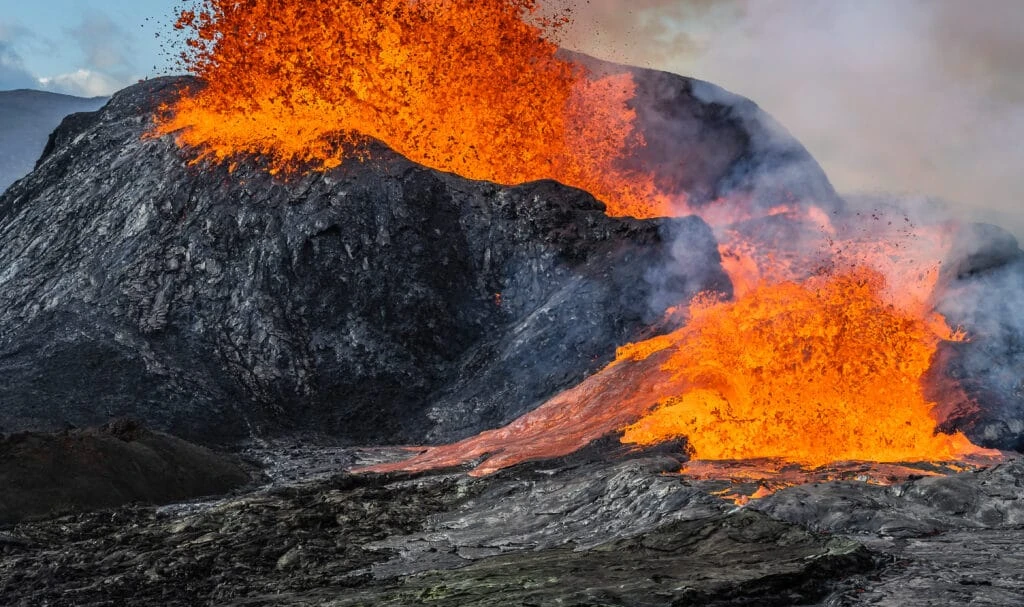
Source: “Geophysical Research Letters” & Opening photo: Generated by Gemini
About Post Author
