

Contents
Forging a Resilient Digital Future: The 18th TIME Economic Forum on European Technological Sovereignty
The 18th edition of the TIME (Telecommunications, Industry, Media, Energy) Economic Forum is set to take place in Warsaw on March 9-10, 2026. Organized by the National Chamber of Electronics and Telecommunications (KIGEiT) in collaboration with various ICT sector chambers, organizations, and the Ministry of Digitization, this event is a cornerstone for discussions on digital transformation.
Why Technological Sovereignty Now?
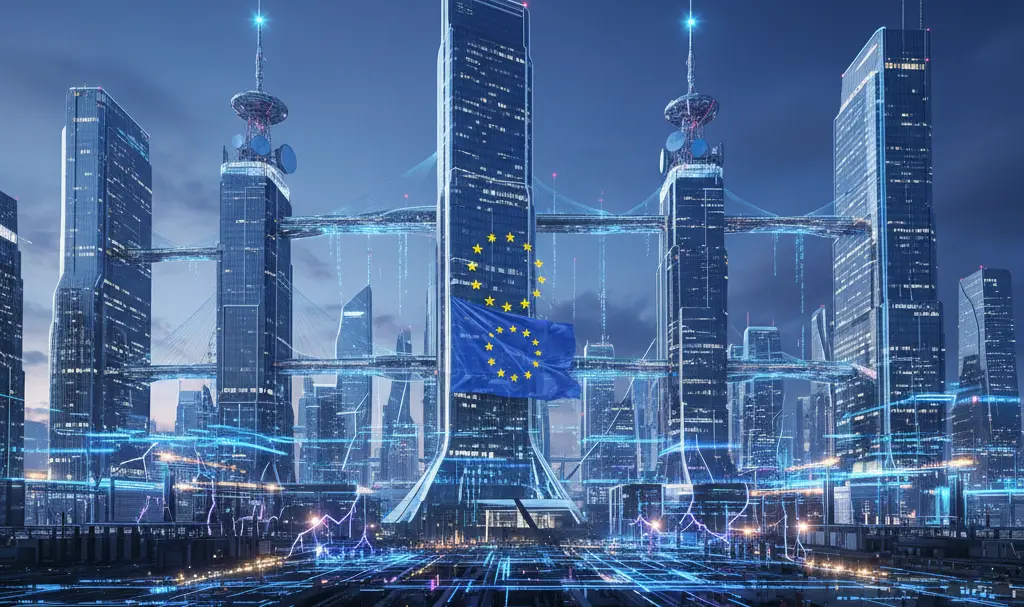
FGTIME is recognized as one of the most crucial events dedicated to digital transformation, technological security, and the future of the Polish and European economies. In light of ongoing geopolitical shifts across Europe and the globe, the forum’s central theme for this year – “Technological Sovereignty of Poland and Europe 2030” – resonates profoundly. This theme underscores the imperative for a self-reliant digital economy, supported by robust strategies and regulations.
Day 1: Charting the Course for Digital Sovereignty
The first day’s program will delve into building digital sovereignty, state resilience, and the competitiveness of the ICT sector with a 2030 outlook.
Strategic Vision and Regulatory Frameworks
The discussion will be inaugurated by Vice Prime Minister and Minister of Digitization, Krzysztof Gawkowski, who will present Poland’s strategic directions for digital state development. Following this, Przemysław Kuna, President of the Office of Electronic Communications, and Piotr Mieczkowski, Vice President of KIGEiT, will deliver key addresses, focusing on the regulatory, investment, and industrial challenges inherent in establishing technological sovereignty.
Key Economic Areas and Expert Panels
The discourse will extend into several pivotal areas of the national economy through dedicated discussion panels:
- The End of the Golden Decade: Why Poland is Losing its Development Advantage: Professor Paweł Wojciechowski, President of the Board of the Public Finance Institute, and Ignacy Morawski from SpotData Analysis Center will discuss critical economic trends.
- New Regulatory and Legal Challenges by 2030: Attorney Xawery Konarski, Vice President of the Polish Chamber of Information Technology and Telecommunications, will address emerging legal and regulatory hurdles.
Focus on Cybersecurity and Digital Resilience
Given the heightened importance of broadly understood security, including cybersecurity, in recent years, a significant portion of the forum will be dedicated to this critical topic.
Expert panels include:
- Cybersecurity and Digital Sovereignty: How to Build Europe’s Resilience in the AI Era: Moderated by Krzysztof Silicki from NASK.
- Protection of Critical Infrastructure Against New Challenges: Moderated by Sławomir Chmielewski from the KIGEiT Board.
Further discussions will explore specific issues such as the role of regulators in building technological sovereignty, the emergence of AI gigafactories, financing strategic technologies by 2030, and the European pilot line for semiconductors in Poland.
From Strategy to Action: Expert Roadmap for Sovereignty 2030 – Part I
The afternoon sessions of both days will feature expert debates aimed at developing concrete recommendations and action plans to build technological sovereignty for Poland and Europe by 2030. These discussions are designed to provide a platform for in-depth analysis of regulatory, investment, and security challenges, as well as to identify barriers hindering the competitiveness of the ICT sector and the broader digital economy.

The forum will also facilitate crucial meetings between the ICT community, state administration, and political spheres. Opportunities for this interaction will arise during the following panels:
- Model of Secure State Communication – A Time for Strategic Choices and Role Division Between Administration, Operators, and Other Market Players
- Infrastructure Investments and the Coordination of State Administration Bodies
- Partnership in Digitalization
- Polish Technologies in the Global Economy – The State’s Role in Building the Competitiveness of the Digital Technology Sector
Additional expert debates will cover:
- Industrial Policy and Technological Security in Energy Transformation: The Role of Public Procurement in Shaping Supply Chains and “Local Content”
- Coordination Instead of Silos – An Inter-sectoral Approach to Disinformation and Strategic Communication
Two presentations will also take place:
- Goals and Possibilities of Using Dual-Use Technologies to Increase Resilience to Cyber Threats
- European Digital Innovation Hub – A Tool for Research Commercialization and Supporting Digital Transformation
Gala of Digital Transformation Leaders
The first day of the forum will conclude with the Gala of Digital Transformation Leaders. This ceremonial event will summarize the forum’s key substantive discussions and honor individuals and institutions making significant contributions to the development of a modern, secure, and competitive digital economy in Poland.
Day 2: Secure Investments and Resilient Infrastructure – Funding, Defense, Future
The second day of the TIME Economic Forum will offer an in-depth analysis of crucial areas for building Poland’s resilience and facilitating the digital transformation of both public and private sectors. Technological sovereignty remains the leading theme, with particular emphasis on telecommunications and energy infrastructure, and dual-use technologies.
Opening Addresses and Strategic Funding
The session will open with an address by Vice Prime Minister and Minister of National Defense, Władysław Kosiniak-Kamysz. His speech, titled “The Role of Dual-Use Technologies in Building Poland’s Resilience,” will highlight the importance of synergy between civilian and military sectors, the development of national technological competencies, and the utilization of innovation within the state’s security system.
Following this, Andrzej Domański, Minister of Finance and Economy, will present the directions and priorities for financing digital transformation as part of Poland’s Digitalization Strategy. His presentation will cover both national instruments and the utilization of European funds to support investments in infrastructure, semiconductors, artificial intelligence, and other strategic technologies.
Deep Dive into Key Sectors
The strategic speeches will be followed by sessions dedicated to critical areas of state function and the technological market.
- Telecommunications Infrastructure as a Pillar of Digital Resilience and National Security: Leaders of major telecommunications operators, alongside representatives from the Ministry of Digitization, will discuss the significance of modern networks in building state resilience, including fiber optic development, network cybersecurity, and ensuring service continuity during crises.
- A presentation on the digitization of the Energy Regulatory Office will showcase the role of digital twins in modernizing regulatory processes.
- A session on energy security will cover the integration of nuclear energy, renewable energy sources (RES), and mechanisms for increasing the resilience of the transmission system.
Subsequent panels will feature experts presenting strategies for developing the national fiber optic market, regulatory challenges, and mechanisms for commercializing ICT investments that accelerate the state’s digital transformation.
- The debate “Building the Polish Tech Brand” will bring together representatives from public administration, the Ministry of Digitization, the Ministry of Foreign Affairs, the Polish Investment and Trade Agency (PAiH), the Polish Agency for Enterprise Development (PARP), and the private sector. They will discuss promoting the Polish ICT sector, supporting startups, exporting digital solutions, and enhancing Poland’s image in Europe and worldwide.
- Experts on the Digital Networks Act will share insights into upcoming EU regulations, deregulation, and facilitators for operators, analyzing their practical impact on the national market.
From Strategy to Action: Expert Roadmap for Sovereignty 2030 – Part II
The afternoon of the second day will again be dominated by expert debates in themed discussion tables. These discussions will cover:
- Regulatory challenges and simplifications in the Digital Networks Act.
- Price valorization in regulated services.
- Financing audiovisual production in Poland.
- Development of Polish satellite systems for national security and defense.
- Science-business collaboration, including new cooperation models for effective technology transfer and commercialization of scientific research.
These debates will integrate perspectives from public administration, regulators, entrepreneurs, and the scientific community, generating practical recommendations and action plans across technology, security, and the digital economy. Day two of the TIME Economic Forum 2026 aims to foster in-depth discussions on practical solutions, uniting public, private, and scientific sectors to forge concrete actions that strengthen Poland’s resilience and competitiveness in technology and the digital economy.
Key Participants of the TIME Economic Forum 2026
The forum will host a distinguished lineup of speakers and participants, including:
- Krzysztof Gawkowski – Vice Prime Minister, Minister of Digitization
- Władysław Kosiniak-Kamysz – Vice Prime Minister, Minister of National Defense
- Andrzej Domański – Minister of Finance and Economy
- Maciej Wróbel – Secretary of State, Ministry of Culture and National Heritage
- Michał Gramatyka – Secretary of State, Ministry of Digitization
- Paweł Olszewski – Secretary of State, Ministry of Digitization
- Rafał Rosiński – Undersecretary of State, Ministry of Digitization
- Michał Baranowski – Undersecretary of State, Ministry of Development and Technology
- Przemysław Kuna – President of UKE (Office of Electronic Communications)
- Waldemar Pawlak – Senator of the Republic of Poland, President of the Main Board of the Union of Volunteer Fire Brigades of the Republic of Poland
- Bartłomiej Pejo – Chairman of the Parliamentary Committee on Digitization, Innovation and Modern Technologies, Sejm RP
- Piotr Marta Wachowicz – President of POLSA (Polish Space Agency)
- Prof. Paweł Wojciechowski – Economist, President of the Board, Public Finance Institute
- Gen. Krzysztof Bondaryk – Plenipotentiary of the Minister of Internal Affairs and Administration for the organization of the State Secure Communication System, MSWiA
- Col. Piotr Turek – Head of the Artificial Intelligence Implementation Center, Cyber Defense Component Command, Ministry of National Defense
- Prof. Henryk Majchrzak – Chairman of the Polish Committee of the World Energy Council
- Kamila Kloc – Director for Digital Decade and Connectivity, Directorate-General for Communications Networks, Content and Technology, DG CONNECT
- Wanda Buk – Social Advisor to the President of the Republic of Poland, Chancellery of the President of the Republic of Poland
- Dr. hab. Adam Kola – Vice-Rector for Research, Nicolaus Copernicus University in Toruń
Conclusion
The TIME Economic Forum 2026 is poised to be a pivotal platform for dialogue among public administration, regulators, the military, the financial sector, and the ICT industry. This crucial dialogue aims to define a tangible roadmap for the technological sovereignty of Poland and Europe by 2030, fostering a more resilient and competitive digital future.
Registration Information
Entry for journalists is free upon registration at www.fgtime.pl and approval by the organizer.
Frequently Asked Questions (FAQ)
What is the TIME Economic Forum?
The TIME (Telecommunications, Industry, Media, Energy) Economic Forum is a significant annual event in Poland dedicated to digital transformation, technological security, and the future of the Polish and European economies. It brings together leaders from public administration, industry, and academia to discuss critical challenges and strategies.
When and where will the 18th TIME Economic Forum take place?
The 18th edition of the TIME Economic Forum will be held on March 9-10, 2026, in Warsaw, Poland.
What is the main theme of the 2026 forum?
The central theme for the 2026 forum is “Technological Sovereignty of Poland and Europe 2030,” focusing on building a self-reliant digital economy and enhancing national and European resilience in the face of geopolitical changes.
Who are the key organizers and partners of the event?
The forum is organized by the National Chamber of Electronics and Telecommunications (KIGEiT) in cooperation with various ICT sector chambers, organizations, and the Ministry of Digitization.
What are some of the key topics to be discussed at the forum?
Key topics include digital transformation strategies, cybersecurity, critical infrastructure protection, the role of AI, financing strategic technologies, telecommunications and energy infrastructure resilience, regulatory challenges, and fostering Polish technological competitiveness on a global scale.
Source: Press release. Opening photo: Generated by Gemini.
About Post Author
