

Contents

The Rise of AI Companions: How Teenagers Are Using Chatbots for More Than Just Homework
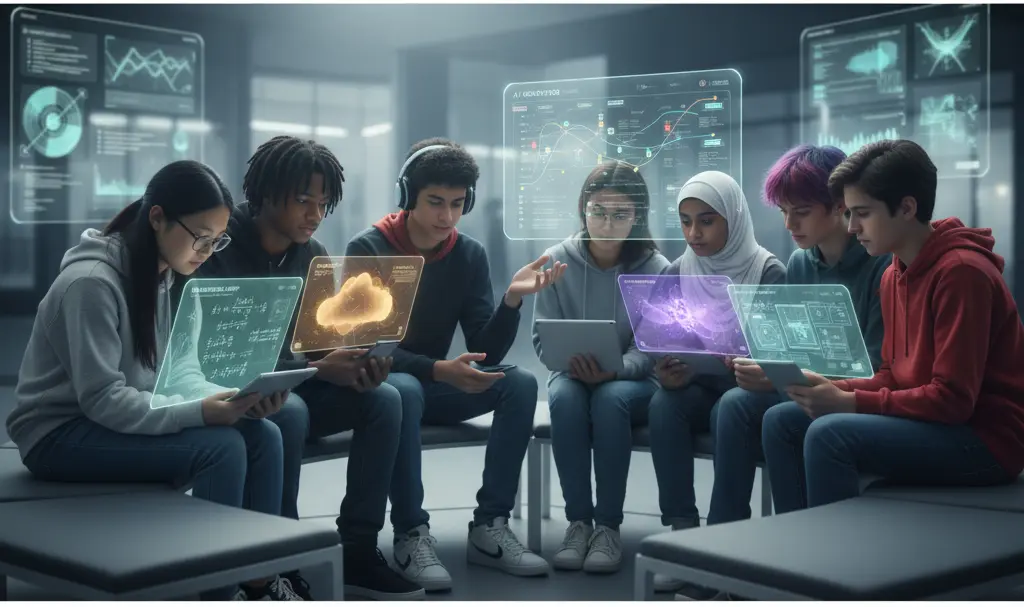
Artificial intelligence (AI) is increasingly woven into the daily lives of teenagers, extending far beyond academic assistance and information retrieval. Recent studies highlight a notable trend: for a segment of young people, chatbots are evolving into sources of casual conversation and even emotional support, prompting discussion among experts, parents, and tech companies.

AI: A Growing Presence in Teen Life
Data from the Pew Research Center indicates that the use of AI-powered tools is widespread among American teenagers. Their primary uses typically involve quickly finding information or completing school assignments. This widespread adoption for educational and informational purposes is generally accepted by both parents and experts, reflecting the current technological landscape.
Beyond Tasks: AI as a Source of Connection
However, the Pew report reveals that the role of chatbots doesn’t stop at practical tasks. For a minority of young users, AI is becoming a conversational partner for informal chats and even a platform where they seek emotional support or advice on personal issues. While this trend currently involves about 12% of American teenagers, its scale is significant enough to capture the attention of specialists.
What are Chatbots and General Language Models?
- Chatbots: Computer programs designed to simulate human conversation through text or voice. They can answer questions, provide information, and perform tasks.
- General Language Models (GLMs): Advanced AI systems, like ChatGPT, Claude, and Grok, that are trained on vast amounts of text data to understand, generate, and respond to human language in a coherent and contextually relevant way. They can engage in diverse conversations and generate various forms of creative content.
Expert Concerns and Mental Health Considerations
Mental health experts approach this emerging trend with caution. General language models (GLMs) such as ChatGPT, Claude, or Grok were not designed as therapeutic tools. In extreme cases, relying on AI for emotional support could potentially deepen isolation rather than provide genuine help, as these models lack true empathy, understanding of human nuance, and professional training.
There are concerns that over-reliance on AI for emotional processing could hinder the development of essential social skills and the ability to form healthy human relationships. While AI can offer quick responses, it cannot replicate the complex dynamics of human interaction and the unique benefits of speaking with a trained professional or trusted individual.
Parental Worries and Tech Company Responses
The Pew study also uncovers a significant disparity between the frequency with which teenagers use chatbots and their parents’ awareness. Many adults are unaware of the extent of AI usage by their children, and even greater opposition arises regarding the use of chatbots for discussing emotions or personal problems.
Parental anxieties are reflected in the actions of technology companies. For instance, Character.AI, a popular platform for creating and interacting with AI characters, made the decision to block access for users under 18 years of age. Similarly, OpenAI, the creator of ChatGPT, implemented changes, including the withdrawal of its GPT-4o model, which some users felt excessively fostered emotional dependency.
Teenagers’ Mixed Views on AI’s Future
Interestingly, teenagers themselves hold diverse opinions on the future impact of AI. Many acknowledge its potential benefits and innovative capabilities. However, an almost equally large group expresses concerns that AI’s long-term influence on society could prove to be negative, touching upon issues like job displacement, privacy, and the nature of human connection.
Frequently Asked Questions (FAQ)
How commonly do teenagers use AI?
According to the Pew Research Center, the use of AI tools is widespread among American teenagers, primarily for educational purposes and information gathering.
Are chatbots replacing human emotional support for teens?
While a minority (around 12%) of American teenagers use chatbots for emotional support and personal advice, mental health experts caution that these AI tools are not designed for therapeutic purposes and may not be a substitute for human interaction or professional help.
What are the main concerns about teenagers using AI for emotional support?
Experts worry that relying on AI for emotional support could lead to increased isolation and hinder the development of crucial social skills. Additionally, general language models lack true empathy and professional training required for effective mental health support.
Source: The Wall Street Journal, original research. Opening photo: Generated by Gemini
About Post Author
