

Contents
InPost Parcel Locker Rule Update: What Individual and Business Customers Need to Know for 2026
Effective March 16, 2026, InPost, a popular automated parcel locker service (known as Paczkomat in some regions), is implementing updated regulations for preparing and packaging shipments, particularly for its business clientele. While these changes primarily target commercial users, they will inevitably influence what individual customers can send through InPost parcel lockers. Many popular items will no longer be shippable via these convenient points.
Paczkomaty (InPost Parcel Lockers) are self-service terminals that allow users to send and receive parcels 24/7 without direct contact with a courier. This makes them a highly convenient option for e-commerce and personal shipments.
Understanding InPost’s New Shipping Regulations
The latest update primarily clarifies and differentiates rules between business and individual (retail) customers. While there aren’t drastic changes compared to the last update on July 24, 2025, the new regulations solidify the list of items that cannot be placed in InPost shipments by either customer group.
Key Prohibited Items for All InPost Parcel Locker Users
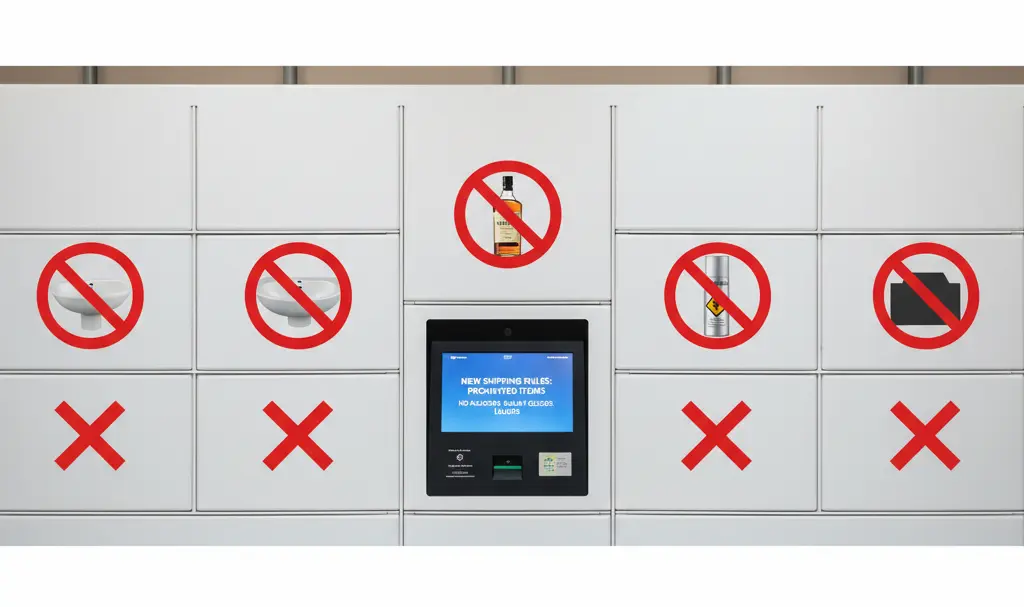
Both individual and business customers are prohibited from sending the following items through InPost parcel lockers:
- Sinks, washbasins, toilet bowls, and WC compacts: Due to their size, fragility, and potential for damage during transit.
- Glass items: High risk of breakage, which can damage other parcels or injure handlers.
- Tobacco products and e-cigarettes: Often subject to age restrictions and specific shipping regulations.
- Fire extinguishers: Contain pressurized substances which can be hazardous.
- Building materials: Typically heavy, bulky, and unsuitable for automated locker systems.
- Various oils and chemical substances: Including care oils, paints, stains, universal greases, technical greases, impregnates, and mildew removers. These can be corrosive, flammable, or harmful if spilled.
- Narcotics, psychotropic substances, and psychoactive substances: Illegal and highly regulated.
- Automotive fluids: Such as engine oils, brake fluids, and related automotive liquids, due to their hazardous nature.
- Batteries and accumulators: While devices containing batteries are generally allowed, standalone batteries and accumulators are restricted to prevent fire hazards.
- Aerosol substances: Pressurized containers pose a risk of explosion or leakage.
- Products emitting intense odors: Can affect other parcels and the environment within the locker.
- Valuables: Items of high monetary worth are generally advised to be sent via specialized, insured services, not standard parcel lockers.
- Animals, plants, and biological materials: Require specific environmental conditions and rapid transport, which standard parcel lockers cannot guarantee.
A New Addition to the Restricted List: Alcohol
One notable new item added to the list of prohibited products is alcohol. Interestingly, InPost does permit its distribution under a separate business agreement as part of their Smart Courier service. This highlights a differentiation in service levels and contractual arrangements for certain goods.
Enhanced Options for Business Clients
Business customers now have an additional option: the ability to send non-standard parcels via courier. While individual customers must adhere to rigidly defined parcel sizes, businesses can submit an individual request to InPost if the sum of their package dimensions exceeds 220 cm. This flexibility caters to the diverse shipping needs of commercial entities.
For a complete overview of the rules and regulations, customers are advised to visit the official InPost website and consult the detailed PDF document.
Frequently Asked Questions (FAQ)
When do the new InPost parcel locker rules take effect?
The updated InPost regulations for preparing and packaging shipments for business customers, which also impact individual users, will come into effect on March 16, 2026.

What are Paczkomaty (InPost Parcel Lockers)?
Paczkomaty are automated, self-service terminals operated by InPost, allowing users to send and receive parcels 24/7. They provide a convenient and contactless delivery solution.
What items are prohibited from being shipped via InPost Parcel Lockers?
Prohibited items include sinks, glass products, tobacco products, fire extinguishers, building materials, various oils and chemicals, narcotics, automotive fluids, standalone batteries, aerosol substances, intensely odorous products, valuables, animals, plants, biological materials, and now, alcohol (with specific business exceptions).
Are the shipping rules different for business and individual customers?
Yes, while many prohibited items apply to both, business customers have additional flexibility, such as the option to ship non-standard packages (exceeding 220 cm in total dimensions) via courier upon individual request, and special agreements for shipping items like alcohol through the Smart Courier service.
Can I ship alcohol with InPost?
Generally, alcohol is now a prohibited item for all customers using standard InPost Parcel Lockers. However, InPost may permit alcohol distribution for business clients under a separate, specific business agreement through their Smart Courier service.
Source: InPost. Opening photo: Gemini
About Post Author
