

Contents
Revolutionizing Urban Mobility: Europe’s First Commercial Robotaxi Service Debuts
A new era for European urban transport is dawning. Ride-sharing giant Uber, alongside autonomous vehicle technology firm Pony.ai, and fleet operator Verne, have announced ambitious plans to launch Europe’s first-ever commercial autonomous ride-hailing service. This groundbreaking initiative is set to roll out in a prominent European capital, marking a significant step towards driverless mobility across the continent.
Zagreb: The Testing Ground for Europe’s Robotaxis
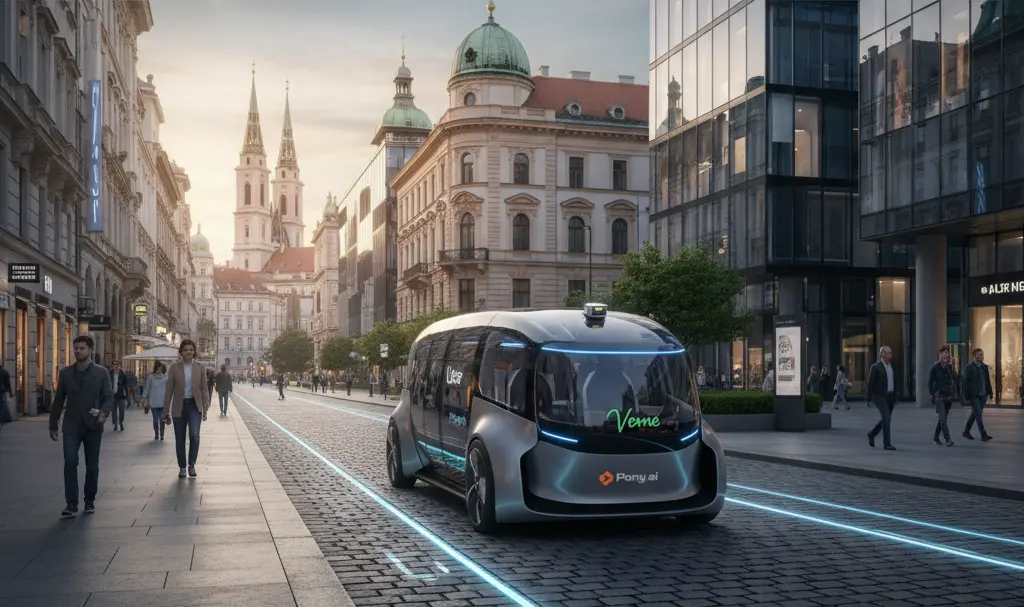
The Croatian capital, Zagreb, has been selected as the inaugural city for Europe’s first commercial robotaxi service. Road tests for Pony.ai’s autonomous vehicle fleet have already commenced there. These vehicles will form the core of the planned service, which will be integrated into the Uber platform and managed by Verne.
This isn’t just another pilot program; it represents the first genuine commercial deployment of driverless transport services in Europe. Zagreb’s selection is strategic, attributed to its modern road infrastructure, a supportive regulatory environment, and a rapidly expanding mobility services sector. This combination makes it an ideal location to introduce and scale autonomous vehicle technology.
The introduction of such advanced transportation solutions aligns with global trends towards smarter cities and sustainable mobility. For a deeper dive into how technology is shaping the future of transportation, you might be interested in developments discussed at CES 2026 regarding car tech and the third space.
A Collaborative Effort: The Three Partners Behind the Project
The successful launch of this commercial robotaxi service is the result of a robust partnership between three key players:
- Pony.ai: Provides its advanced autonomous driving system and a fleet of state-of-the-art vehicles.
- Uber: Integrates the service into its global mobility platform, allowing users to easily book robotaxis through its existing app.
- Verne: Acts as the operational backbone, managing the fleet and ensuring compliance with European regulations.
This collaborative model is designed for scalability, with plans to expand into additional cities across Europe and other regions globally.
“Partnering with Uber and Verne is a crucial step in our ongoing global expansion of autonomous mobility. In China, our Gen-7 system has been commercialized, and operations in Guangzhou and Shenzhen have reached profitability. This validates the readiness of our technology and business model. It enables us to accelerate international expansion by combining our solutions with Uber’s platform and Verne’s multi-market deployment expertise. Together, we aim to build a scalable and sustainable autonomous mobility ecosystem.”
— Dr. James Peng, Founder and CEO of Pony.ai
Pony.ai’s Advanced Technology
Pony.ai supplies the autonomous driving technology and the Gen-7 Arcfox Alpha T5 Robotaxi fleet. These vehicles are specifically designed for full autonomy, equipped with an array of LiDAR sensors, radar, cameras, and Pony.ai’s proprietary Virtual Driver software. This system ensures precise navigation, even in complex urban environments, and its reliability has been proven through millions of rides completed in Asia.
Pony.ai often shares updates on its progress, like the one below:
👏Excited to share https://t.co/jCrY756ajt’s rollout of its 300th jointly manufactured ARCFOX Alpha T5 #Robotaxi — a significant production milestone that accelerates the company’s trajectory toward large-scale deployment and commercialization.
More: https://t.co/c7ZYs0o2Es pic.twitter.com/Lj7ocGOLFX— Pony.ai (@PonyAI_tech) October 24, 2025

Verne’s Operational Expertise
Verne plays a crucial role as the fleet operator and manager, responsible for securing all necessary permits and licenses within the European Union. Their mandate includes preparing the infrastructure and ensuring vehicle certification aligns with stringent European regulations.
Uber’s Global Reach
Uber will seamlessly integrate the robotaxi service into its widely used global ride-hailing platform. This integration means users will be able to order driverless rides directly through the Uber application, making autonomous transport accessible to a broad audience.
Uber also enthusiastically announced the partnership:
Zagreb 👋 Europe’s first commercial robotaxi service is arriving soon with Verne x Pony AI. Let’s ride. pic.twitter.com/rNLBGVdv4p
— Uber (@Uber) March 26, 2026
Thousands of Robotaxis Planned for Europe
Following its debut in Zagreb, Verne and Pony.ai have ambitious plans for a gradual rollout of autonomous robotaxis to other cities across the European continent. The long-term objective is to establish a fleet of thousands of autonomous vehicles within the next few years, transforming urban transportation on a larger scale.
“Only a strong ecosystem of partners will enable autonomous mobility to scale globally. By combining Pony.ai’s proven autonomous transport technology, Verne’s operational experience, and the reach of the Uber platform, we are taking a significant step towards making autonomous rides available to more users in more locations.”
— Dara Khosrowshahi, CEO of Uber
While specific details about the next locations remain undisclosed, industry observers anticipate that major European cities like Berlin, Amsterdam, and Madrid could be among the first candidates. These markets are often considered favorable for testing and implementing intelligent transportation solutions. This expansion reflects a broader trend of technological advancements, similar to how AI is enhancing various services, such as the Uber Eats AI cart assistant for grocery shopping.
Frequently Asked Questions (FAQ)
What is Europe’s first commercial robotaxi service?
It’s a new autonomous ride-hailing service launched by Uber, Verne, and Pony.ai, set to debut commercially in Zagreb, Croatia. Unlike pilot programs, this is a full-scale deployment of driverless transport.
Which companies are involved in this robotaxi initiative?
The project is a collaboration between Uber (for its ride-hailing platform), Pony.ai (providing autonomous driving technology and vehicles), and Verne (managing fleet operations and regulatory compliance).
Why was Zagreb chosen as the first city for this service?
Zagreb was selected due to its modern road infrastructure, a favorable regulatory environment for autonomous vehicles, and a growing sector for mobility services, making it an ideal location for the initial rollout.
What kind of technology powers these robotaxis?
The service utilizes Pony.ai’s Gen-7 Arcfox Alpha T5 Robotaxis, which are equipped with advanced LiDAR sensors, radar, cameras, and Pony.ai’s Virtual Driver software for precise and reliable autonomous navigation.
How do commercial robotaxis differ from traditional ride-hailing services?
The key difference is the absence of a human driver. Commercial robotaxis operate autonomously, relying on advanced AI and sensor technology to navigate, pick up, and drop off passengers, offering a driverless transportation experience while potentially enhancing safety and efficiency over time.
Source: Press Release, Reuters, Uber. Opening photo: Uber / Press Materials
About Post Author
