

Contents
US B-52 Bombers Reportedly Flying Missions Over Iran, Signaling Shift in Air Superiority
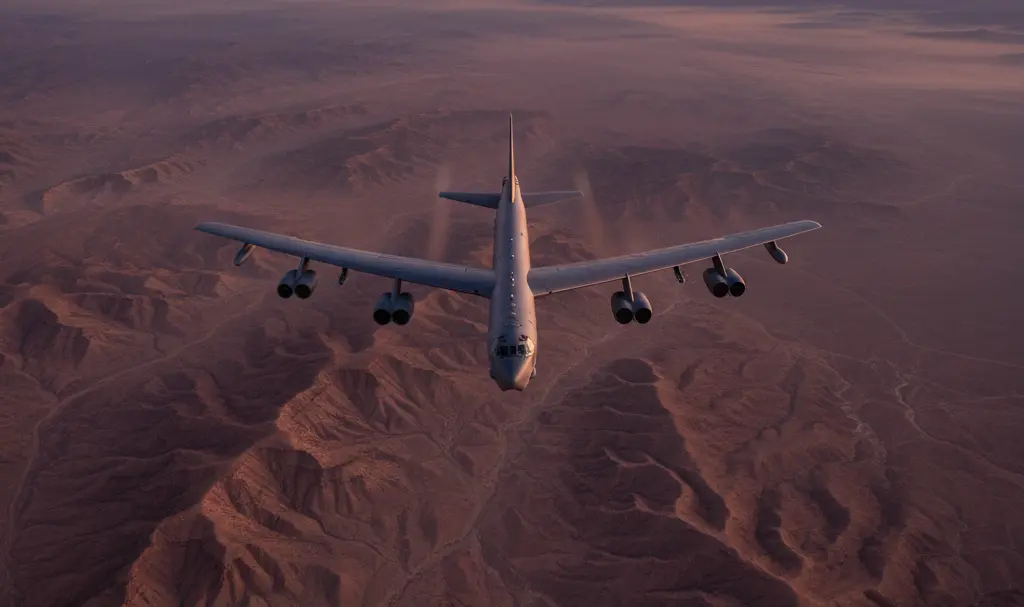
Reports indicate that the United States has deployed its B-52 Stratofortress bombers on missions directly above Iranian airspace. This assertive move, involving aircraft with over 70 years of service history, suggests a significant level of American air superiority in the region and a potential new chapter in the ongoing geopolitical landscape.
The Return of the Stratofortress: B-52s Reasserting Presence
American media outlets are circulating claims that U.S. B-52 bombers are now being utilized for operations directly over Iranian territory. The deployment of such large and relatively unstealthy aircraft implies a considerable degree of operational freedom for the U.S. Air Force, serving as a powerful demonstration of its aerial dominance. This strategic deployment highlights the adaptability and continued relevance of these long-serving aircraft.
Reports have emerged, notably one citing a social media post dated March 31, 2026, that claim U.S. B-52 bombers have commenced missions directly over Iranian airspace. This particular claim, attributed to a “Gen. Dan Caine” in a hypothetical “War Radar” update, asserted: “BREAKING 🇺🇸🇮🇷: U.S. B-52 bombers now flying over Iran — Gen. Dan Caine says American air superiority is in full control. ‘No more cruise missiles needed.'” While the date of this specific claim is in the future, the sentiment it expresses underscores discussions around potential shifts in regional air superiority.
Strategic Implications of B-52 Deployments
The U.S. command reportedly emphasizes that an expansion of air superiority has opened avenues for new operational strategies. The B-52s are therefore joining a broad array of military assets deployed by the United States across the Middle East. The significance here extends beyond mere firepower; it encompasses crucial political and military dimensions.
If the U.S. can deploy such formidable aircraft over Iran without substantial opposition, it suggests a significant degradation of the adversary’s defensive capabilities. This also signals a potential shift into a new phase of conflict, where the U.S. is increasingly confident in leveraging its strategic airpower. Such developments often precede or accompany shifts in broader geopolitical strategies, including those involving advanced technologies and cyber warfare, as seen in evolving digital warfare and missile capabilities.
Enduring Legacy: The B-52’s Newfound Role
The B-52 Stratofortress stands as one of the most recognizable bombers in the annals of American aviation history. These aircraft have been in service with the military since the 1950s, yet the Pentagon continues to regard them as a vital component of its armed forces. This longevity is primarily attributed to continuous modernization efforts, which have adapted the B-52s to contemporary combat environments through upgrades such as engine replacements and radar enhancements.
In an era dominated by modern and stealth-focused military technology, the continued frontline deployment of such venerable equipment might seem counter-intuitive. However, the operations reportedly conducted over Iran serve as a compelling illustration that even aged platforms, when consistently upgraded and strategically deployed, can retain significant relevance on the battlefield. This highlights the ongoing interplay between legacy systems and emerging technologies, a topic often explored in discussions around military innovation and integration, such as the ethical considerations of Pentagon AI integration.
Frequently Asked Questions (FAQ)
Why are B-52 bombers still relevant after 70 years of service?
B-52 bombers remain relevant due to extensive and continuous modernization programs. These upgrades include engine replacements, advanced avionics, and radar enhancements, allowing them to adapt to modern combat scenarios and continue serving as a powerful strategic deterrent and strike platform. Their large payload capacity and long range also contribute to their enduring value.

What does the deployment of B-52s over Iran signify about air superiority?
The reported deployment of B-52s over Iranian territory implies a high degree of U.S. air superiority. As large and non-stealthy aircraft, their ability to operate freely suggests that Iranian air defenses are either significantly degraded or that the U.S. believes it can neutralize any threats, indicating a substantial imbalance in aerial control.
What are the geopolitical implications of using B-52s in this manner?
The use of B-52s in such operations carries significant geopolitical weight. It serves as a strong signal of military strength and resolve, potentially escalating tensions. It also demonstrates an assertive posture by the U.S., indicating a new phase where strategic air assets are being utilized more overtly, potentially influencing regional power dynamics and deterrence strategies.
How does the B-52’s role compare to newer, stealth-focused aircraft?
While newer aircraft like the B-2 Spirit or the upcoming B-21 Raider prioritize stealth for penetrating contested airspace, the B-52 offers a different set of advantages. Its large payload, long endurance, and ability to carry a diverse range of weapons make it ideal for sustained conventional bombing, stand-off attacks, and situations where air superiority is already established. It complements, rather than replaces, stealth platforms.
Source: Business Insider, Original reporting.
Opening photo: Gemini
About Post Author
