

Contents
Why Leaving Your Key in the Lock Puts Your Home at Risk
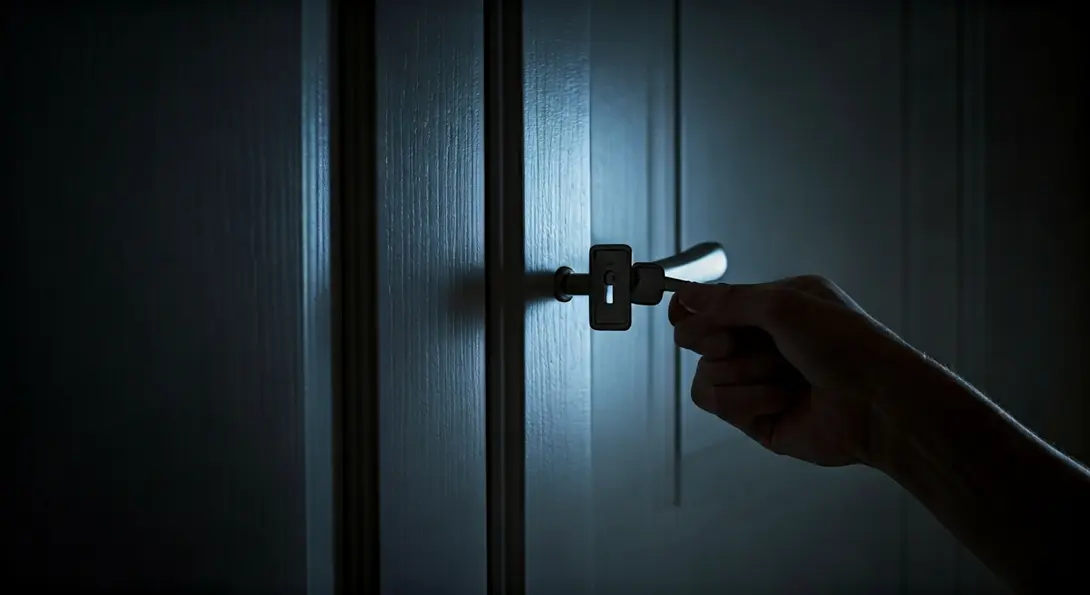
Many homeowners believe that leaving a key in the lock overnight provides an extra layer of security. The common assumption is that it prevents outsiders from tampering with the lock mechanism. However, security experts warn that this practice can, in fact, make your home more vulnerable to burglars. In certain scenarios, it could take a skilled intruder mere seconds to gain entry.
The Hidden Dangers of a Key in the Lock
Contrary to the widespread belief that a key inserted from the inside “blocks” access, security professionals highlight a significant flaw in this logic. While it might seem intuitive, cheaper or older lock cylinders can be surprisingly easy to bypass with a key left in place. Locksmiths and security channels frequently demonstrate this vulnerability.
For instance, some experts show how simple tools, like two thin wires, can be used. One wire stabilizes the key already in the lock on the opposite side of the door, while the other manipulates the cylinder mechanism. An experienced burglar, using such a technique, can open the door in less than a minute.
An expert from a security channel explains, “The risk primarily applies to locks equipped with double-bitted key cylinders. Even if these often boast high-security ratings, it’s crucial never to leave a key in the lock from the inside. Otherwise, an intruder can exploit the internal key to open the door—regardless of whether it’s turned once or multiple times.”
Knob Locks: Not Always the Solution
Similarly, locks with an internal knob or thumb turn aren’t always immune to this vulnerability. The expert adds, “If you have a lower-security model, a burglar can insert a thin tool from the outside, engage the clutch mechanism, and unlock the door. Therefore, when choosing a lock, prioritize its security rating over mere convenience.”
Beyond the Key: Common Burglary Methods
While a key left in the lock presents a specific risk, burglars often employ other, more common methods to gain entry.
Cylinder Snapping and Escutcheon Weaknesses
One prevalent technique is cylinder snapping, where the lock cylinder is forcibly broken. This is especially easy if the lock is protected by a low-quality escutcheon.
The expert clarifies, “An escutcheon is an additional protective plate for the lock cylinder. It doesn’t just cover the hole in the door; its primary purpose is to deter burglaries. The most basic models, which are screwed on from the outside, can be easily removed, allowing the cylinder to be snapped. Much more effective are anti-burglary escutcheons secured with screws from the inside.”
According to the expert’s experience, a significant majority of repair calls post-burglary involve poorly secured cylinders. In such cases, forcing entry doesn’t require specialized tools or time-consuming drilling. “As a result, a burglar can quickly and relatively quietly breach the door. My observations indicate that poorly secured cylinders and low-quality locks account for roughly 98% of burglary cases I encounter during post-burglary repairs,” he states.

Window and Other Entry Point Vulnerabilities
It’s also important to remember that burglars frequently target other entry points, such as balcony windows, patio doors, garages, or basements. Homes on the ground floor or single-family residences face a considerably higher risk.
The security expert points out, “Tools for opening tilted windows can be purchased for a modest sum, making them an accessible investment for burglars. The cost is likely recouped after just one successful break-in.”
Even closed windows aren’t always secure. “If a window has a standard handle, drilling a small hole in the frame allows an intruder to manipulate the mechanism with a wire and open the window from the outside. Handles with a locking mechanism, such as a key or button, eliminate this risk. Replacing your window handles is one of the most affordable ways to enhance your home’s security.” This simple upgrade can significantly bolster your home’s defenses. For more ways to fortify your living space, explore smart home tech deals that can offer advanced protection.
Declining Burglaries, Enduring Vigilance
On a positive note, the number of home and apartment burglaries has been steadily decreasing. Statistics show a significant drop in recent years. For instance, reports indicate a reduction of over 30% in burglaries over the last five years, with the trend continuing downwards. While this is encouraging, it’s not a reason for complacency.
Vigilance remains paramount. Essential security habits include:
- Always closing windows before sleeping or leaving the house.
- Avoiding the display of valuable items where they are easily visible from outside.
- Limiting social media posts about travel plans that could signal an empty home.
Additional security measures can also be highly effective, such as:
- Security monitoring systems.
- Alarm systems.
- Motion sensors.
However, all these measures can be rendered ineffective without a robust primary defense: your doors. “The best option is certified anti-burglary doors, featuring an internal grille, a multi-point locking system, anti-jemmy bolts, and certified lock cylinders. The cylinder should be high-end, with a restricted key profile, and protected by a certified escutcheon,” advises the expert. Before investing in new security, you might want to understand the dangers of buying old smartphones on online marketplaces, as they might lack modern security features or be compromised.
The expert often assesses door security across entire buildings during client visits. “When I walk through a stairwell, I notice many apartments have only very basic door security. I suspect a burglar observes the building just as I do and can quickly identify the easiest target,” he concludes, emphasizing the need for comprehensive and visible security.
Frequently Asked Questions (FAQ)
No, this is a common misconception. For many lock types, especially older or lower-security models, a key left in the lock can actually make it easier for an intruder to manipulate the mechanism from the outside using simple tools.
Beyond exploiting keys left in locks, common methods include cylinder snapping (forcibly breaking the lock cylinder), manipulating windows (especially tilted ones or those with standard handles), and forcing entry through balcony doors, patio doors, garages, or basements. Poorly secured doors and windows are often primary targets.
A truly secure door should be a certified anti-burglary door with an internal grille, a multi-point locking system, anti-jemmy bolts, and certified lock cylinders. The cylinder itself should be high-quality, ideally with a restricted key profile, and protected by a certified anti-burglary escutcheon secured from the inside.
One of the simplest and most affordable upgrades is replacing standard window handles with ones that have a locking mechanism, such as a key or push-button lock. This prevents external manipulation of the window latch even if a small hole is drilled in the frame. Always remember to close and lock your windows, especially when leaving home or going to bed.
Source: Rankomat.pl, original compilation. Opening photo: freepik / Magnific
About Post Author
