

Contents
Samsung Eyes Major Investment in Boston Dynamics, Signaling Shift to ‘Physical AI’
The landscape of artificial intelligence (AI) is undergoing a significant transformation, with a clear pivot from advanced language models towards intelligent machines capable of interacting and operating within the physical world. Global technology powerhouse Samsung has keenly recognized this evolving trend and is reportedly analyzing a potential investment in Boston Dynamics.
Samsung Considers Investment in Robotics Leader
Reports circulating within the technology sector suggest that Samsung has begun investigating the possibility of acquiring a stake in Boston Dynamics. While there has been no official confirmation of these discussions, the news has already generated substantial interest. Boston Dynamics has long been synonymous with cutting-edge robot development, establishing itself as one of the most recognizable and innovative companies in the field.
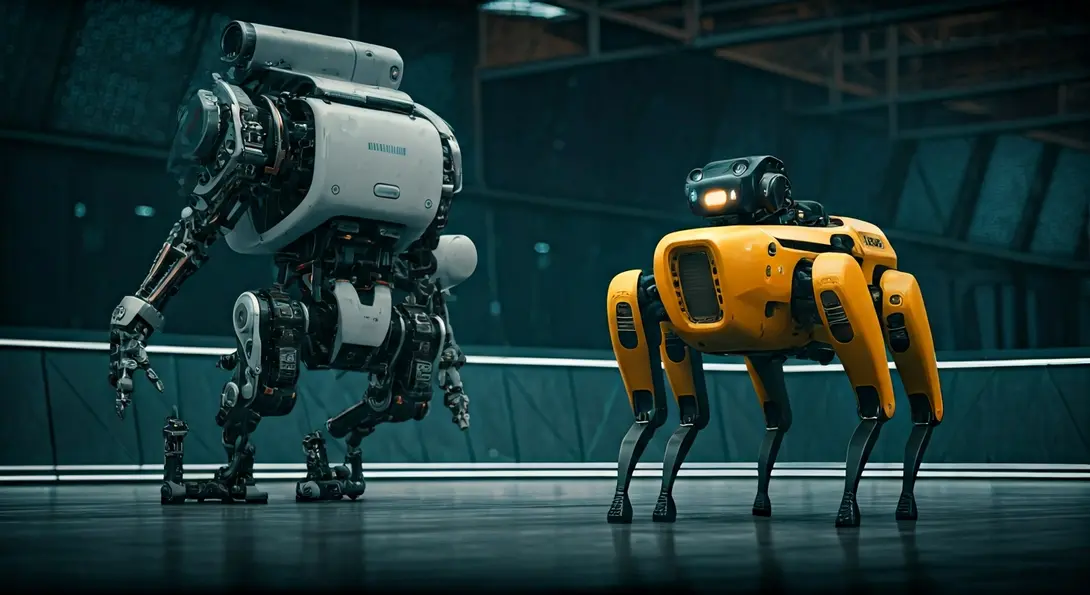
This renowned firm is responsible for creating iconic robotic platforms such as Spot, the agile four-legged robot; Atlas, the highly dynamic humanoid robot; and Stretch, designed for warehouse automation. These creations frequently feature in presentations and showcases, illustrating the latest advancements and capabilities in robotics technology.
“Physical AI”: Samsung’s Potential Next Giant Leap
For several years, the biggest names in tech have primarily focused their resources on developing generative artificial intelligence and increasingly sophisticated large language models. However, the conversation is now shifting to what many believe is the next pivotal phase of AI evolution: “Physical AI.”
Physical AI involves the seamless integration of intelligent systems with robots that can perform tangible, real-world tasks. This means deploying AI not just in software but in physical entities capable of navigating and manipulating environments such as manufacturing facilities, logistics warehouses, and even homes. This transition represents a fundamental shift in how AI will impact daily life and industries, moving intelligence from virtual interfaces to physical action.
Indeed, internal reviews at Samsung are reportedly focusing on a potential stake in Boston Dynamics (currently owned by Hyundai, with SoftBank having divested its majority stake in 2021, though smaller portions might still be available or in discussion), with an aim to build advanced humanoid robot capabilities. This aligns with the vision that “Physical AI” is poised to become the next frontier, extending beyond the current capabilities of generative AI.
Samsung’s Strategic Position and the Competitive Landscape
Samsung maintains an exceptionally strong global position across various sectors, including advanced semiconductors, consumer electronics, and AI solutions. Despite this formidable presence, the company currently lacks its own distinct and widely recognized humanoid robot platform. This absence is becoming increasingly noticeable when viewed against the backdrop of an accelerating competitive landscape.
Other technology giants, such as NVIDIA and Google, are aggressively expanding their commitments to developing technologies that underpin autonomous machines and robotics. NVIDIA, with its strong GPU capabilities, is a key player in AI processing for robotics, while Google has a history of investing in various robotics ventures. This broader industry trend underscores the strategic importance of entering the physical robotics space. For example, the increasing interest in intelligent robotic assistants for homes highlights the growing market for physical AI applications. You can read more about how other companies are exploring this space, such as Amazon’s investments in child-sized robots for homes.
Furthermore, Samsung representatives have previously indicated their keen interest in the burgeoning robotics sector. During the first-quarter earnings presentation, Samsung’s Chief Financial Officer, Park Soon-cheol, emphasized the company’s proactive approach, stating that the “company is continuously evaluating merger and acquisition opportunities and capital investments in promising growth areas.” This statement provides strong context for the current reports regarding Boston Dynamics.

The Future of AI: Beyond Screens to Physical Reality
Should the reports of Samsung’s interest in Boston Dynamics prove accurate, it would represent a pivotal strategic move into a market that many experts identify as one of the most crucial technological trends of the coming decade. As artificial intelligence increasingly transcends computer screens and integrates into physical devices, a robust presence in the robotics sector could prove as vital for Samsung’s long-term growth as its historic investments in smartphones or integrated circuits. The development of AI in physical hardware is not just a technological advancement but a fundamental shift in how industries operate and how humans interact with technology. This focus on tangible AI applications is transforming various sectors, similar to how Elon Musk’s ventures in semiconductor factories and AI for space robotics are pushing boundaries in their respective fields.
Frequently Asked Questions (FAQ)
“Physical AI” refers to intelligent systems integrated with robots that can perform real-world tasks and interact with physical environments. Unlike generative AI, which focuses on creating new content (like text, images, or code) and often operates within a digital realm, Physical AI extends intelligence into tangible machines for physical action and interaction.
Boston Dynamics is highly attractive due to its unparalleled expertise in advanced robotics, particularly in creating highly dynamic and stable robots like Spot and Atlas. An investment would provide Samsung with immediate access to cutting-edge hardware, sophisticated motion control systems, and a leading brand in the robotics space, accelerating its entry into the Physical AI market.
Samsung’s entry or significant investment could dramatically accelerate the commercialization and adoption of advanced robotics. With Samsung’s immense manufacturing capabilities, global distribution network, and financial resources, it could significantly scale the production and deployment of Boston Dynamics’ robots, pushing innovation and competition across various industries.
The long-term implications of “Physical AI” are transformative. In industries, it promises increased automation, efficiency, and safety in manufacturing, logistics, healthcare, and exploration. For daily life, it could lead to more advanced service robots, assistive devices, and intelligent companions, fundamentally altering how we work, live, and interact with technology in our homes and public spaces.
Source: Sammy Fans, original reporting.
Opening photo: Gemini
About Post Author
