Contents
Samsung’s Futuristic ‘Brick Phone’ Patent: A Glimpse into the Future of Smartphones?
In a bold move that could redefine mobile technology, Samsung has filed a patent for a remarkably unconventional device: a smartphone shaped like a brick. This innovative concept, far from being just about its unusual form factor, promises to surprise users with an unprecedented number of screens and advanced multi-folding capabilities. Could this be a preview of the smartphones of tomorrow?
A Radical New Design: The Brick Phone Concept
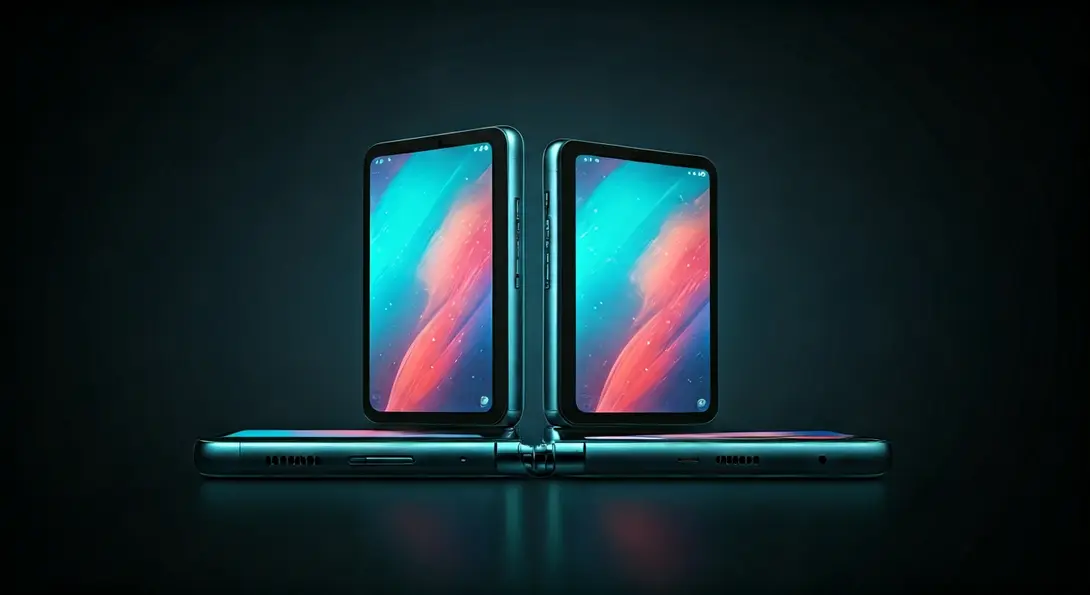
As reported by Android Authority, Samsung’s patent details a smartphone with a distinctly original, brick-like form. What truly sets this design apart is the inclusion of touchscreens on potentially every side of the device, offering a multi-faceted interactive experience unlike any current smartphone.
This atypical Samsung smartphone is envisioned as a convergence of foldable, flexible, and rollable display technologies. If the details within the patent and circulating rumors hold true, the device could offer versatile unfolding options:
- Single Fold: Similar to existing clamshell or book-style foldables, allowing for a compact form factor. Learn more about the evolution of folding phones at Samsung Serene Folding Phone History.
- Double Fold: An advanced mechanism that would allow the device to unfold twice, transforming its display into a size comparable to a tablet, offering an expansive screen real estate. This aligns with Samsung’s continuous innovation in futuristic foldables, as seen in Samsung Galaxy Z Tri-Fold Successor Development.
Beyond its innovative display mechanics, the “brick” construction itself suggests a focus on durability. As the name implies, this design is expected to be significantly more robust than many contemporary smartphones, potentially appealing to users seeking resilience. However, details regarding its exact dimensions and weight remain undisclosed, fueling speculation about its practical application.
Patented Ideas vs. Production Reality
It’s crucial to remember that filing a patent does not automatically confirm a device’s production plan. Technology companies, including Samsung, frequently patent numerous innovative concepts that may never see the light of day as commercial products. These patents serve to protect intellectual property and explore technological possibilities, rather than guaranteeing immediate market releases. Samsung, for instance, has previously patented concepts such as smartphone-based palm recognition systems that have not yet materialized into widely adopted features.
The Legacy of the “Brick Phone”: From Nokia to Samsung?
The term “brick phone” immediately conjures images of robust, almost indestructible mobile devices. For many, the iconic Nokia 3310 from the turn of the century epitomizes this legacy. Renowned for its legendary durability, the Finnish brand’s handset became a cultural phenomenon, celebrated for its resilience against drops and everyday wear.
Over the past two decades, the Nokia 3310 has become a staple of internet memes, humorously depicting its “indestructible” build quality. Interestingly, well-preserved, functional second-hand units of this classic device can still command significant value on online marketplaces, with prices ranging from modest amounts for basic models to hundreds of international currency units for complete sets with accessories. This enduring appeal highlights a market appreciation for tough, reliable mobile communication.
Frequently Asked Questions (FAQ)
Samsung’s patent describes a smartphone with a distinctive brick-like shape, featuring multiple touchscreens on its sides. It also proposes advanced multi-folding capabilities, allowing it to unfold once like a standard foldable, or twice to expand into a tablet-sized display.
Not necessarily. Companies like Samsung frequently file patents to protect innovative ideas and explore future technologies. Many patented concepts never make it to commercial production, serving instead as intellectual property or research endeavors.

This concept builds upon current foldable technology by introducing a multi-fold mechanism (single or double fold) that could transform the device from a compact “brick” into a tablet-sized screen. It combines aspects of current foldables with flexible and rollable display solutions.
The term “brick phone” historically refers to early mobile phones known for their robust, durable, and often bulky designs. The Nokia 3310 is a prime example, celebrated for its legendary resilience and becoming a cultural icon for its “indestructible” nature. Samsung’s patent revives this term in a modern, futuristic context.
Source: Android Authority. Opening photo: Samsung Newsroom / Press materials
About Post Author