

Contents
Beat the Heat: Clever Ways to Cool Your Home at Night Using Simple Physics
Sweltering temperatures can make it difficult to find comfort around the clock, but nighttime often presents the best opportunity to cool down your bedroom. Interestingly, a classic fan can be your best ally, especially when used in a slightly unconventional way. It all comes down to a simple, yet highly effective trick rooted in fundamental principles of physics.
As warmer seasons approach, many people begin searching for ingenious hacks to keep their living spaces cool. One effective strategy involves a concept known as Negative Pressure Ventilation (NPV).
Harnessing the Power of Negative Pressure Ventilation with Your Fan
Understanding Negative Pressure Ventilation (NPV)
Negative Pressure Ventilation is a technique that uses a fan to create lower air pressure inside a room compared to the outside, effectively expelling hot air and drawing in cooler air. This method leverages basic fluid dynamics and is surprisingly efficient when applied correctly.
How to Set Up Your Fan for Optimal Cooling
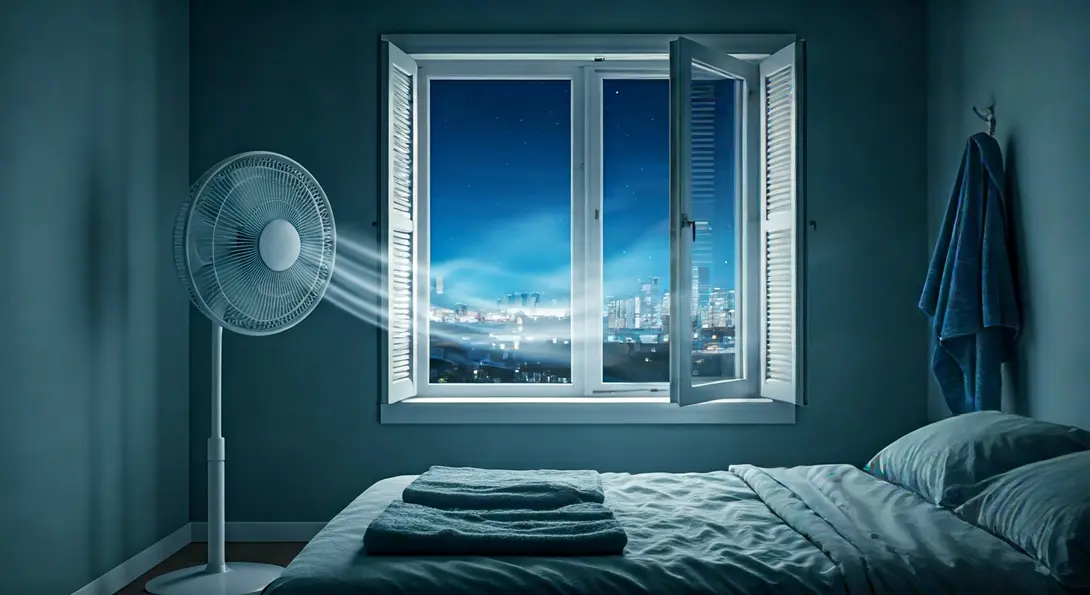
The core idea of NPV for home cooling involves positioning your fan to push hot air out of an open window, rather than simply circulating air within the room. This process helps to extract warm, stagnant air from your indoor space, simultaneously creating a slight vacuum that pulls cooler, fresher air from outside.
For this method to be effective, timing is crucial. It works best in the evenings or at night when the outdoor temperature has dropped below the indoor temperature. If the outside air is still warmer, this method could inadvertently draw more heat into your home.
Maximizing Cross-Ventilation
To ensure the entire process runs smoothly and efficiently, you need to create a cross-breeze. This means opening not only the window in the room you’re trying to cool but also another window or door in an opposite or distant part of your home. This setup allows for continuous airflow, drawing cool air in through one opening and expelling warm air out through another via your strategically placed fan.
Optimal Fan Placement and Operation
- Distance from Window: Position the fan approximately 7.5 to 15 centimeters (3 to 6 inches) away from the open window. This allows it to create a strong outward airflow without being completely obstructed.
- Direction: The fan should face outwards, blowing air directly out of the window.
- Power Setting: Operate the fan at its maximum power setting to maximize the expulsion of hot air and the intake of cooler air.
By following these steps, you’re not just moving air around; you’re actively ventilating your space and reducing the overall heat load using fundamental principles of physics. For more ways to integrate technology for comfort and efficiency, explore how features like Gemini and other AI tools can enhance your smart home experience.
The Low-Tech Cooling Solution: The Wet Towel Trick
For those seeking an alternative that doesn’t require electronics, there’s another surprisingly effective way to cool your bedroom at night: a simple wet towel. This method utilizes the principle of evaporative cooling.
How the Wet Towel Method Works
The concept is straightforward: soak a towel in cold water, wring out the excess until it’s damp but not dripping, and then hang it near an open window. As the water from the towel evaporates, it absorbs heat energy from the surrounding air, effectively cooling the air that enters your room.

While this isn’t a miraculous solution, experts like John Lawless from heating system specialists BestHeating have confirmed its efficacy. This method can realistically lower the indoor temperature by several degrees Celsius (a few degrees Fahrenheit), which can make a significant difference for a comfortable night’s sleep.
Steps for the Wet Towel Method:
- Soak a clean towel in cold water.
- Wring out as much excess water as possible. It should be damp, not dripping.
- Hang the damp towel near an open window or across a chair in front of it.
- Ensure there’s some airflow to encourage evaporation.
This simple trick provides a noticeable cooling effect and is a testament to how basic physics can be applied in practical ways for everyday comfort. To further optimize your home’s environmental controls, you might be interested in learning about how Google Gemini’s memory feature can personalize your smart home interactions.
Frequently Asked Questions (FAQ)
Negative pressure ventilation is most effective when the outdoor temperature is noticeably cooler than the indoor temperature, typically in the evening or night. Ideally, the outdoor temperature should be at least a few degrees Celsius (or several degrees Fahrenheit) lower than inside your home to achieve a significant cooling effect.
While you can use the wet towel method during the day, its effectiveness will be significantly reduced if the outdoor temperature is high. Evaporative cooling works best when there’s a good temperature difference and some air movement to facilitate evaporation. During intense daytime heat, it might offer minimal relief or even contribute to humidity without sufficient cooling. It’s generally more beneficial in the cooler evening hours.
Generally, leaving a modern, well-maintained fan running overnight is safe. Ensure the fan is on a stable surface, away from any curtains or loose fabrics that could get caught in its blades. Regularly clean your fan to prevent dust buildup, which can be a fire hazard. Also, consider general home security when leaving windows open overnight, especially on ground floors.
The frequency of re-wetting the towel depends on factors like room temperature, humidity, and airflow. In drier, warmer conditions with good airflow, the towel will dry out faster. Generally, you might need to re-wet it every 2-4 hours to maintain its cooling effect. You’ll notice when it starts to feel dry and less cool to the touch.
Source: Yahoo. Opening photo: Gemini
About Post Author
