

Contents
PRIMA Implant: EU Approves Breakthrough Vision Restoration Technology
An American startup, Science Corporation, has developed the advanced PRIMA implant, a cutting-edge device designed to restore vision for individuals suffering from specific eye conditions, particularly macular degeneration. This innovative technology has just received crucial regulatory approval from the European Union, paving the way for its introduction to the market. While its price remains undisclosed, it is anticipated to be a significant investment.
The PRIMA Implant: A Closer Look at Vision Restoration
Named PRIMA, this novel chip from Science Corporation represents a potential paradigm shift in ophthalmology. Its primary objective is to restore sight in people affected by age-related macular degeneration (AMD), a leading cause of vision loss among older adults.
How the PRIMA Implant Works
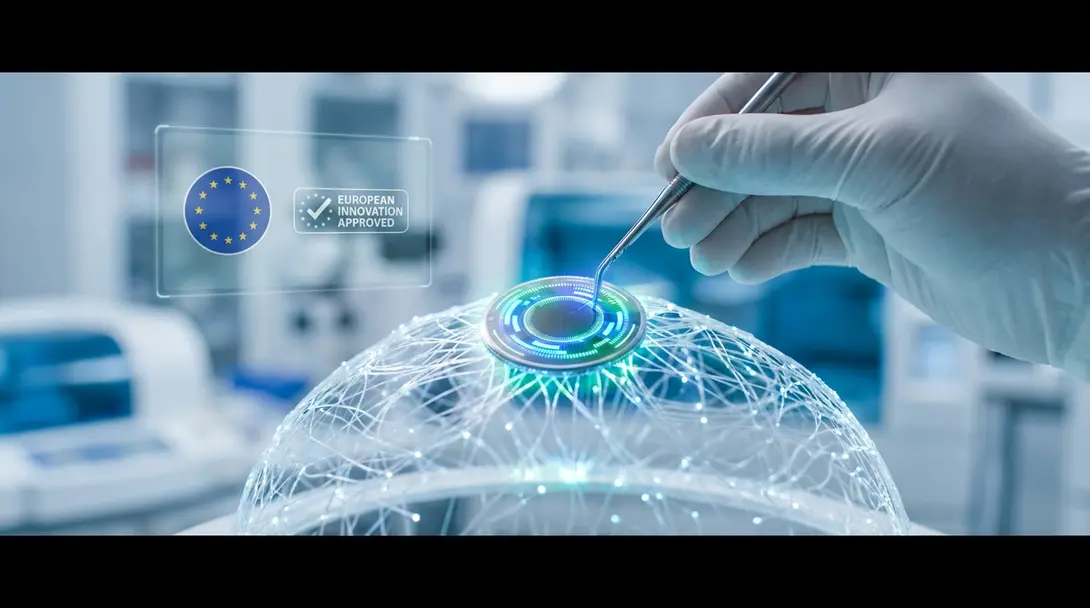
The implant procedure is designed to be straightforward and minimally invasive. The chip is surgically implanted into the back of the patient’s eye during an outpatient procedure that typically lasts about an hour. Once the operation is successful, patients wear specialized smart glasses that wirelessly receive signals directly from the implanted chip. These signals are then processed to provide visual information to the brain, effectively bypassing the damaged part of the retina.
The device has already undergone initial trials with patients who have reported positive outcomes and praised its effectiveness. Science Corporation is committed to continuous development, openly stating their ambition to evolve the technology into something akin to advanced augmented reality (AR) smart glasses, much like those explored by Meta. This vision aligns with broader technological trends where companies are pushing the boundaries of how we interact with digital information and our physical world, transforming everyday experiences into enhanced realities. For more on the future of immersive technologies, you might be interested in discussions around Meta’s advancements in virtual and augmented realities.
Addressing Key Questions: Cost and Availability
While the European regulatory green light is a monumental step, two significant questions remain for prospective patients: the cost and the launch date.
The Price of Restored Sight
There’s currently no definitive good news regarding affordability. Although the exact figure has not been publicly announced, it’s widely expected that the PRIMA implant will command a price tag in the hundreds of thousands of dollars. This reflects the high research and development costs, the advanced technology involved, and the specialized medical procedures required for implantation.
Launch Timeline
The specific market launch date for the PRIMA implant is also yet to be confirmed. However, the recent approval by the European medical device regulator for sales within the European Union is a strong indicator that progress is well underway and moves the device significantly closer to becoming available to the public.
The Broader Landscape of Vision Restoration Research
Scientists and researchers have dedicated decades to developing innovative solutions aimed at restoring vision for individuals confronting severe ocular conditions. While a significant breakthrough has remained elusive for many years, new avenues of treatment are constantly being explored.
Pioneering Research: Müller Cells and Photoreceptor Regeneration
One such promising development, which garnered attention in 2023, comes from researchers at the University of Montreal. Their work focuses on Müller cells – glial cells found in the retina – which were previously thought to be dormant. The Montreal team discovered that these cells can, in fact, be “awakened” and transformed into cells possessing the properties of cone photoreceptor neurons. This groundbreaking discovery could potentially enable patients to distinguish colors and improve their ability to read written content, offering hope for a more nuanced restoration of vision beyond basic light perception.

The pursuit of restoring human senses and capabilities through advanced technology extends beyond vision. Researchers globally are investigating various neural interfaces and biotechnological solutions to address a range of medical challenges. From enhancing cognitive function to restoring motor control, the field of neurotechnology is rapidly evolving. For instance, the progress made by initiatives like Neuralink, which aims to create direct brain-computer interfaces, showcases the broader scientific push to integrate technology with biology to improve human lives. Learn more about such ambitious projects and their implications, including how they might relate to a former soldier’s experience with Neuralink and gaming, highlighting the diverse applications of these emergent technologies.
The approval of the PRIMA implant is a testament to the relentless dedication of scientists and innovators. While challenges regarding cost and widespread accessibility remain, this technology offers a beacon of hope for millions living with vision loss, underscoring a future where advanced medical devices can truly transform lives.
Frequently Asked Questions (FAQ)
The PRIMA implant is a novel retinal chip developed by Science Corporation, designed to restore functional vision in individuals primarily affected by age-related macular degeneration (AMD). It works by capturing visual information and transmitting it to the brain via smart glasses, bypassing damaged retinal cells.
The implant is surgically placed in the back of the patient’s eye during an outpatient procedure that typically takes about one hour. After recovery, patients wear specialized smart glasses that communicate wirelessly with the implant.
Yes, the PRIMA implant has received regulatory approval (CE Mark) from the European Union, allowing for its sale and use within EU member states.
While an official price has not been released, the PRIMA implant is anticipated to be very expensive, likely costing in the hundreds of thousands of dollars due to the advanced technology and specialized medical procedures involved.
Macular degeneration, particularly age-related macular degeneration (AMD), is an eye disease that causes blurred central vision or a blind spot due to damage to the macula. The PRIMA implant is specifically designed to help individuals whose vision loss is attributed to this condition, offering a chance to regain some functional sight.
Source: TechCrunch. Opening photo: Science Corporation / Press Materials
About Post Author
