

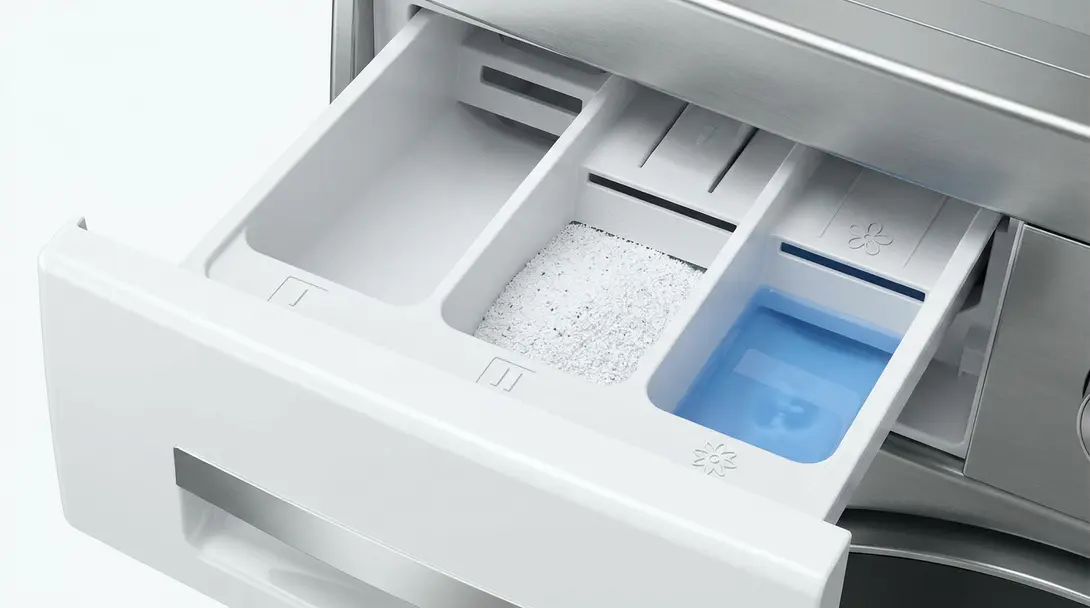
Many of us go through the motions of laundry day, mindlessly pouring detergent into the same familiar slots without a second thought. However, the three compartments within your washing machine’s detergent drawer are designed with very specific functions. Misunderstanding or misusing them can significantly hinder cleaning performance, lead to unpleasant residue buildup, and even shorten your appliance’s lifespan. This comprehensive guide will demystify each compartment’s purpose and highlight common mistakes to help you achieve perfectly clean laundry every time.

Contents

Understanding the Three Compartments in Your Washing Machine Drawer
While washing machine models vary, the fundamental design and function of their detergent drawers remain consistent. A standard drawer typically features three distinct compartments, each marked with a universal symbol:
- Compartment I (Pre-Wash): Often marked with a ‘I’, this compartment is designated for pre-wash detergent. It’s generally the least utilized, as it’s only active when you select a pre-wash option on your machine. The washing machine draws detergent from here at the very beginning of the cycle to tackle heavily soiled items, helping to loosen and rinse away significant dirt before the main wash even begins.
- Compartment II (Main Wash): This is typically the largest compartment, marked with a ‘II’. It’s where the primary laundry detergent (powder or liquid) should be added. The machine dispenses detergent from this compartment at the start of the main wash cycle, when the drum is operating at optimal temperature and the detergent works at full strength to remove stains and grime. Incorrectly placing your main detergent elsewhere will result in ineffective cleaning.
- Compartment with Star or Flower Symbol (Fabric Softener): This smaller compartment, often identified by a star or flower symbol, is exclusively for fabric softener. It should never be used for laundry detergent. The machine only dispenses the fabric softener from this compartment during the final rinse cycle, after all the detergent has been flushed out. This ensures the softening agents can properly condition the fibers, reduce static, and impart a pleasant fragrance and softness to your clothes.
It’s important to note that the physical arrangement of these compartments can differ between manufacturers. Furthermore, some washing machines, particularly those without a pre-wash cycle, may lack the ‘I’ compartment entirely. Conversely, certain models, especially those designed for markets where bleach is commonly used, might include an additional compartment for liquid bleach, often marked with a triangle containing ‘CL’ or simply “Liquid Bleach only.”
Common User Mistakes and Their Consequences
Extensive research into laundry efficiency consistently points to incorrect detergent dosing and improper compartment usage as leading causes of unsatisfactory wash results and residue accumulation within the washing machine. Avoiding these common pitfalls can dramatically improve your laundry outcome:
- Putting Main Detergent in the Fabric Softener Compartment: If you pour laundry powder or liquid into the compartment marked for fabric softener (the one with the flower/star symbol), the detergent will only be dispensed during the final rinse. This means it won’t effectively clean your clothes and may instead leave deposits on the fabric, resulting in a rough texture, unsightly streaks, or an overpowering scent.
- Pouring Fabric Softener into the Main Wash Compartment: The opposite mistake – adding fabric softener to the main detergent compartment – means the softener will be released at the very beginning of the wash cycle, before the cleaning detergent even gets to work. This renders the softener ineffective and its ingredients might react negatively with the primary detergent, potentially hindering both products’ performance.
- Overfilling the Fabric Softener Compartment: Many users believe more softener equals softer clothes, but this isn’t true. Manufacturers design the fabric softener compartment for a specific, small amount, indicated by a ‘MAX’ line. Exceeding this limit can cause the softener to be released prematurely into the drum, spill into other compartments, or leave greasy marks on your laundry. Less is often more when it comes to fabric softener.
How to Properly Use the Detergent Drawer for Optimal Washing
To maximize cleaning efficiency and extend the life of your washing machine, follow these manufacturer recommendations:
- Pre-Wash Compartment (I): This compartment should only be used for genuinely heavily soiled items, such as mud-stained outdoor wear, work clothes, or heavily sweated sports gear. For everyday loads, it’s best to leave this compartment empty.
- Main Wash Compartment (II): This is where your primary detergent goes. Always refer to your detergent packaging and your washing machine’s manual for recommended dosages. Factors like water hardness, load size, and the level of dirtiness influence the correct amount. Using too much detergent doesn’t improve cleaning; it only increases residue buildup and makes rinsing more difficult. For powerful cleaning performance, consider advanced detergents that work effectively even in challenging conditions. For insights into efficient cleaning tools, you might find our review of the Dyson Pencilwash Electric Mop Review helpful for general home cleaning.
- Fabric Softener Compartment (Flower/Star Symbol): Fill this compartment exclusively with fabric softener, ensuring you never exceed the ‘MAX’ fill line. This guarantees the softener is dispensed at the correct stage of the wash cycle for optimal results. To maintain a clean and efficient home, similar attention to detail found in managing your washing machine can be applied to other appliances, such as understanding robot vacuum functionalities, which you can learn more about in our Dreame X60 Ultra Robot Vacuum Review.
Maintaining Your Detergent Drawer for Longevity
Regardless of your washing machine’s brand or model, regular cleaning of the detergent drawer is paramount. Neglecting this simple task can lead to unsightly streaks, stubborn mineral deposits, unpleasant odors, and even mold growth.
Most detergent drawers are designed to be easily removable (consult your washing machine’s user manual for specific instructions on how to safely detach it without causing damage). Once removed, thoroughly clean it under running water, scrubbing away any detergent residue or grime. Don’t forget to clean the channels and nozzles where water flows through. This straightforward maintenance step is one of the most effective ways to extend your appliance’s lifespan, prevent blockages, and ensure consistently efficient washing, a recommendation echoed by service technicians and manufacturer guides alike.
Frequently Asked Questions (FAQ)
Yes, you can use liquid detergent in the pre-wash compartment if your washing machine offers a pre-wash cycle. However, ensure the liquid detergent is formulated for a pre-wash and avoid overfilling. Some machines might have specific instructions for liquid vs. powder in this compartment, so always check your appliance manual.
If you skip the pre-wash for very dirty items and just use the main wash, the primary detergent may struggle to break down all the grime in a single cycle. This can lead to less-than-clean results, potential redeposition of dirt onto other clothes, and increased wear on your washing machine as it works harder. A pre-wash effectively loosens heavy dirt, preparing clothes for a more thorough main wash.
Yes, it is perfectly normal for some modern washing machines to omit the pre-wash (Compartment I) compartment. Many newer machines have advanced main wash cycles that are efficient enough to handle most loads without a dedicated pre-wash. If your machine lacks this compartment, it simply means its design focuses on optimizing the main wash cycle, or it might have a pre-wash function integrated into specific programs that use the main detergent compartment at an earlier stage.
It is recommended to clean your washing machine’s detergent drawer at least once a month, or more frequently if you notice visible residue, mold, or an unpleasant odor. Regular cleaning prevents buildup, ensures detergents are dispensed correctly, and helps maintain the overall hygiene and efficiency of your appliance.
Source: Ariel, CheckAppliance, Samsung, Tom’s Guide. Opening photo: Gemini
About Post Author
