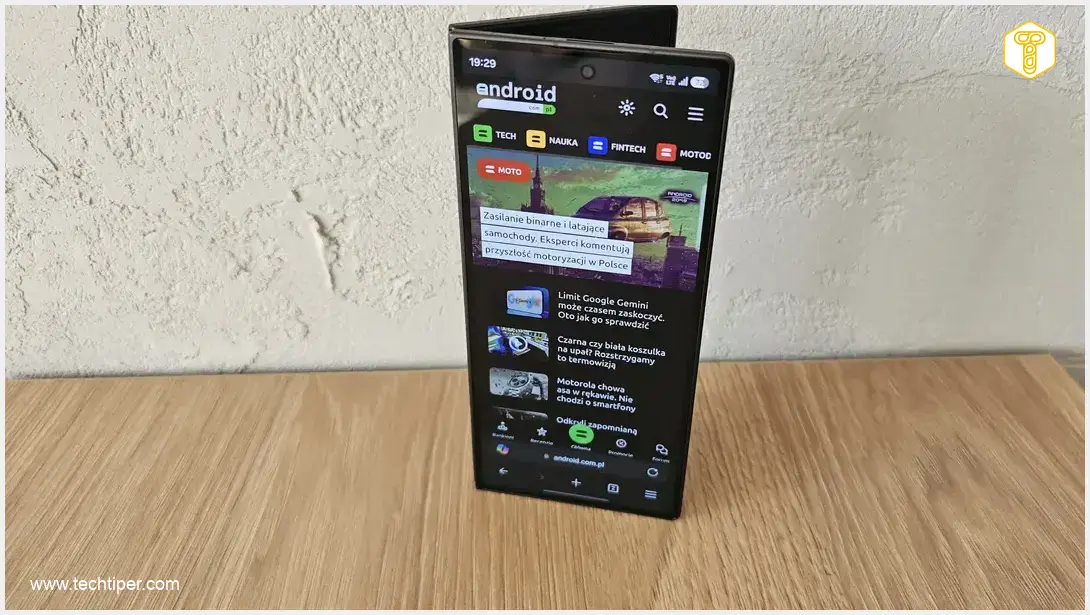
Galaxy Z Fold8 Ultra Review
-
Design and Displays
-
Performance (One UI 9)
-
Cameras
-
Battery Life
-
Overall User Experience
A truly extraordinary foldable with few compromises
The Galaxy Z Fold8 Ultra delivers an exceptional user experience with its refined design, fluid performance, and surprisingly good battery life. While the cameras have a caveat with zoom, it largely succeeds in being a premium, versatile device that “unleashes ‘geeky endorphins’.”
Advantages
- Premium, compact, and durable design (Flex Titanium, Gorilla Glass, Aluminum)
- Minimally visible inner screen crease
- Outstanding, fluid, and fast performance (One UI 9 with AI)
- Powerful and intuitive multitasking experience (like a full-fledged computer)
- Excellent main camera quality
- Longer-than-expected battery life
Disadvantages
- Limited telephoto zoom capabilities (only 3x optical, poor quality beyond 5x)
Contents
I Spent a Fortune on the Galaxy Z Fold8 Ultra. I Regret Nothing.
When the first whispers of the Galaxy Z Fold8 Ultra appeared online, it immediately caught my attention. Its official launch ultimately convinced me it was time to upgrade from my trusty Galaxy S23 Ultra to something newer. After just a few hours with this device, I feel like I’m holding something truly extraordinary – something that unleashes ‘geeky endorphins’ I haven’t experienced in a long time.
Design and Displays of the Galaxy Z Fold8 Ultra
My first interaction with the device after unboxing was, of course, grappling with its form factor. The Galaxy Z Fold8 Ultra feels incredibly “compact,” both when folded and unfolded. This immediately gives the impression of a solid, well-built device.
The technologies Samsung employed for the casing and display significantly impact its daily use. For example:
- Flex Titanium: This makes the inner screen more resistant to damage and generally more robust, a noticeable improvement over previous generations.
- Aluminum Frame: The device’s aluminum frame feels durable and appropriate for a premium foldable.
- Gorilla Glass Ceramic 3: Designed to strengthen the outer display, although I still decided to apply a Samsung screen protector for extra peace of mind.
- Gorilla Glass Victus 2: Reinforces the rear panel, which feels cool and matte to the touch.
How these technologies will hold up in practice remains to be seen; I’ll likely only be able to fully assess them after several weeks of use. However, my initial impression of the build quality and the internal screen’s opening mechanisms is very positive. Furthermore, I appreciate the sharp edges on smartphones, as they contribute to a more modern design aesthetic.
As a foldable device, the Galaxy Z Fold8 Ultra features two screens. The outer display is slightly narrower and shorter than those on standard smartphones (like my S23 Ultra), which translates to a subtly different experience in daily operation. The difference is palpable when holding it – it feels much more comfortable and secure in hand than a traditional Galaxy S23 Ultra (and I don’t have the smallest hands).
Although the image occupies a smaller surface area, this isn’t a hindrance, especially since the resolution and aspect ratio are excellent. The Home Up module from Good Lock further enhances this, allowing for even better space organization.
Regarding the inner screen, the presence of a subtle crease doesn’t bother me at all. In fact, I barely notice it – every time I unfold the device, I forget it’s even there. Samsung has significantly reduced its visibility compared to previous generations, and it’s only occasionally visible in specific use cases.

One UI 9 and Uncompromising Performance
The interface and performance deserve special attention – perhaps even a dedicated article. It would be unrealistic to expect an absurdly expensive device to run slowly. The Galaxy Z Fold8 Ultra feels like a device that doesn’t know the word ‘compromise.’ Everything here is fast, fluid, and instantaneous.
Switching between applications on the large internal screen feels like working on a full-fledged computer, not just a phone trying to imitate one. The multitasking capabilities I needed are finally intuitive – windows can be moved, merged, and split, and the entire interface responds with such fluidity it feels as if it anticipates every user gesture. This experience makes me ponder if classic smartphones are perhaps becoming too small, too limited, too… one-dimensional. Want to know more about the latest software features? Explore what’s new in One UI 9, multi-window, and AI cross-device functionalities.
Cameras with a Caveat
The cameras in the Fold series have often been a topic of discussion, with Samsung historically treating this line more experimentally than as a photographic powerhouse. In my previous articles, I’ve frequently criticized the manufacturer for neglecting the telephoto lenses in their foldables. Unfortunately, this situation remains unchanged. However, I can live with the fact that the Galaxy Z Fold8 Ultra offers only a 3x optical zoom – in contrast to the 10x zoom found in my Galaxy S23 Ultra, for instance.
While I’m no photography expert, I can confidently say that photos taken with the main camera are genuinely excellent. The quality of the zoom, however, at levels greater than 5x, leaves much to be desired.
Battery Life: A Pleasant Surprise
The biggest surprise, however, came from the battery. Even now, I can confidently say that with high activity, the Galaxy Z Fold8 Ultra lasts longer than I anticipated. A quick glance at my usage shows that after more than 2.5 hours of screen-on time, the battery indicator still showed 72%.
Thankfully, this isn’t a device you need to constantly recharge throughout the day – even intensive use of the large screen doesn’t send me scrambling for a charger. It feels as though Samsung has finally struck a balance between power, screen, optimization, and the device’s slimness. It’s not a revolution, but this particular improvement was the final factor that convinced me to make the purchase.
Why I Chose the Galaxy Z Fold8 Ultra
After just a few hours with the Galaxy Z Fold8 Ultra, it’s hard not to feel that Samsung has finally achieved what it has been striving for since the very first Fold: creating a device that genuinely delivers a positive user experience. Finally, the crease is practically invisible and doesn’t interfere with using the inner screen, and the battery life is precisely what one would expect from such a device.
Moreover, One UI 9 and its integrated AI capabilities make multitasking an undeniable strength of this hardware. The combination of all these aspects led me to choose this type of smartphone. So far, I don’t regret my decision, but it’s still too early for a definitive verdict.
For a deeper dive into upcoming foldable tech, check out our insights on Galaxy Z Fold 8 specifications leak and Samsung’s preparations for a foldable iPhone response.
Frequently Asked Questions (FAQ)
The Galaxy Z Fold8 Ultra features a compact, solid design, both folded and unfolded. Its outer display is slightly narrower and shorter than those on standard devices, making it feel more comfortable and secure to hold, even for users accustomed to larger phones like the S23 Ultra.
According to initial impressions, the crease on the inner screen of the Galaxy Z Fold8 Ultra is significantly minimized compared to previous generations. It is barely noticeable in most usage scenarios, making the internal display experience much more seamless.
The Galaxy Z Fold8 Ultra, running on One UI 9 with integrated AI, offers exceptionally fast, fluid, and instantaneous performance. Its advanced multitasking features, including the ability to move, merge, and split application windows on the large screen, provide a “full-fledged computer” like experience, making it highly intuitive for productivity.
While the main camera of the Galaxy Z Fold8 Ultra delivers excellent photos, its telephoto lens offers only a 3x optical zoom. This is a noticeable limitation compared to flagships like the S23 Ultra, which features a 10x optical zoom. The zoom quality at levels greater than 5x may leave users wanting more, though the main camera’s performance is strong.
Source: Original article by author.
Opening photo: Adam Lulek
About Post Author