Contents
Understanding Wireless Charging Costs: A Deep Dive into Power Consumption
Wireless charging offers unparalleled convenience – simply place your smartphone on a charging pad, and forget about tangled cables. However, a common perception suggests it’s a more expensive charging method, leading to higher electricity bills. To investigate this claim, we conducted an experiment to measure power consumption and examine the phenomenon more closely.
The Truth About Wireless Charging Efficiency
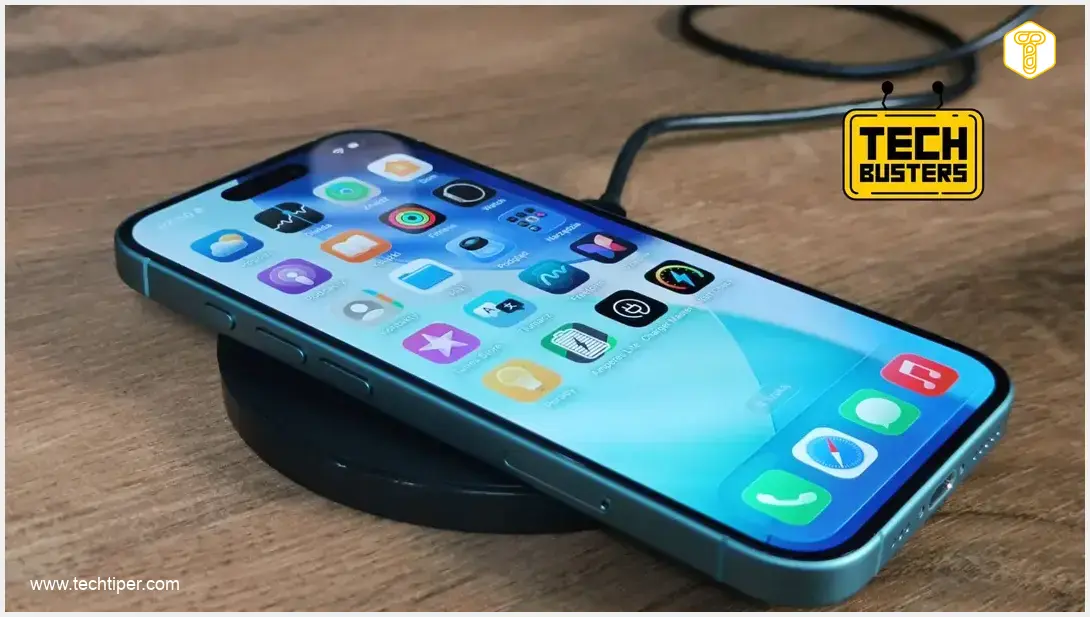
To perform this experiment, we needed a smartphone that supports both wireless and wired charging. Our choice was an iPhone 16, provided by a company specializing in refurbished smartphones, tablets, and laptops, all backed by at least a 12-month warranty.
With the smartphone and charger ready, our tester proceeded with the measurements. We utilized a Baseus 15W wireless charger, purchased independently, which included its own built-in wattmeter. It’s important to note that such a charger typically requires a Quick Charge (QC) 3.0 compatible adapter that can deliver at least 18W.
Our equipment revealed that the smartphone consumed approximately 10W during wireless charging. To further validate this, we used a thermal camera, which showed the entire smartphone and its surrounding area heating up. This indicated that the additional energy was simply dissipating into the air as heat, rather than being efficiently transferred to the device.
A second wattmeter, connected at the power outlet, confirmed these findings, indicating a total power draw of approximately 12W. This means that a consistent difference of about 2W was lost in the transfer process before reaching the smartphone.
Considering the energy loss, let’s look at the financial impact. If we assume that wired smartphone charging costs roughly 15 currency units annually, then wireless charging would add an approximate extra 3 currency units per year. While this is a small amount, it highlights the efficiency difference. For more tips on optimizing your phone’s battery life, consider exploring resources like improve-iphone-battery-life-settings.
Optimizing Your Wireless Charging Experience
The above findings do not suggest that wireless charging should be abandoned entirely. An additional 3 currency units per year for enhanced convenience is a minor expense for many. However, it’s crucial to keep a few key principles in mind to maximize efficiency and safety:
- If your phone case is not specifically designed for wireless charging, always remove your smartphone from the case before placing it on the charging pad.
- When charging with a case, ensure you remove any additional items like payment cards, magnetic strips, or other metal objects, as these can interfere with charging efficiency and potentially damage the items or the phone.
- Wireless charging is generally not ideal if you need to quickly power up your device. For rapid charging, it is always more efficient to use a traditional wired charger.
- It’s also important to match your wireless charger to your smartphone’s capabilities. For example, a high-end device like the Motorola Signature (2026) can support up to 50W wireless charging, significantly reducing charging times compared to lower wattage chargers. Similarly, ensuring charger compatibility is vital, as discussed in topics like samsung-galaxy-s26-ultra-charger-compatibility-issue.
Frequently Asked Questions (FAQ)
Our experiment showed that wireless charging can be slightly more expensive due to energy loss during the transfer process. However, the annual cost difference is generally minor, often just a few additional currency units per year, making it a small premium for the added convenience.
Yes, our thermal imaging revealed that wireless charging tends to generate more heat in both the phone and the charging area. This heat is a byproduct of energy dissipation, indicating that some energy is lost as heat rather than being converted into battery power.

It’s best to use phone cases specifically designed for wireless charging. Thick cases or those with metal components (like magnetic mounts, cardholders with cards, or kickstands) can hinder the wireless charging process, reduce efficiency, and potentially cause overheating or damage. Always remove such items or the case if it’s not wireless charging compatible.
Generally, yes. While advancements in wireless charging technology have significantly increased speeds, wired charging typically remains faster, especially for “quick charge” or “fast charge” technologies that directly deliver power with minimal loss. If speed is a priority, wired charging is usually the better option.
Source: Our own research. Opening photo: Krzysztof Rojek
About Post Author