

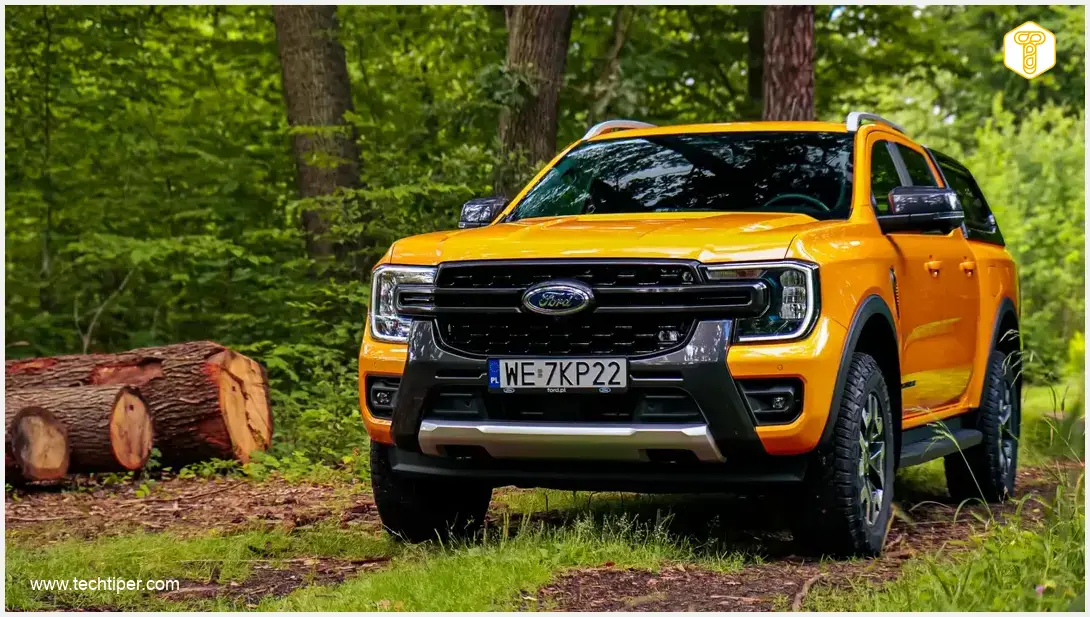
Ford Ranger PHEV Wildtrak Review
-
Driving Experience & Refinement
-
Performance & Powertrain
-
Off-Road & Practicality
-
Interior & Comfort
-
Infotainment & Tech
-
Fuel Economy & Range
A Refined, Capable, and Innovative Pickup
The Ford Ranger PHEV Wildtrak redefines the pickup segment with its exceptionally refined and comfortable driving experience, blending powerful hybrid performance with uncompromised off-road capability. It excels in practicality, offering features like the Pro Power Onboard system, a user-friendly SYNC4A infotainment system, and robust driver assistance. While its electric-only range is modest and long-term servicing considerations exist, it delivers competitive fuel economy and a sophisticated feel that sets it apart from traditional work trucks.
Advantages
- Exceptional operational refinement and comfort, akin to a passenger car.
- Uncompromised off-road prowess, payload (1 ton), and towing (3.5 tons) capabilities.
- Innovative Pro Power Onboard system, providing significant external power (up to 6.9 kW).
- Strong hybrid performance with impressive torque and competitive fuel economy for a pickup.
- User-friendly SYNC4A infotainment and comprehensive driver assistance systems.
- High-quality interior with practical design and good fit-and-finish.
Disadvantages
- Modest electric-only range (approx. 40 km) with limited dynamics, requiring frequent charging for optimal use.
- Slightly higher vehicle mass and reduced fuel tank capacity compared to non-PHEV models.
- Potential for higher long-term servicing costs due to hybrid system complexity.
- Some infotainment quirks like occasional audio interruptions and inefficient screen use for smartphone mirroring.
- Lacks advanced features like matrix LED headlights in this trim.
Contents
A New Era for Pickups: The Ford Ranger PHEV Wildtrak Review
The automotive landscape is constantly evolving, with electrification making its way into every segment, even the traditionally rugged pickup truck. We present a comprehensive review of the Ford Ranger PHEV (Plug-in Hybrid Electric Vehicle) in its Wildtrak trim. What makes this pickup truly exceptional and virtually unrivaled is its unique powertrain. Driven by the stringent emissions regulations and market demands, particularly in Europe, Ford decided to introduce an electrified version of its most popular model in this segment.
Traditionally, pickups have been synonymous with diesel engines, which are rapidly disappearing from passenger cars. The increasing electrification is already evident in commercial vehicles, making it a natural progression for Plug-in Hybrids to find their place. Ford is leading the charge, and we delve into what benefits and trade-offs come with choosing the Ranger PHEV. Join us for an in-depth exploration.
Ford Ranger PHEV: Pricing and Configurations
The Ford Ranger is available with three distinct powertrains:
- 3.0-liter V6 Diesel: 240 horsepower
- 3.0-liter V6 Petrol: 292 horsepower
- 2.3-liter R4 Plug-in Hybrid (PHEV): Combined 281 horsepower
Previously, a 2.0-liter diesel variant (170 horsepower) was available but was discontinued in the first half of 2026.
Engine Options and Available Trims
As of this review’s publication, the pricing (net, before discounts) for the Ford Ranger, considering six trim levels and two cab types, is approximately as follows (prices are illustrative and subject to regional variation):
Extended Cab (1.5):
- XLT (Diesel): ~190,000 currency units
Double Cab:
- PHEV:
- XLT: ~197,000 currency units
- Limited: ~220,600 currency units
- Wildtrak: ~234,600 currency units
- Platinum: ~249,700 currency units
- MS-RT: ~316,700 currency units
- Diesel:
- XLT: ~200,000 currency units
- Limited: ~223,600 currency units
- Wildtrak: ~237,600 currency units
- Platinum: ~252,700 currency units
- MS-RT: ~319,700 currency units
- Raptor (Petrol): ~322,600 currency units
It’s important to note that these are net prices and do not account for potential discounts, which can be substantial. Ford frequently offers promotions ranging from 33,000 to nearly 55,000 currency units, significantly altering the effective cost of a Ranger.
Warranty and Maintenance
The standard warranty for the Ford Ranger is 2 years, with unlimited mileage. The paintwork is covered for the same period, while the body panels are guaranteed against corrosion for 12 years. Additionally, Ford offers the Ford Protect package, which extends the basic warranty to 4 years or 200,000 kilometers, whichever comes first. The traction battery is typically covered for 8 years or 160,000 kilometers.

Understanding Ford Ranger PHEV Insurance Costs
According to insurance data providers, comprehensive insurance (including collision and liability) for a Ranger PHEV, for a driver with several years of experience, could be around 8,700 currency units annually, with basic liability coverage starting at approximately 720 currency units. These figures are illustrative and vary based on driver profile and region.
The reviewed Ford Ranger is a PHEV variant in the Wildtrak trim, which Ford positions as the optimal choice. Its starting price is approximately 234,600 currency units (net). Optional extras on the tested model included:
- Hardtop (rigid cargo bed cover with windows): ~17,200 currency units
- Cargo Package #3 (e.g., hard bedliner, two 230V outlets in the bed, one 230V outlet in the cabin – total 6.9 kW, auxiliary switch bank, cargo management system): ~8,900 currency units
- Cyber Orange special paint: ~3,700 currency units
- Fixed tow bar: ~2,100 currency units
- Bang & Olufsen 8-speaker audio system: ~2,000 currency units
With these options, the total net price for the reviewed Ranger was approximately 266,500 currency units, equating to just under 328,000 currency units gross (before discounts). Ford also offers other configurator options, such as additional anti-corrosion protection, smaller wheels with A/T tires, and various cargo bed accessories.
It’s worth noting that the tested vehicle predates recent pricing and equipment updates. Newer models may come with additional standard features, such as larger digital instrument clusters and Bilstein off-road suspension.
In-Depth Technical Specifications of the Ranger PHEV
Powertrain Details
Opting for the Ranger PHEV brings a 4-cylinder EcoBoost petrol engine under the hood, a unit familiar from models like the Ford Mustang, albeit in a slightly detuned version. Paired with an electric motor, this configuration delivers impressive torque, which is invaluable for a pickup. This setup offers the highest torque figure in the Ranger lineup, totaling a massive 697 Nm.
However, this comes with a slightly smaller fuel tank (70 liters compared to the standard 80 liters), as space is allocated to the traction battery. Theoretically, the Ranger PHEV can travel up to 45 kilometers on electric power alone. In practice, consistent electric-only driving requires regular charging. Additionally, be aware of slightly more frequent service intervals (15,000 km vs. 20,000 km for some other variants).
Off-Road Prowess and Practical Capabilities
Unsurprisingly, a sophisticated 4×4 system with a low-range gearbox is standard. Ford maintained its classic robust solutions in the PHEV Ranger, including a traditional driveshaft, ensuring no compromises in off-road capability. This extends to general off-road abilities, such as a wading depth of 80 cm.
Choosing the Wildtrak version means you get a pickup prepped for off-road adventures right out of the factory. This includes additional metal underbody protection for the engine and transmission, plastic protection for the fuel tank, an electronic rear differential lock, and a suite of dedicated off-road driving modes. Following recent pricing updates, the Wildtrak now also comes standard with Bilstein off-road suspension.
The overall dimensions of the Ranger are highly competitive among pickups, particularly the generous width between the wheel arches in the cargo bed. Furthermore, the PHEV system does not compromise payload capacity, despite the vehicle’s higher mass (approximately 300 kg heavier). The Ranger PHEV can still carry approximately one metric ton of cargo and tow a trailer weighing up to 3.5 tons.
The Evolution of the Ford Ranger: A PHEV Perspective
For a detailed history of the Ford Ranger, readers are encouraged to consult reviews of the Raptor version, another unique offering in the market. The Ranger’s diverse lineup contributes to its leadership in many markets; almost every other new pickup sold is a Ranger, catering to a wide range of needs beyond just a basic workhorse.
Ranger’s Market Dominance and the PHEV Innovation
The PHEV variant represents the most significant recent addition to the Ranger’s configurator. This powertrain debuted in 2025 as part of the sixth generation, which has been on sale since 2021. Ford immediately demonstrated that a Plug-in Hybrid doesn’t have to be a compromise; it remains a highly capable off-roader and commercial vehicle.
Moreover, Ford thoughtfully integrated additional ways to utilize electric power for daily work, beyond just propelling the wheels. Some of these features may require an additional cost, so it’s essential to consider them during configuration. The automotive market is seeing many interesting developments, such as the Toyota Corolla Cross GR Sport facelift addressing specific customer needs.
PHEV: A Game Changer in the Pickup Segment
The Ford Ranger is a D-segment pickup, and with the addition of a PHEV powertrain, it becomes a rarity in the market. No other manufacturer has introduced a similar plug-in hybrid pickup truck. If you forgo the electric powertrain, competitors include the closely related VW Amarok, Toyota Hilux, Isuzu D-Max, Jeep Gladiator, Mitsubishi L200, and KG Mobility Musso Grand. This evolution in automotive technology is fascinating, akin to comparing the new Opel Astra with its 64-year-old predecessor.
The Intuitive SYNC4A Infotainment System
Ford stands out for prioritizing clarity and user understanding of its infotainment system over excessive personalization. In a vehicle like the Ranger, this is an even greater advantage. The SYNC4A platform is well-regarded, with the only minor critique being occasional audio interruptions that suggest a need for further optimization.
One notable equipment change linked to recent pricing updates is the size of the digital instrument cluster. In the tested model, it measures 8 inches diagonally, whereas newer configurations feature a larger 12.4-inch panel. However, the central 12-inch display remains consistent across all versions, having become standard even in models below the Wildtrak trim where it was previously exclusive.
Central Display and Digital Cluster
Ford’s infotainment system only requires a driver profile connection for logical, specific functions. This means the manufacturer doesn’t impose unnecessary demands to fully utilize the SYNC4A platform. While not overly complex, it’s exceptionally well-documented, making operation entirely transparent.
The Ranger doesn’t default to a specific home screen; often, the first thing you’ll see is a prompt to connect a device. After a moment, a remembered smartphone will connect wirelessly, launching its external platform. Specific applications are displayed, selectable from a top dropdown bar or a bottom bar with popular shortcuts.
The Ford system includes a built-in owner’s manual, but the manufacturer also provides a QR code for reviewing it on a smartphone, offering a comprehensive solution. The integrated voice assistant is quite capable, though it primarily relies on a predefined list of commands.
User Experience and Practical Features
A dedicated section for climate control is always visible within the SYNC4A interface. Fortunately, Ford has retained a separate panel with physical buttons and dials for key climate functions, ensuring a highly practical setup. While software controls offer additional options, the most crucial ones are always within reach. As this is a PHEV, a simple configuration for scheduled pre-conditioning (parking climate) is also available.
One of the most significant conveniences in the reviewed Ranger is the Pro Power Onboard system, which provides three 230V outlets with a combined output of 6.9 kW. This allows users to power various external devices, including power tools. Managing this feature is straightforward and includes short-circuit protection.
The zone lighting feature is also highly appreciated, significantly improving external visibility when the vehicle is stationary. The comprehensive trailer management application further enhances utility. Other comfort modules (central locking, lights, windows, wipers, etc.) meet or exceed expectations; it’s rare for a pickup to offer such a range of switches and controls.
Connectivity and Audio
Ford has not skimped on connectivity, including a 4G (LTE) module on board, allowing the internet to be shared via a Wi-Fi hotspot in the cabin. The system can also connect to external networks for software updates, for example. No additional applications were found within SYNC4A beyond its core functionalities.
The tested Ranger featured the most advanced audio system Ford offers for this model, bearing the B&O logo and including an additional subwoofer. The sound quality is quite good, but it’s important to consider the context of a pickup, where wind resistance and tire noise are factors. Therefore, within its segment, the audio quality is excellent, though in absolute terms, it’s simply competent.
Seamless Navigation and Smartphone Integration
Ford’s built-in navigation system is generally easy to use, but delving deeper into its menus reveals many additional functions. While not all are updated in real-time (e.g., speed camera alerts), it’s clear that Ford aimed to distinguish its offering. The map database and route guidance are reliable.
Due to the vertical orientation of the central screen, Android Auto and Apple CarPlay do not occupy the entire display area. After a wireless and seamless connection, the top and bottom sections of the native interface remain visible. Additional integration is limited to displaying navigation prompts on the digital instrument cluster.
The Customizable Digital Instrument Cluster
The tested Ranger featured an 8-inch digital instrument cluster, which has since been superseded in newer models by a larger 12.4-inch display (as seen in the Ford Ranger Raptor review). While the information presented on the smaller screen is more condensed, it remains legible. Fixed gauges and warning lights are present on either side of the display.
Available themes allow you to display or hide a circular tachometer. The same applies to widgets, which are quite extensive. Other views on the Ranger’s digital cluster include trip summaries. Ford also uses this screen independently of the central display for selected vehicle settings, particularly driving modes.
The aforementioned widgets are very comprehensive, offering various onboard computer displays and a range of secondary information. Ford not only allows their display (with personalization) but also their management. This means you can control multimedia (including source selection), make calls, manage navigation, and more.
Additionally, many contextual pieces of information are displayed. A standout feature for the Ranger PHEV is its eco-coach, which provides sensible guidance on acceleration and braking. This is essentially the only way to optimize fuel consumption, for example, by understanding the recuperation system’s operation. Unfortunately, a dedicated energy flow indicator is absent.
Inside the Wildtrak: Comfort Meets Practicality
Many perceive pickups as purely utilitarian vehicles, where comfort and premium materials take a back seat. While the tested Ford Ranger isn’t exceptionally luxurious, it clearly aims to offer more than just a crude cabin. Crucially, its practicality remains uncompromised, proving to be excellent.
The interior primarily utilizes hard plastics, but soft-touch inserts are present, and the fit-and-finish is excellent. Colored accents are used sparingly but effectively break up the predominantly dark interior.
Premium Touches and Smart Design
The keyless entry system is also present in the Ranger. Ford has cleverly integrated sensors into the front door handles; simply grabbing a handle with the key in your pocket will unlock the vehicle. Locking is done by touching visible indentations.
Significantly, the tailgate is integrated into this system, eliminating the need for a separate key to unlock it. This even applies to the optional hardtop. It’s a truly comprehensive approach, highlighting the convenience of factory-integrated solutions.
First-Row Experience: Ergonomics and Comfort
While entering a pickup might seem challenging, it’s surprisingly easy in the Ranger. Shorter individuals can use the integrated side step and the grab handle on the A-pillar to comfortably get into the front row. The doors open wide, offering unimpeded access.
The door panel features convenient buttons and a mechanical door handle hidden in the grip. This ensures good usability, and the finish is pleasant to the touch. Soft-touch inserts are present, along with a storage compartment large enough for a sizable bottle and small items.
Seating and Steering Wheel
Regardless of the Ranger’s trim level, comfortable seats are a given. Differences between specific versions primarily concern materials, adjustment mechanisms, and overall design. In the Wildtrak, for example, orange accents are featured. The seats and backrests provide good lateral support—for a pickup—and a well-balanced cushioning, ensuring long journeys remain comfortable.
Base Ranger models feature manual (6-way) seat adjustment, but the Wildtrak offers electric motors for the driver’s seat, including lumbar support adjustment. The passenger seat has basic (4-way) manual adjustment, but both front seats are heated (3-stage). Higher trim levels offer electric adjustment for the passenger, additional forms of adjustment (10-way), and ventilation.
The steering wheel is a prime example of practical layout combined with a comfortable, leather-wrapped rim. It features subtle contours and accent stitching, and is heated (1-stage). Manual two-way adjustment allows for an ideal driving position.
The physical buttons and switches on the steering wheel are a classic Ford setup, which is highly user-friendly. The left section controls the cruise control, while the right manages the digital instrument cluster. The lower rows are dedicated to multimedia control.
Convenient Controls
Another highly convenient feature is the standard external lighting panel, located near the driver’s left knee. Above it, a retractable cup holder is found. On the opposite side, the engine start button is prominently placed.
The Feature-Rich Dashboard
The Ranger’s dashboard in the Wildtrak trim, with its specific badging and soft-touch inserts, clearly indicates it’s more than just a basic work pickup. Everything is well-assembled, with no creaks even when driving off-road. Practicality is also excellent, with many clever solutions.
Before even examining the dashboard, you’ll notice the visible heating elements in the windshield for quick defrosting. On the A-pillars, grab handles assist entry into the front row, and B&O branded speakers are present.
The central part of the dashboard is dominated by the vertical display. Fortunately, a classic panel with physical buttons and dials for basic climate control and volume adjustment is located beneath it.
Central Console and Storage Solutions
The center console begins with a wireless charging pad featuring a rubberized surface to keep smartphones secure. Alongside it are two USB ports: one Type-A and one Type-C. Below these is a small storage area, with a larger longitudinal compartment further back that can also hold a phone.
Next is the gear selector, with three buttons on its side for manual gear changes. Two sizable cup holders are positioned nearby. Further back, a comprehensive rotary dial with buttons allows selection of the drive mode.
The armrest is wide, though its length could be extended as its fixed position might not suit shorter drivers. Opening it reveals a simple, removable organizer and a spacious compartment with a 12V outlet.
In front of the passenger, there are two glove compartments—a standard one and an upper one—with a rubberized shelf and retaining walls between them. The passenger can also extend an additional cup holder, mirroring the one on the driver’s side.
The overhead console offers further conveniences, including an opening glasses holder and a series of auxiliary switches for accessories (optional equipment). An auto-dimming rearview mirror is included, though its visibility is somewhat limited. However, the hardtop on the bed is glazed, meaning a rearview camera is essential.
Comfortable and Functional Second Row
Opening the rear doors reveals a noticeably smaller aperture, but entry into the back seats is still good, thanks to the step and grab handle on the B-pillar. The door panel maintains the quality finish seen in the front row. While ambient lighting is absent, automatic windows are a welcome feature, which were surprisingly missing even in the Raptor.
At first glance, the rear bench of the tested Ranger PHEV Wildtrak doesn’t seem significantly different from those in conventional passenger cars. However, closer inspection reveals additional features like storage compartments under the seats, which can be locked in an open position.
The second row comfortably accommodates passengers up to approximately 1.9 meters tall. Taller individuals may find legroom limited. A third, smaller person can fit in the middle, but they will find the transmission tunnel and protruding console somewhat intrusive.
In addition to the under-seat storage, the Ford Ranger’s rear bench offers seat-back pockets, an armrest with two cup holders, various hooks, and Isofix child seat mounts. Centrally, there are additional air vents paired with two USB ports (Type-C and Type-A), as well as a 230V outlet. This last outlet, part of the Pro Power Onboard generator, can deliver up to 2.3 kW instead of the standard 400W, though this is an optional configuration.
Comprehensive Lighting System
Upon unlocking the Ranger (or even approaching it), powerful projectors in the side mirrors immediately activate, effectively illuminating the entire sides of the pickup. Furthermore, an additional light source at the rear brightly illuminates the cargo bed area. Individual zones can be managed independently via the software (zone lighting feature).
The cargo bed with its additional hardtop also benefits from ample lighting. It’s a minor oversight that the charging port isn’t illuminated (apart from the plug release button).
Inside, strong main lighting is provided, primarily focused on the first row. The second row is slightly dimmer, and there’s no sophisticated ambient lighting—just a basic blue illumination, with brightness being the only adjustable parameter.
The Versatile Cargo Bed with PHEV Advantages
The cargo bed of the tested Ranger featured a hardtop rather than a roll-up cover, theoretically allowing for more cargo volume under cover. This particular hardtop is notable for its glazing, which can be opened (left side slides, right side tilts), providing more light. A significant advantage is its full integration with Ford’s systems, including central locking.
Regarding the tailgate itself, the only minor criticism is the absence of dampers that would allow it to lower gently; caution is needed to prevent it from dropping too quickly. However, its integration with central locking, which is not always a given, and the additional tie-down points and zone lighting are significant benefits.
Hardtop and Tailgate Convenience
The Ford Ranger’s cargo area is considered one of the best in the pickup market, with minimal intrusion from the wheel arches. Additionally, Ford offers a range of optional mounting solutions, including rail systems. The bed itself is lined with a rough-textured material that reduces item slippage and is designed for durability.
Power and Practicality for the Job Site
Among the unique features available exclusively in the Ranger PHEV, though at an additional cost, are two 230V outlets, each delivering 3.45 kW. This allows for powering most power tools and other equipment.
Naturally, the pickup retains its towing capabilities. Despite being a Plug-in Hybrid, the optional tow bar allows it to tow up to 3.5 metric tons.
Driving the Ford Ranger PHEV: A Unique Experience
If you’re looking for a noisy, uncomfortable workhorse, the tested Ford Ranger PHEV is certainly not it. The introduction of electrification combined with a passenger car-derived petrol engine makes it one of the most comfortable pickups on the market. Crucially, the suspension remains excellent, providing appropriate comfort without compromise.
Refined Comfort and Steering Dynamics
Let’s start with the steering system, which has to contend with large wheels and off-road tires. Its assistance is exceptionally high, making maneuvering very light. While this impacts steering precision and there’s no option to stiffen the power steering, it’s a beneficial solution that one quickly adapts to. The turning circle remains acceptable, at approximately 13 meters.
The suspension in the tested model was not the off-road Bilstein variant, which Ford has, by the way, completely discontinued after refreshing its price list. Nevertheless, this is not a drawback, as the Soft-Ride shock absorber setup is commendable for everyday driving. It offers greater comfort, albeit with a minimal trade-off in extreme off-road performance. However, dedicated off-road enthusiasts would likely replace components to increase ground clearance anyway.
Undiminished Off-Road Performance
While the Ranger PHEV can be considered a comfortable pickup for daily driving on paved roads, this doesn’t mean Ford has stripped it of its off-road capabilities. On paper, it boasts the same parameters as other powertrain versions, including various suspension types, a rear differential lock, and a fully capable 4×4 system with a low-range gearbox.
In practice, the Ranger PHEV proves highly capable off-road, with no issues of unpredictable engine behavior. The software effectively utilizes the immense torque, and the transmission performs smoothly. In fact, power delivery can be quite precisely modulated in manual mode.
Of course, the higher mass will have consequences, such as quicker sinking on soft surfaces. Even a winch will have to work harder in critical situations. Nevertheless, the practical difference is not drastic, though it is a factor to consider.
Dynamic Performance: A Departure from Traditional Pickups
Ford has assembled the Ranger’s hybrid powertrain from the following components:
- 2.3-liter turbocharged 4-cylinder petrol engine: 190 horsepower (412 Nm)
- Electric motor: 102 horsepower
The combined system output is 281 horsepower and a massive 697 Nm of torque, transmitted to all four wheels via a 10-speed MHT transmission. The 4×4 system allows selection of rear-wheel drive (2H), or both axles with (4L) or without (4H) the low-range gearbox. Importantly, an automatic 4×4 mode (4A) is also available.
Powertrain and Acceleration
On paper, the tested Ford Ranger PHEV accelerates from 0 to 100 km/h in 9.2 seconds. This is a conservative estimate, as tests consistently achieved times around 8.7 seconds. Even with a depleted traction battery, a sub-nine-second acceleration is achievable.
As a point of interest, we also tested how long the Ranger PHEV takes to reach 100 km/h using only electric power. The available just over 100 horsepower propels the 2.5-ton pickup to this speed in… 28 seconds. This clearly illustrates that the electric motor primarily serves as an augmentation to the internal combustion engine rather than a sole propulsion source for high-speed performance.
Driving Modes and Hybrid Operation
Ford offers conventional driving modes: Eco, Normal, and Sport. The differences between them are subtle, mainly affecting throttle response. Additionally, there’s a towing mode and a range of off-road-specific options. In these modes, changes in powertrain behavior are noticeable, as the Ranger automatically engages 4×4.
A separate category comprises the hybrid driving modes. Alongside the automatic setting, you can force maximum priority for electric power, reduce electric usage to save energy, or charge the traction battery using the internal combustion engine. The latter option is generally inefficient, while the former allow tailoring power consumption to your planned route.
Interestingly, these modes can be synchronized with Clean Transport Zones (e.g., low-emission zones). Ford’s software can automatically switch to electric-only mode when entering such zones. Moreover, this system can also automatically change drive settings from 2H to 4A.
Refined Driving Experience
The first thing that distinguishes the Ranger PHEV during driving is its exceptionally high level of refinement. This is not a typical, utilitarian pickup with excessive noise and vibration. While not on par with passenger cars, the tested vehicle leans far more towards that experience than a rugged work truck.
Consequently, the cabin is remarkably quiet, with tire noise being the primary sound source. You’ll feel when the engine starts and revs up, but it’s not irritating. The 10-speed transmission also performs well, operating smoothly with barely perceptible gear changes.
In daily driving, the excellent smoothness and eagerness for dynamic driving are particularly appreciated. The abundant torque is palpable, making it relatively easy to break traction, especially with an empty bed and rear-wheel drive (2H). The Ranger PHEV has a zest that is readily apparent.
Even outside urban areas, there’s no sensation of lacking power. For a pickup, these are exceptional sensations, making you feel like you’re driving a conventional passenger car. You won’t excessively complain about noise; it’s only marginally louder than standard passenger cars (due to air resistance), but still comfortable. This represents a significant advantage of the PHEV over diesel engines.
Electric-Only Mode and Regenerative Braking
Driving on electric power alone is possible, but it comes with limited dynamics, making it best suited for urban environments. Outside the city, the electric motor clearly struggles, even though it can theoretically propel the Ranger to about 120 km/h. However, remember it takes half a minute to reach 100 km/h, consuming a significant amount of energy.
Therefore, the optimal approach is to regularly charge the battery and drive in hybrid mode, which yields the best dynamics and lowest fuel consumption. For the Ranger PHEV, electric-only driving is occasional, with the internal combustion engine needed for efficient and comfortable travel. Indeed, the software quickly switches to the petrol engine when more power is required.
Despite the reviewed pickup being a Plug-in Hybrid, Ford has not implemented an advanced regenerative braking system. The software merely indicates how much energy was recovered during braking, which is useful, but there’s no option to adjust the deceleration force when lifting off the accelerator. It also feels as though the Ranger brakes slightly harder when cruise control is active but not engaged. Regardless, the difference is not spectacular.
Fuel Economy, Energy Consumption, and Range
Battery and Fuel Tank Specifications
When choosing the Plug-in Hybrid Ranger, Ford had to reduce the fuel tank size; the tested model’s tank holds 70 liters (compared to 80 liters in non-PHEV models). Alongside the petrol, there’s a traction battery with a capacity of 11.8 kWh (net, 16 kWh gross)—a modest size given the vehicle’s scale and the overall PHEV market. During the following measurements, the ambient temperature was approximately 25 degrees Celsius, and there was an additional ~200 kg load in the bed.
Real-World Fuel Consumption
In urban driving, the Ranger in hybrid mode (with a discharged traction battery, 2H drive) can achieve relatively low fuel consumption with gentle driving. The most frequent result achieved was 8 L/100km (estimated range: ~870 km), which is considered very good. It’s beneficial to approach acceleration sensibly and plan gentle braking effectively.
If you’re not in a hurry and not impeding traffic, you can achieve figures around 6.7 L/100km (estimated range: ~1040 km) on the onboard computer. However, in heavy traffic or with dynamic driving, consumption can easily reach 13 L/100km (estimated range: ~530 km).
When driving outside urban areas, which is a common scenario for the Ranger, expect fuel consumption of 6.2 L/100km (estimated range: ~1120 km) at an average speed of 80 km/h. On gentle descents, the Ford readily switches to electric-only mode. On highways, the following figures were obtained:
- 100 km/h: 6.8 L/100km (estimated range: ~1020 km)
- 120 km/h: 9.4 L/100km (estimated range: ~740 km)
- 130 km/h: 10.1 L/100km (estimated range: ~690 km)
- 140 km/h: 10.7 L/100km (estimated range: ~650 km)
Undoubtedly, the Ranger PHEV can compete favorably with efficient diesels, offering better dynamics and refinement. Compared to the Raptor, the significantly lower fuel consumption will be a notable saving. Overall, the hybrid system positively impacts petrol consumption. As almost always with Ford, the capless fuel filler is a convenient feature at the pump.
Electric Range and Charging
While driving the Ranger on electric power alone is not its primary strength, Ford states an official electric range of 45 km without engaging the internal combustion engine. During tests, 40 km was achieved, which is acceptable given the modest battery and the vehicle’s size. However, this applies mainly to urban driving. On the open road or in lower temperatures, expect a significantly reduced range, possibly half of this figure.
Despite the relatively small battery cells, charging still takes some time—approximately 4 hours. This is because the maximum charging power via a Type 2 connector is 3.6 kW. Thus, leaving the Ranger PHEV connected to a standard 230V household outlet overnight is sufficient to fully replenish the battery.
Advanced Driver Assistance Systems in the Ranger PHEV
Almost every Ford vehicle gains favor due to its sophisticated driver assistance systems and, more importantly, the manufacturer’s approach to explaining the function of each option. From a driver’s perspective, everything is well-understood, and there’s a generous number of physical controls. This is particularly impressive for a pickup, a segment where such high expectations for advanced tech aren’t always present.
Intelligent Driving Aids
The traffic sign recognition system in the Ranger is audible, partly due to the relative quietness of the cabin. A chime sounds when exceeding the speed limit, which is not overly irritating. However, it can occur frequently because Ford’s implementation also considers signs from side roads.
Pickup mirrors must be large yet fit within the vehicle’s overall dimensions. Ford has maximized visibility during Ranger maneuvers with appropriately sized mirror surfaces. Additionally, effective blind-spot monitoring (and cross-traffic alert) sensors are included.
Moving to cruise control, the PHEV powertrain can significantly enhance this feature. Only in this configuration is Ford’s most advanced, intelligent variant available. This refers to an adaptive and predictive cruise control system, which was present in the tested model. It utilizes information from road signs to set speeds and slow down before curves.
The system generally performs well, especially its fundamental function of reacting smoothly to other road users without unnecessary jolts. Acceleration is also positively assessed, considering the vehicle’s overall mass. Furthermore, the Ranger can brake relatively late, often later than a driver might manually. The Stop&Go function is standard, completing the package.
Similarly, there’s no need to pay extra for the lane-keeping assist. The Ranger effectively identifies and maintains its lane. Only on straight roads does Ford’s implementation sometimes require gentle steering inputs to confirm the driver’s hands are on the wheel.
Lighting and Visibility
The tested Ranger Wildtrak features full LED headlights, including LED fog lights that actively illuminate corners. The beam pattern is excellent, boasting impressive spread and range for a pickup. Its brightness and fill are also noteworthy.
The only missing feature for complete satisfaction is a segmented high beam mode (matrix LEDs). These are available in higher trim levels, along with a swivel beam. The reviewed model only features automatic high beam switching, which works reasonably well.
Parking and Maneuvering Assistance
In pickups, all forms of maneuvering aids are invaluable. It’s commendable that Ford equips all Rangers with a rearview camera and parking sensors (front/rear), and the Wildtrak trim includes a 360-degree camera system as standard. The quality of the camera feeds is positive, ensuring potential obstacles are visible in all conditions.
It’s a slight missed opportunity that Ford hasn’t fully utilized the vertical screen; for instance, the bird’s-eye view is unnecessarily reduced in size. Nevertheless, there’s a wide variety of view configurations, including specific options for trailer hook-up. However, navigating through them requires several clicks to select the most relevant view.
Final Verdict: Ford Ranger PHEV Wildtrak
Concluding our review of the Ford Ranger PHEV Wildtrak, the application of a hybrid powertrain results in a pickup with exceptionally high operational refinement, significantly enhancing travel comfort. Crucially, no other aspect—such as payload capacity or off-road capability—is compromised, indicating a comprehensive approach by the manufacturer. Furthermore, this variant offers potential fuel savings and the ability to export power for external tools. Interestingly, the purchase price for the PHEV can be lower than comparable diesel versions.
The inherent advantages of the Ranger over other pickups remain consistent. These include a practical interior that is far from utilitarian, a very user-friendly infotainment system, and equally robust driver assistance systems. In terms of overall utility and specifications, the Ford Ranger continues to impress positively.
On the other hand, the Ranger should not be treated as a typical Plug-in Hybrid vehicle. Driving purely on electric power significantly limits the vehicle’s dynamics, and the electric-only range is not particularly extensive. Therefore, it’s a hybrid that benefits from regular charging but should continuously utilize its internal combustion engine for optimal performance. Moreover, it’s important to consider that long-term servicing costs may be higher compared to traditional powertrains.
Frequently Asked Questions (FAQ)
The Ford Ranger PHEV offers a significantly more refined and comfortable driving experience than traditional diesel pickups. Its hybrid powertrain reduces noise and vibration, making it feel more akin to a passenger car. The immediate torque from the electric motor also contributes to a smoother and more dynamic acceleration, a notable improvement over typical workhorse diesels.
Beyond fuel efficiency, the Ranger PHEV’s standout feature is the Pro Power Onboard system, which provides multiple 230V outlets with a combined output of up to 6.9 kW. This allows users to power various external devices and power tools directly from the vehicle, turning it into a mobile generator for work sites or outdoor activities. It also offers the capability for limited electric-only driving in urban areas.
No, the Ford Ranger PHEV is engineered to retain its robust off-road capabilities and high payload capacity. Despite the added weight of the battery, it maintains the same impressive wading depth, 4×4 system with low-range gearing, and a payload capacity of approximately one metric ton. Towing capacity remains at 3.5 metric tons, ensuring no compromise on its utility as a work truck or adventure vehicle.
While the official electric-only range is 45 km, real-world testing shows about 40 km in urban conditions. This range is best utilized for short city commutes to minimize fuel consumption. For longer journeys or dynamic driving, it’s recommended to use the vehicle in hybrid mode, ensuring the battery is regularly charged. The electric motor primarily acts as a powerful assist to the petrol engine, offering significant torque and smoothness.
Yes, potential long-term ownership considerations include slightly higher servicing costs due to the complexity of the hybrid system compared to traditional powertrains. While initial purchase prices might be competitive or even lower than some diesel variants (especially with incentives), the added components of the PHEV system could lead to increased maintenance expenses over time. However, this is often offset by fuel savings and environmental benefits.
Source: Own elaboration. Opening photo: Lukasz Pajak
About Post Author
