

Contents
JCB Hydromax Sets New World Speed Record for Hydrogen Power
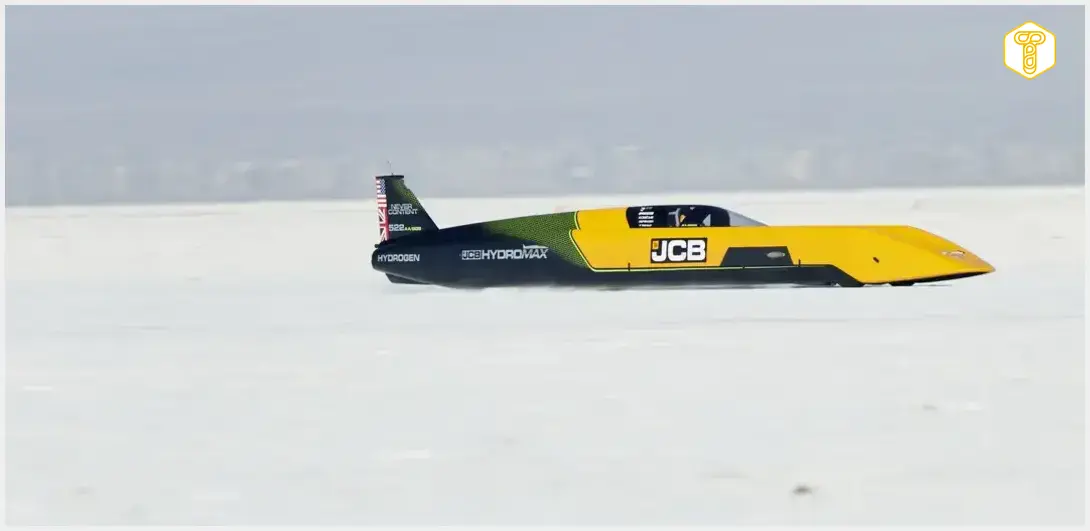
A new chapter in sustainable automotive engineering has been written as the JCB Hydromax, a hydrogen-powered vehicle, has achieved a world record for speed. This remarkable feat, reaching an average of over 600 kilometers per hour (km/h) across two timed runs, demonstrates the cutting-edge capabilities of hydrogen internal combustion engine technology.
Unprecedented Speed on the Bonneville Salt Flats
The record-breaking attempt took place on the iconic, dried-out surface of Utah’s Bonneville Salt Flats in the United States. There, the JCB Hydromax not only pushed the boundaries of speed but also exceeded its own expectations, hitting an astonishing peak speed of 645.75 km/h (approximately 401.25 mph). The official world record, however, is certified based on the average speed calculated from two runs completed within an hour, ensuring accuracy and overcoming environmental variables.
At the heart of the Hydromax are two formidable 4.8-liter turbocharged engines, each delivering an impressive 800 horsepower (HP), culminating in a colossal total output of 1600 HP. What sets this vehicle apart is its nearly emissions-free operation, with its hydrogen combustion engine primarily emitting water vapor, offering a glimpse into a greener future for high-performance vehicles.
Andy Green: The Man Behind the Wheel
Piloting the JCB Hydromax during its historic runs was none other than Andy Green, a name synonymous with land speed records. Green is globally renowned for holding the outright land speed record, achieved in 1997 with the ThrustSSC, reaching an astounding 1,227.985 km/h (763.035 mph). His expertise and nerve were crucial in guiding the hydrogen-powered machine to its new world record.
Dual Milestones: Hydrogen Internal Combustion Engine and Fuel Cell Records
The JCB Hydromax’s achievement marks a significant milestone specifically for hydrogen internal combustion engine (ICE) vehicles, setting a new world record for the fastest hydrogen ICE car. This demonstrates the incredible potential of burning hydrogen directly in an engine, similar to how traditional gasoline engines operate, but with dramatically reduced emissions.
It’s important to distinguish this from hydrogen fuel cell vehicles, which generate electricity through an electrochemical reaction between hydrogen and oxygen, powering an electric motor. While the Hydromax champions hydrogen ICE technology, the broader hydrogen automotive sector has seen other records, including a top speed of 487 km/h (approximately 302.6 mph) for hydrogen fuel cell cars, showcasing the diverse applications of hydrogen as an automotive fuel source.
Hydrogen’s Potential in Motorsport and Beyond
The demonstration of hydrogen power by vehicles like the JCB Hydromax could be a game-changer for the future of motorsport. Hydrogen-fueled vehicles are already making appearances in various racing events, with examples such as the Toyota GR Corolla H2 showcasing the viability of this fuel in competitive environments. These advancements signal a shift towards more sustainable racing, proving that high performance doesn’t have to come at the expense of the environment.
However, broader adoption of hydrogen vehicles, whether ICE or fuel cell, still faces challenges, including infrastructure development and consumer acceptance. Understanding these hurdles is crucial for the future of sustainable transportation. For an interesting perspective on the real-world challenges of hydrogen vehicle ownership, read about a Norwegian couple’s struggles to sell their hydrogen car.
Toyota’s Hydrogen Journey: Innovations and Challenges
Toyota has been a prominent pioneer in hydrogen vehicle technology, actively developing and campaigning hydrogen-powered cars, including those for potential racing applications. Their commitment to this alternative fuel source is evident through various projects.

However, the journey has not been without its bumps. Toyota previously faced a significant class-action lawsuit amounting to approximately $5.7 billion (USD). The lawsuit alleged that the company deliberately concealed defects in its hydrogen-powered vehicles, which reportedly led to long-term engine damage. This highlights the complex technical and regulatory challenges involved in bringing new, advanced technologies to market.
As the automotive industry continues to evolve, integrating advanced technologies like hydrogen power and artificial intelligence becomes paramount. Tools like ChatGPT, Apple CarPlay, Android Auto, and Gemini are transforming the in-car experience, showcasing the broader technological shifts impacting vehicle design and functionality.
Frequently Asked Questions (FAQ)
A hydrogen internal combustion engine (ICE) vehicle burns hydrogen fuel directly in a modified engine, similar to how gasoline or diesel engines work, but primarily emitting water vapor. A hydrogen fuel cell vehicle, on the other hand, uses a fuel cell to convert hydrogen and oxygen into electricity, which then powers an electric motor, similar to an electric car but with on-board electricity generation.
The JCB Hydromax set its speed record on the Bonneville Salt Flats in Utah, United States. This location is famous for hosting numerous land speed record attempts due to its vast, flat, and hard surface.
The primary environmental benefit of hydrogen-powered vehicles, particularly those using hydrogen internal combustion engines or fuel cells, is their near-zero tailpipe emissions. When hydrogen is used, the main byproduct is water vapor, significantly reducing greenhouse gas emissions and air pollutants compared to traditional fossil fuel vehicles.
Despite their environmental benefits, hydrogen cars face several hurdles to widespread adoption. These include the high cost of hydrogen production and storage, limited refueling infrastructure, and consumer unfamiliarity or concerns about safety and resale value. Overcoming these challenges is crucial for hydrogen vehicles to become a mainstream option.
Source: InsideEVs. Opening photo: JCB press materials
About Post Author
