Contents
The New Foldable Samsung Reaches Its Limit: Galaxy Z Fold8 Ultra Fails Brutal Durability Test
For several years, Samsung has consistently demonstrated that foldable smartphones can be both remarkably thin and surprisingly resilient. However, the introduction of the latest Galaxy Z Fold8 Ultra has shown that even with cutting-edge technology, there remains a critical threshold that users should be careful not to exceed.
The Galaxy Z Fold8 Ultra’s Durability Threshold
This year’s lineup of Samsung’s foldable smartphones brought several new devices, but the Galaxy Z Fold8 Ultra naturally garnered the most attention. It stands as the most advanced and, concurrently, the most expensive model in the entire family. Its design has been slimmed down to an impressive 4.1 mm, a remarkable feat of engineering. However, a recent durability test reveals that such slenderness comes with its own set of vulnerabilities.
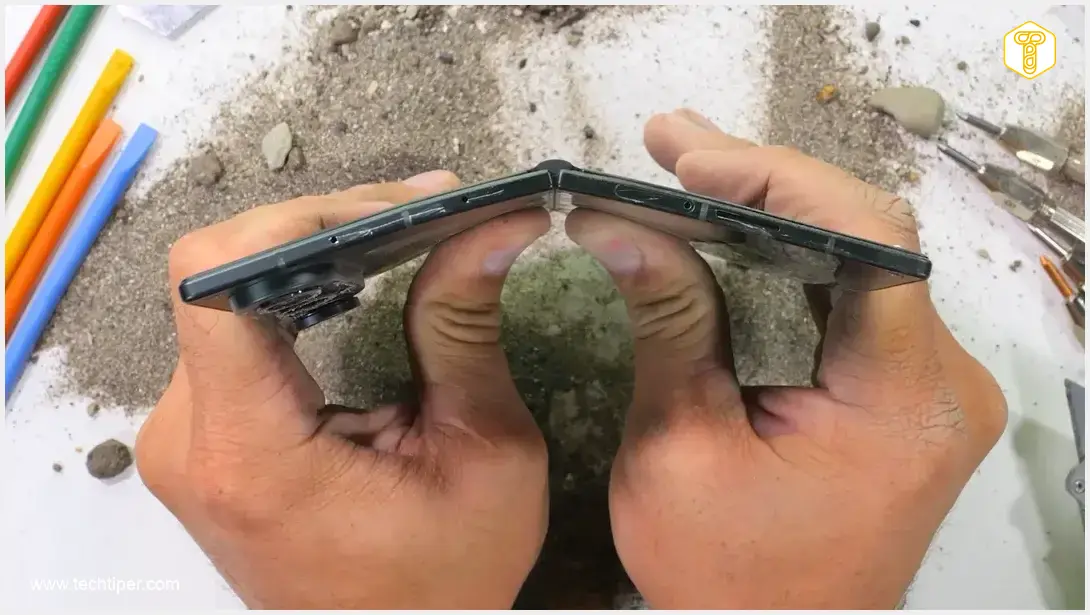
The device landed in the hands of Zack Nelson, the creator of the popular YouTube channel, JerryRigEverything. While his phone bending tests are not designed to replicate typical daily usage, they are invaluable for pinpointing specific structural limitations within a device. In the case of the Galaxy Z Fold8 Ultra, the outcome was particularly disheartening.
The Display Couldn’t Withstand the Reverse Bend Test
During the extreme experiment, the phone itself did not catastrophically break apart in the same manner as the Google Pixel 11 Pro Fold did previously. However, the critical issue emerged after the device was bent in the opposite direction to its intended design. Despite incorporating titanium reinforcements, the flexible AMOLED screen ceased to function after the test, remaining completely black. This incident underscores the ongoing challenge of balancing innovative design with practical resilience, a challenge that companies across the industry are continually addressing. For instance, reports and specifications leaks often highlight the intense competition and development in this space, as manufacturers strive to outdo each other while ensuring device robustness.
In practical terms, a black screen typically implies a potentially expensive repair. While it’s unlikely that an average user would deliberately attempt to bend their unfolded phone backward, this test serves as a stark reminder that ultra-thin designs demand greater caution than conventional smartphones. Even an unusual amount of pressure applied to an unfolded device could lead to serious consequences. It also brings to mind past instances of foldable phones facing unique durability challenges, such as unexpected damage to earlier models like the Galaxy Z Flip, demonstrating that hinge mechanisms and flexible displays are continuously evolving areas of improvement.
This outcome does not, however, mean that the Galaxy Z Fold8 Ultra is inherently fragile. The test was extreme, and the device did endure a significant amount of stress. Nevertheless, it’s crucial for owners of foldable smartphones to be mindful of situations where the screen or hinge might be subjected to unusual stress or strain.
Dust and Sand Remain Foldable Phones’ Adversaries
The test also brought attention to another factor that is significant for daily device use. Foldable smartphones still require more care when exposed to dirt and debris compared to traditional designs. Small particles of sand can penetrate the hinge area and, over time, cause operational issues.
The Galaxy Z Fold8 Ultra boasts an IP48 rating for water and dust resistance. This is less than the IP68 rating declared for devices like the Google Pixel 11 Pro Fold. Crucially, the mere presence of a certification does not mean complete imperviousness to fine contaminants. Therefore, it’s wise to exercise particular caution at the beach, during outdoor excursions, or in any environment where the phone might come into contact with sand or dust.
External Screen Protection vs. Internal Display Vulnerability
On a more positive note, the external screen features robust protection. Samsung has utilized Corning Gorilla Glass Ceramic 3 for the outer display, offering significantly more typical scratch resistance. The internal, flexible panel, however, remains a component that requires gentler handling, especially since fingernails and sharp objects can more easily damage its surface.

Design Nuances: Z Fold8 Ultra vs. Z Fold8
Interestingly, disassembling the phone also revealed structural differences between the Galaxy Z Fold8 Ultra and the broader Galaxy Z Fold8 model. While the hinges of both models appear similar, their individual components are not directly interchangeable, indicating refined engineering for each variant.
Frequently Asked Questions (FAQ)
During an extreme bend test by JerryRigEverything, the Galaxy Z Fold8 Ultra’s flexible AMOLED screen failed and went completely black when bent backward, in the opposite direction to its intended design. This specific action revealed a critical durability limit for the device.
While the Galaxy Z Fold8 Ultra is a highly advanced and durable foldable under normal use, its failure in an extreme reverse bend test highlights that even reinforced flexible screens have specific breaking points. Other foldable phones have shown different vulnerabilities, such as hinge failures or screen delamination under stress, indicating that durability challenges vary across models and manufacturers.
An IP48 rating means the Galaxy Z Fold8 Ultra offers a degree of protection against solid objects (like dust) and liquids (water). The ‘4’ indicates protection against solid objects larger than 1mm, and the ‘8’ signifies protection against continuous immersion in water under specific conditions. However, it’s less robust than an IP68 rating, meaning users should still be cautious, especially with fine dust and sand which can impact the hinge mechanism.
The outer screen of the Galaxy Z Fold8 Ultra is protected by Corning Gorilla Glass Ceramic 3, offering robust scratch resistance typical of high-end smartphones. In contrast, the internal, flexible AMOLED display is more delicate and susceptible to damage from sharp objects or fingernails, requiring more careful handling due to its flexible nature.
To maximize the lifespan of your Galaxy Z Fold8 Ultra, avoid intentionally bending the device against its natural folding direction. Exercise caution in dusty or sandy environments to prevent particles from entering the hinge mechanism. Be gentle with the inner flexible screen, keeping sharp objects and fingernails away from its surface. Always handle the phone with care, especially when unfolding or folding, to prevent undue stress on the display and hinge.
Source: Notebookcheck, JerryRigEverything
Opening photo: JerryRigEverything / YouTube, screenshot
About Post Author