

Contents
Meta’s Latest Smart Glasses Tackle Privacy with Camera-Free Design
Meta has unveiled a significant addition to its wearable technology lineup: new AI-powered smart glasses that strategically omit cameras. This move, particularly with the introduction of the Ray-Ban Meta Audio, aims to directly address one of the most pressing public image challenges faced by earlier models: privacy concerns.
During the recent Connect 2026 conference, Meta showcased the Ray-Ban Meta Audio as a groundbreaking product within its smart eyewear family. This is the first design entirely devoid of a camera, repositioning the device primarily as an advanced audio accessory. Users can look forward to features like listening to music and podcasts, making calls, translating spoken language in real-time, and interacting with Meta’s integrated AI assistant, Muse.
The Evolution of Smart Glasses: Beyond the Camera
The decision to remove cameras is no accident. Previous iterations of Meta and Ray-Ban smart glasses drew considerable criticism due to their potential for recording individuals without their explicit knowledge or consent. While Meta implemented measures like a prominent recording indicator light, the fundamental issue of public trust persisted. The new camera-free model completely circumvents this concern, offering peace of mind to users and those around them.
The absence of cameras has also contributed to a more refined and lightweight design. The Ray-Ban Meta Audio glasses weigh approximately 43 grams (about 1.5 ounces) and are noticeably slimmer than their camera-equipped counterparts. Meta states that these glasses offer up to 12 hours of active use on a single charge, with the accompanying charging case extending the total operating time to an impressive 48 hours.
Customization is a key aspect, with a total of 23 combinations of colors and lenses available. Meta has also introduced two new frame styles: the retro-inspired Clubmaster and the more classic, rectangular Burbank. As with other smart glasses from the company, users will have the option to order prescription lenses tailored to their vision correction needs.
Meta’s Broader AI Glasses Ecosystem
The Ray-Ban Meta Audio glasses aren’t the only innovation announced at Connect 2026. Meta also presented the third generation of its camera-equipped smart glasses, the Ray-Ban Meta Gen 3. These updated models feature a 12 MP camera capable of recording 3K Ultra HD video, a suite of six microphones for superior audio capture, and a battery designed to last up to nine hours.
Expanding on existing designs, new frame styles will join the familiar Wayfarer, including the iconic Aviator and the more rounded, cat-eye inspired Zena. Meta further committed to expanding the availability of its smart glasses to new international markets and introducing additional color variants.
Muse AI Assistant and Upcoming Features
A central, unifying element across Meta’s new smart devices is Muse, the company’s continually evolving personal AI assistant. Meta has also outlined a roadmap of upcoming features and enhancements:
- Dolby Atmos Capture: For immersive audio recording.
- Best Shot Selection: AI-powered recommendations for optimal photos from multiple captures.
- Material Orientation Change: Flexibility to adjust video or photo orientation post-capture.
- Hearing Impairment Improvements: Features designed to assist users with hearing challenges.
- Additional Sound Modes: Enhanced audio experiences tailored to different environments.
- More Robust Assistant Responses: Deeper and more nuanced interactions with the Muse AI.
These ongoing developments highlight Meta’s commitment to improving the utility and user experience of its AI eyewear, leveraging cutting-edge AI capabilities.

Addressing Privacy: Private Processing and Broader Efforts
In a continued effort to build user trust, Meta is developing a project known as Private Processing. This initiative aims to limit Meta’s access to user data when certain AI functions are utilized on its devices, promising enhanced privacy for sensitive interactions. This approach aligns with broader industry trends towards privacy-by-design, acknowledging growing user concerns about data handling. For a deeper dive into Meta’s privacy strategies, you might explore discussions around topics such as Meta’s Instagram encryption efforts and user privacy.
Meta’s Vision for the Future: Advanced VR Glasses
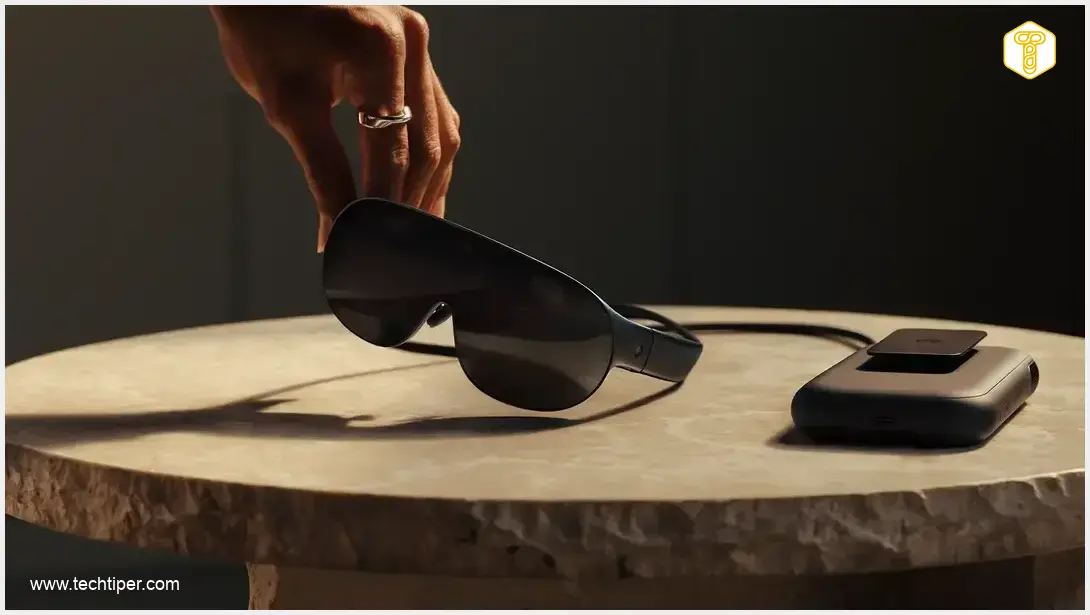
Beyond the smart glasses, Meta is also making strides in more immersive extended reality (XR) hardware. Recent announcements have hinted at advanced VR glasses, a distinct category from the Ray-Ban smart glasses. These next-generation VR devices are reportedly ultra-light, weighing approximately 100 grams (around 3.5 ounces), and are set to feature cutting-edge Micro-OLED displays. Powered by a Snapdragon Reality Elite processor, they will offer sophisticated eye and hand tracking capabilities, with an external compute and battery unit to maintain their lightweight form factor.
Early demonstrations have impressed, with users describing the experience as akin to “a computer” and noting the potential for complex tasks like “editing a whole movie.” These developments underscore Meta’s ambitious long-term vision for the metaverse and its commitment to pushing the boundaries of spatial computing. These innovations are likely guided by strategic insights, potentially including advice from figures like Meta AI board advisor Mark Zuckerberg on innovation.
Availability and Pricing
The Ray-Ban Meta Audio glasses will be available for pre-order starting October 13. The introductory price for these camera-free smart glasses is set at $349.
Frequently Asked Questions (FAQ)
The Ray-Ban Meta Audio glasses are designed without any cameras, directly eliminating the primary source of privacy concerns associated with earlier smart glasses that could record video or take photos. By focusing solely on audio and AI assistant functionalities, Meta aims to rebuild public trust and ensure that users and those around them feel more comfortable and secure, removing any ambiguity about recording capabilities.
No, they are distinct products. The Ray-Ban Meta Audio glasses are camera-free smart glasses focused on audio, calls, and AI assistance, weighing about 43 grams. The “VR Glasses” refer to a more advanced, immersive virtual reality headset Meta is developing, which is described as weighing around 100 grams, featuring Micro-OLED displays, and offering advanced eye and hand tracking for a full VR/AR experience.
The ‘Private Processing’ project is an initiative by Meta to limit the company’s access to user data when specific AI functions are being used on their devices. This means that for certain sensitive AI-powered features, the processing might occur locally on the device or with stricter protocols, ensuring that Meta itself has less direct access to the user’s personal information, thereby enhancing data privacy and control.
Source: TechCrunch, Internal Report. Opening photo: Meta / Press Materials
About Post Author
