

Contents
Field Museum Students Uncover 309-Million-Year-Old Amphibian Relative, Naming It in a Heartfelt Tribute
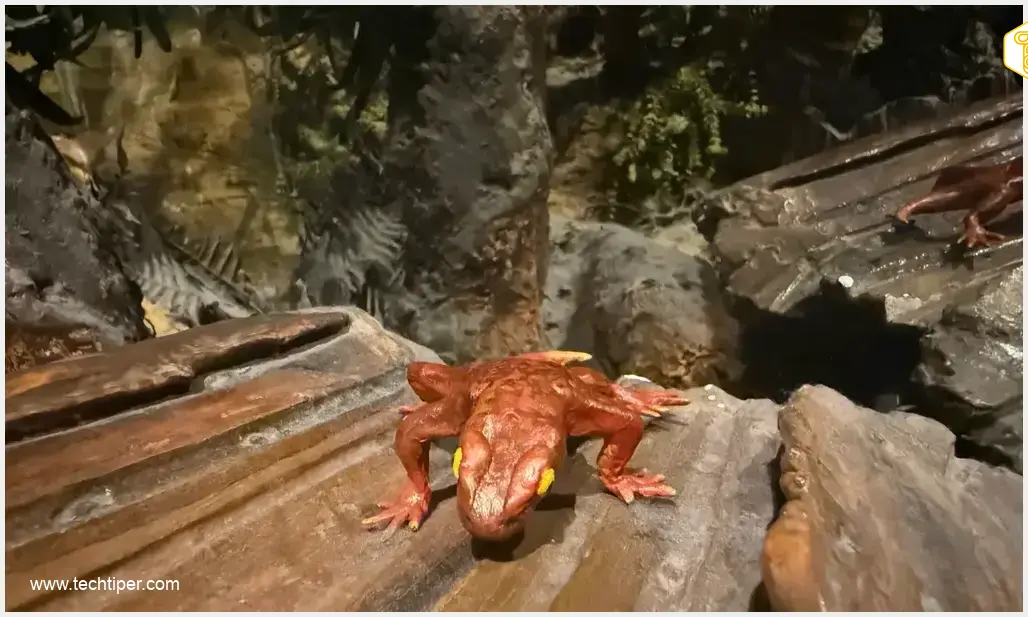
A groundbreaking paleontological discovery has been announced by two talented students associated with the Field Museum in Chicago. They have meticulously described a new species of ancient amphibian relative, dating back an astonishing 309 million years. This fascinating creature has been named Jeanerpeton mazonensis, a touching tribute to the mothers of both researchers, who share the name Jean. Their detailed findings have been officially published in the prestigious Journal of Vertebrate Paleontology.
A Hidden Treasure: Unearthing Jeanerpeton mazonensis
The fossil of Jeanerpeton mazonensis hails from the Mazon Creek locality in Illinois, a globally recognized paleontological site from the Carboniferous period. Approximately 309 million years ago, the area that is now modern-day Chicago was a sprawling, marshy river delta, teeming with early land animals, gigantic insects, and a diverse array of aquatic organisms. The rapid burial of organic remains by sediment created exceptionally favorable conditions for fossilization, preserving not only bones but often delicate soft tissues and body contours.
This remarkable preservation allowed researchers to observe intricate details on the Jeanerpeton mazonensis specimen, including:
- Fragments of scales along its back.
- Minute gastralia, which are bony elements found in the abdominal region.
- Distinct impressions of its eyes.
Intriguingly, this significant specimen wasn’t unearthed during recent excavations. The fossil had resided within the Field Museum’s extensive collection for many years, previously identified as belonging to the species Amphibamus grandiceps. It was only through a meticulous re-analysis of the skull and axial skeleton by the student researchers that a unique combination of features was identified, compellingly justifying its classification as an entirely new genus and species.
Understanding past environments and the creatures that inhabited them, like those from Mazon Creek, is crucial for comprehending Earth’s biodiversity. Much like studying dinosaur nesting behaviors can reveal intricate details about ancient ecosystems, re-examining existing fossil collections can unveil previously overlooked species and deepen our knowledge of prehistoric life.
Clarifying Ancient Lineages: The Case of Amphibamus grandiceps
For many years, various fossils from the Mazon Creek locality were broadly categorized under the name Amphibamus grandiceps. However, as scientific understanding advanced and analytical techniques improved, it became increasingly apparent that this single designation might encompass the remains of several distinct animals.
More comprehensive and detailed studies were needed to pinpoint the subtle differences in their anatomical structures. In the case of Jeanerpeton, these distinctions were so pronounced that the scientists unequivocally recognized it as a separate species. This reclassification not only enriches our understanding of individual species but also strongly suggests that the fauna of Mazon Creek during the Carboniferous period was far more diverse than previously understood.
This process of refining taxonomic classifications based on new evidence is a cornerstone of paleontology, continuously enhancing our understanding of evolutionary pathways and biodiversity. It parallels ongoing efforts in modern conservation, such as the successful conservation of horseshoe crabs in Cape Cod, where detailed ecological studies are vital for protecting unique species and their habitats.
A Legacy Honored: The Naming of a New Species
The pioneering work on Jeanerpeton mazonensis was led by Allison Sefcovic and Payton Kohlberg. Both researchers were participants in the prestigious Women in Science internship program, hosted by the Field Museum. Their decision to name the new species Jeanerpeton mazonensis is a heartfelt tribute to their mothers, both of whom are named Jean.

The newly identified species belongs to the amphibamiforms, an extinct group of Paleozoic animals closely linked to the early evolutionary history of modern amphibians. The authors of the publication highlight this specimen as an exceptionally well-preserved representative of this significant group from the Late Carboniferous period. Discoveries like Jeanerpeton mazonensis provide invaluable insights into the critical transitional phases of vertebrate evolution, helping scientists piece together the complex puzzle of how life diversified on Earth.
Frequently Asked Questions (FAQ)
While the original Polish text uses “protopłaz,” which can translate to “protoplasmid,” in the context of paleontology, it refers to a very early or primitive form of an animal. Jeanerpeton mazonensis is specifically described as an ancient amphibian relative belonging to the amphibamiforms, an extinct group that represents an early stage in the evolutionary history of modern amphibians. It’s essentially an ancestor or close relative of true amphibians.
The fossil of Jeanerpeton mazonensis was stored in the Field Museum collection for many years, previously identified as Amphibamus grandiceps. This was common practice in earlier paleontological studies where fossils with general similarities might be grouped together. Modern research, however, involves more detailed anatomical analyses, especially of features like the skull and axial skeleton. These in-depth studies revealed distinct characteristics unique to Jeanerpeton mazonensis, warranting its classification as a separate species and genus. This highlights the ongoing process of refining our understanding of ancient biodiversity.
Mazon Creek in Illinois is renowned globally for its exceptional fossil preservation, particularly from the Carboniferous period (around 309 million years ago). Its unique geological history, characterized by rapid burial in a marshy river delta environment, led to the formation of concretions that encased organisms, preserving not only hard parts like bones but also delicate soft tissues and even full body outlines. This allows paleontologists to gain an incredibly detailed understanding of ancient ecosystems and the anatomy of extinct creatures, making it a critical site for studying early terrestrial life.
Source: Journal of Vertebrate Paleontology, esconi.org. Opening photo: Arjan Mann
About Post Author
