

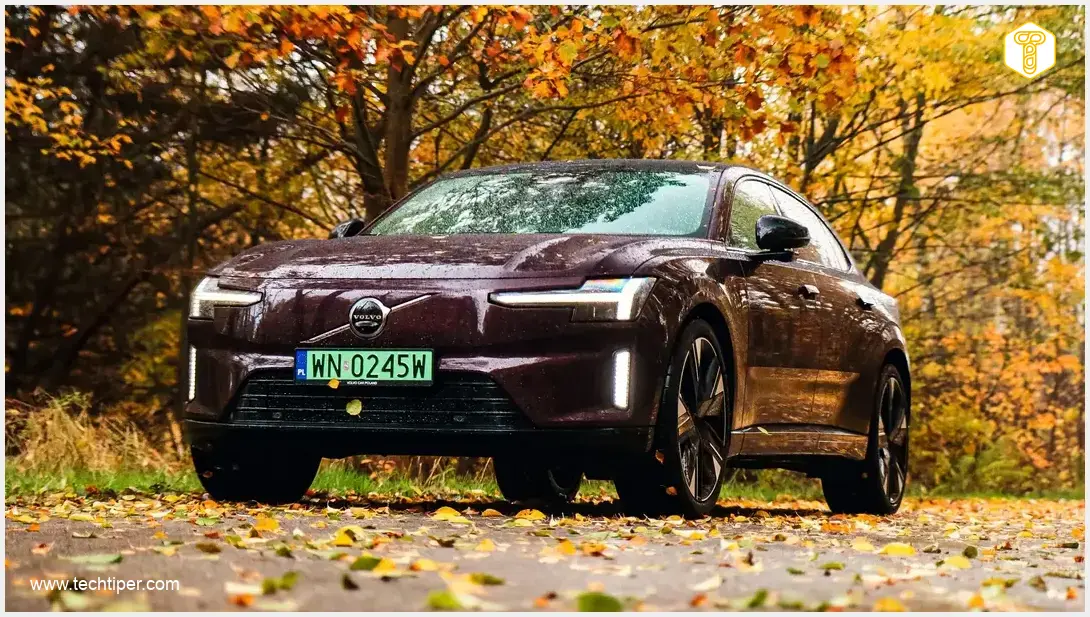
Volvo ES90 Review
-
Luxury & Interior Quality
-
Driving Comfort & Handling
-
Infotainment & Technology
-
Performance (Single Motor)
-
Safety & ADAS
-
Practicality & Ergonomics
Volvo ES90: A Luxurious Electric Flagship with Modern Compromises
The Volvo ES90 delivers an exceptionally refined and quiet driving experience, boasting a high-quality interior, advanced technology, and robust safety features. Its impressive comfort, smooth performance even from the base powertrain, and efficient charging capabilities make it a standout luxury EV. However, the near-total reliance on touchscreen controls, limited rear headroom, and some practicality oversights present a learning curve and potential drawbacks for some users.
Advantages
- Exceptional ride comfort and cabin quietness
- Luxurious interior with high-quality materials and craftsmanship
- Smooth and strong performance even from the base Single Motor variant
- Advanced, intuitive infotainment system with excellent audio options
- Comprehensive and highly effective safety and ADAS features
- Good energy efficiency and very fast DC charging capabilities
Disadvantages
- Near-total reliance on touchscreen controls; lack of physical buttons
- Limited rear headroom for taller passengers
- Poor rear visibility, requiring reliance on cameras
- Basic practical cabin storage and some ergonomic compromises
- Average 360-degree camera quality compared to competitors
- AC charging limited to 11 kW
Contents
Volvo ES90 Review: A Deep Dive into Volvo’s Electric Flagship Sedan
Our comprehensive review of the Volvo ES90 begins with the top-tier Ultra trim, paired surprisingly with the entry-level Single Motor powertrain. While this combination might seem unconventional at first glance, it proves remarkably sensible in practice. Volvo, in its pursuit of excellence for its flagship sedan, has opted for a no-compromise approach, ensuring that even the base powertrain delivers a premium experience. The ES90 is not just another luxury electric vehicle; it’s positioned to define the future direction of the Volvo brand.
Naturally, expectations for such a vehicle are exceptionally high. However, as we delve deeper, it becomes clear that some compromises are present. While its premium segment status is undeniable, Volvo’s approach to practicality in the ES90 might surprise some. Join us as we meticulously dissect the Volvo ES90, exploring every facet of this all-electric sedan to uncover its strengths and weaknesses.
Pricing and Trim Levels
Volvo’s configurator for the ES90 is surprisingly streamlined, a departure from the extensive customization often found in the premium segment. While there are options, they are curated to reflect the most popular choices, simplifying the decision-making process. Buyers first select one of three trim levels, then choose their preferred powertrain.
As of this review’s publication, the Volvo ES90 pricing structure is as follows (figures are approximate and for reference):
- Core (Single Motor Extended Range): 299,900
- Plus:
- Single Motor Extended Range (RWD, 333 hp): 324,900
- Twin Motor (AWD, 456 hp): 346,900
- Twin Motor Performance (AWD, 680 hp): 368,900
- Ultra:
- Single Motor Extended Range (RWD, 333 hp): 355,900
- Twin Motor (AWD, 456 hp): 377,900
- Twin Motor Performance (AWD, 680 hp): 399,900
Standard warranty coverage for the Volvo ES90 includes 3 years or 100,000 kilometers (whichever comes first). This can be extended by an additional year (approximately 3,900) or two years (approximately 7,200), extending coverage up to 200,000 kilometers. Paintwork is covered for 3 years, and body perforation for 12 years. The traction battery comes with a separate warranty of 8 years or 160,000 kilometers, guaranteeing that its capacity will not fall below 70% of its original value within this period.
Our test vehicle, an Ultra trim with the base rear-wheel-drive powertrain, starts at 355,900. Additional options on this specific model included:
- Bowers & Wilkins audio system: ~15,300
- Active air suspension: ~10,000
- Ventilated Nappa leather upholstery (Dawn light tone): ~7,400
- Electric tow bar: 6,900
- Mulberry Red paint: ~4,800
- Tinted windows: ~2,300
- Key Tag (mini remote): 1,300
- Climate Pack (heated steering wheel and wiper blades): 1,200
These additions brought the total price of our review model close to 400,000. Further customization options are available, such as a dashcam system, larger 22-inch wheels, silver accents, and various accessories.

Insurance Costs
According to market data, insuring an ES90 for a driver with several years of experience could cost approximately 470 for basic liability. A comprehensive package including collision coverage might be around 9,200. These figures can vary significantly based on location, driver profile, and specific coverage details.
Technical Specifications
The Volvo ES90 offers a range of powertrains, from quick to exceptionally fast. True to Volvo’s commitment to safety, the electric motors deliver substantial power across the lineup.
| Powertrain | Horsepower | Torque (Nm) | 0-100 km/h (seconds) | Battery (usable kWh) | Drive |
|---|---|---|---|---|---|
| Single Motor Extended Range | 333 hp | 480 Nm | 6.6 | 88 kWh | RWD |
| Twin Motor | 456 hp | 670 Nm | ~4.9 | 96 kWh | AWD |
| Twin Motor Performance | 680 hp | 870 Nm | ~3.2 | 96 kWh | AWD |
The ES90 is built on a 800V architecture, supporting rapid charging. With an overall length of approximately 5 meters, the ES90 is Volvo’s largest sedan, or more accurately, a liftback, despite its “S” designation traditionally meaning sedan. The “E” clearly signifies its all-electric nature, built from the ground up as an EV. Its aerodynamic lines contribute to both efficiency and a quiet cabin.
A Brief History of the Volvo ES90
While the Volvo ES90, first introduced in 2025, marks its first generation under this specific electric designation, it carries a rich lineage as the successor to the combustion-engined S90. Volvo’s full-size sedan history dates back to the 1980s with the iconic 740, followed by the popular 940. This line evolved into the S80 under Ford’s ownership.
The S90 name itself first appeared on the 960 from 1996-1998, positioning it above the 940. With the integration into the Geely group, the S80 was replaced by the S90 in 2016, effectively merging these designations into one flagship model. The ES90 represents a completely new chapter, built on the same dedicated EV platform as the EX90 SUV and Polestar 3, underscoring Volvo’s commitment to electrification.
Production of the ES90 remains in China, a testament to Volvo’s established global manufacturing quality. Interestingly, early concepts of the ES90, much like the EX90, featured a LiDAR sensor above the windshield. However, the production version of the ES90, including our review unit, does not feature this, due to changes in supplier partnerships. This blend of heritage and innovation is a common theme in the automotive industry, where new models often build upon a rich legacy, much like the evolution observed when comparing the new Opel Astra with its predecessors.
The Volvo ES90 competes in the premium E-segment, bordering on F-segment dimensions. Its primary rivals include the Audi A6 e-tron, BMW i5, Mercedes EQE, and Lexus ES, along with emerging competitors like the Nio ET7 and Xpeng P7+.
Infotainment System
The Volvo ES90’s infotainment system demonstrates how seamlessly Android integration can work. While the system appears simple and uncluttered, it centralizes nearly all controls into a single touchscreen. Running on Android with Google Services, its core functionality remains consistent with Volvo’s recent offerings, but with fewer physical buttons and more features integrated into the user interface.
The design and workspace utilization are generally well-executed, though some functions may require a bit of digging or memorization. Performance-wise, the system is responsive and fluid, ensuring a smooth user experience once familiarized. All ES90 variants feature the same display setup: a 14.5-inch central touchscreen, a 9-inch digital instrument cluster mounted on the steering column, and a Head-Up Display (HUD) available from the Plus trim upwards.
Central Display
Initial setup of the ES90’s software involves selecting key settings, logging into a Google account, and optionally a Volvo account. This unlocks full functionality, including access to the Google Play Store. Opting out of Google account integration doesn’t hinder core car functions but limits multimedia capabilities.
The main home screen of the ES90 features Google Maps prominently, two non-configurable widgets, and dynamically chosen app icons. A persistent lower bar provides climate controls and quick shortcuts, while a pull-down notification section offers alerts. A separate app drawer and a few static screens complete the interface. While personalization options are limited, the layout is orderly and intuitive.
The voice assistant, powered by Gemini, performs exceptionally well. Similarly, the integrated online owner’s manual is precise and detailed, explaining all vehicle-related aspects comprehensively.
Climate control is managed entirely via the central screen, primarily through the lower bar icons that open detailed control sections for temperature and seat heating/ventilation. Volvo has also integrated an air purifier with real-time air quality data. As an EV, it naturally includes a parking climate function.
Other notable screen-controlled features include extensive seat adjustments, mirror controls, steering wheel adjustments, and HUD settings. While offering comprehensive options, these functions are less convenient than dedicated physical buttons and require some adaptation.
The ES90 is continuously connected to the internet (5G), enabling full use of Google Services and Play Store apps. While it can connect to external Wi-Fi networks, it doesn’t offer an in-car Wi-Fi hotspot function.
Volvo’s reputation for safety often extends to its exceptional audio systems. The ES90 offers three audio options: a base High Performance (10 speakers), a Bose Premium (14 speakers), and the top-tier Bowers & Wilkins (25 speakers). Our review unit featured the latter, which delivered an incredibly immersive and high-fidelity sound. Its natural default configuration, combined with extensive customization options for sound staging, clarity, and equalization, perfectly complements the ES90’s luxurious character.
Navigation, Android Auto, and Apple CarPlay
With Android and Google Services, the ES90 comes with Google Maps pre-installed. This system performs flawlessly, intelligently planning routes for electric vehicles, including charging station integration. It’s straightforward and effective. For those who prefer alternatives, apps like Waze are available via the Play Store.
Wireless Android Auto and Apple CarPlay are also fully integrated, including the ability to project maps onto the digital instrument cluster, enhancing the overall user experience.
Digital Instrument Cluster and Head-Up Display
The ES90, like the EX90, foregoes traditional analog dials for a minimalist digital instrument cluster. This wide screen, fixed to the steering column, features a simple, highly readable interface focused on essential information.
Three main themes are available: a map view, driver assistance systems view, or a minimalist display. A notable feature is the seamless integration of navigation from both built-in Google Maps and external platforms like Apple CarPlay/Android Auto onto the digital cluster.
The only omission is a dedicated trip computer view on the cluster; consumption and trip data must be accessed via the central screen. The cluster also displays visual cues for steering wheel button presses (as they are not backlit) and adjustments to mirrors, steering wheel, or HUD.
In contrast to the instrument cluster, the Head-Up Display is very basic, showing only speed, current speed limit, and cruise control settings. It lacks navigation prompts or multimedia information.
Volvo ES90 Interior
Stepping into the Volvo ES90’s cabin, whether in the front or rear, immediately conveys a sense of premium luxury without being overtly futuristic. High-quality materials are meticulously fitted, creating a cohesive and elegant design. The presence of genuine wood inlays, a rarity in modern cars, highlights the thoughtful craftsmanship.
However, the cabin’s practicality is its biggest challenge, primarily due to the extreme minimization of physical buttons. While the overall aesthetic is appealing, some piano black accents, particularly in frequently touched areas, are prone to fingerprints. As manufacturers continually refine their offerings, much like the recent updates seen in models such as the Toyota Corolla Cross GR Sport, Volvo’s ES90 represents a significant leap forward in its segment.
Volvo adopts a modern, keyless entry system primarily relying on digital keys via cards, smartphones, or an optional “Key Tag” mini-remote. This tag allows for automatic locking/unlocking by proximity, though it lacks physical buttons for remote operation. Door handles (on all doors) feature sensors and recesses. To lock/unlock, cards or smartphones are tapped against the front part of the door handle. This system requires some getting used to but offers versatile access options. A traditional remote with physical buttons remains the most convenient.
First Row Experience
Upon opening the ES90’s doors, their wide opening angle is immediately noticeable, requiring a lean to close them from inside. The hinges are exceptional, allowing the doors to hold their position at any angle. Double-glazed windows underscore Volvo’s commitment to cabin quietness, complemented by soft-close mechanisms and a fully covered, substantial sill that contributes to the car’s slightly elevated stance.
Door panels feature premium materials: stitched leather, wood, and metal grilles, extending down to a rubber-lined storage compartment. The window controls reveal a cost-saving measure: a piano black panel lacks individual rear window switches, requiring a dedicated button press to toggle control between front and rear windows. The door handles are electromechanical; a light pull activates an electric lock release, while a firmer pull engages a mechanical linkage. Exterior handles operate similarly.
Seating Comfort
Volvo’s seats have always been a highlight, and the ES90 continues this tradition. They offer extensive adjustments, firm yet comfortable padding, and well-sculpted integrated headrests (with a speaker). There’s little to fault here, except for the control mechanism.
While a physical joystick is present, adjustments still require looking at the central display. Pressing the central button reveals three screens of controls for various adjustments, including thigh support and lateral bolstering. Both driver and passenger seats are identical. Beyond extensive adjustments, seats offer 3-stage heating and ventilation (operable simultaneously), plus a multi-mode massage function. The massage is pleasant and can be intense, focusing on the backrest, including the shoulder blades. Surprisingly, Volvo omitted a comfort entry/exit function that automatically adjusts the seat position.
Steering Wheel Design and Controls
Volvo maintains its understated approach with a simple yet elegant steering wheel. The leather-wrapped rim feels pleasant to hold and is 3-stage heated. However, electric tilt and telescopic adjustments are exclusively controlled via the central touchscreen, lacking dedicated column-mounted switches.
The unlit buttons on the spokes are simple but effective. Pictograms appear on the digital instrument cluster upon touch, aiding in their use. They are easily memorable and tactile, though their piano black finish is a minor drawback. The left side controls cruise control and digital cluster themes, while the right manages multimedia and, when selected, adjusts the steering wheel, mirrors, or HUD. A gear selector stalk is located to the right of the steering wheel; a double pull to “D” activates Pilot Assist (adaptive cruise control).
Below the digital instrument cluster on the steering column, and also on top of the dashboard, is a driver attention sensor. This system accurately monitors driver gaze, promptly alerting if attention drifts from the road for too long.
Dashboard Layout and Practicality
The ES90’s dashboard design is conservative, elegant, and timeless. It features a leather-finished top, accented by backlit wood and aluminum inserts. Fit and finish are excellent, and the overall aesthetic is very appealing. Practicality, however, takes a backseat.
The dashboard’s apex features a protruding central speaker from the Bowers & Wilkins system and an additional driver monitoring sensor. The HUD projector is also present. Below this is the dominant 14-inch central display. The only physical controls are beneath it, limited to volume and track skip buttons. While previous Volvos also minimized physical buttons, the ES90 truly tests user patience and memory.
A simple, somewhat hidden storage compartment is located behind the display. More accessible is the space below the screen, which can accommodate one smartphone on its inductive charger, which also charges the Key Tag. Between the seats, a sliding cover conceals two cup holders. Further back are two USB-C ports, followed by a spacious and comfortable fixed armrest. Inside, there’s ample room for two small beverage bottles.
Even the glove compartment is opened via the central touchscreen, offering acceptable capacity. On the headliner, several mandatory physical buttons are present (e.g., hazard lights). However, the electrochromic panoramic roof control is absent as it’s not standard on all ES90 versions.
The auto-dimming rearview mirror offers almost no practical visibility, making cameras essential for maneuvering. Even lowering the rear armrest doesn’t significantly improve the situation. On a positive note, the sun visors are excellent: they feature bright lights and can be extended to effectively block sunlight from the side windows.
Second Row Experience
Entry to the rear seats is typical for a luxury sedan, with large doors providing ample access. The rear door panels replicate the premium materials and finish of the front, reaffirming the ES90’s limousine credentials.
Once seated, the generous legroom and width are immediately apparent, easily accommodating individuals over 2 meters tall. However, some dimensions are less ideal. The raised floor means even an average-height passenger might find their knees uncomfortably high relative to the seat cushion. More critically, the sloping roofline and headliner restrict headroom; individuals over 1.9 meters will likely find it tight, especially with voluminous hairstyles. While electric recline adjustment helps, not everyone prefers a reclined driving position, and a fully reclined position places eye-level near the C-pillar.
Assuming suitable dimensions, traveling in the rear of the Volvo ES90 is exceptionally comfortable. The Ultra trim provides a wide, sophisticated armrest with covered cup holders and a practical storage compartment. Outboard seats are both heated and ventilated (3-stage, operable simultaneously). Four-zone climate control is standard, with central and B-pillar vents for rear passengers. Two USB-C ports are located below the control panel. The headliner also features additional speakers and retractable coat hooks.
For families, ISOFIX anchors are cleverly concealed behind removable upholstery sections. Interestingly, the ES90 does not offer integrated booster seats for older children.
Lighting and Panoramic Roof
Despite numerous lighting points, the Volvo ES90 features very subtle interior illumination. The ambient lighting is almost imperceptible unless specifically sought out, yet it contributes to a pleasant cabin atmosphere. The primary interior lighting is sufficiently bright (2-stage).
Exterior lighting is well-executed, with illuminated door handles, charging port, and additional projectors at the sills and within the doors, making it easy to spot puddles or obstacles when entering or exiting.
Every Volvo ES90 comes with a fixed panoramic glass roof. However, only the Ultra version features an electrochromatic function, allowing the glass to be dimmed to a milky white with the push of a button, reducing sunlight penetration. An accessory sunshade (800) is also available for manual installation.
Cargo Space: Trunk and Frunk
Access to the main cargo area of the Volvo ES90 reveals it to be a liftback rather than a traditional sedan, which is a significant advantage. This design provides unimpeded access to the load space through a large opening.
The power-operated tailgate opens very high, and Volvo’s characteristic interior cargo guide helps visualize what can fit. The tailgate can also be closed along with the central locking system.
Thanks to the pneumatic suspension on our test model, the rear axle height can be adjusted to optimize the loading sill, offering a wide range of motion controlled by dedicated buttons in the trunk. The base trunk capacity of the Volvo ES90 is 464 liters. While not exceptionally large for a 5-meter car, it’s a respectable figure for a sedan. The battery pack under the floor is the primary constraint, though extra space for small items, including a dedicated spot for the cargo cover, is provided.
The rear seatbacks can be folded (40:20:40 split) or adjusted at various angles to gain a few extra liters. Folding them down expands cargo volume to approximately 1,450 liters.
For convenience, the ES90’s trunk is well-equipped with two retractable hooks, net attachment points, a usable wheel well space, and a 12V socket. The area is also well-lit and softly finished.
The front trunk (frunk) under the hood offers 27 liters of storage. While seemingly small compared to its surroundings, it comfortably accommodates essential vehicle equipment and charging cables. It unfortunately lacks illumination.
Another cargo option is the optional, fully electric tow bar. For the single-motor ES90, the towing capacity is 1.6 tons, increasing to 2 tons for more powerful variants.
Driving Impressions
While the Volvo ES90 configurator isn’t extensive, one option stands out: the pneumatic air suspension. This feature significantly alters the driving character and is highly recommended, especially given its relatively modest cost in the context of the car’s overall price. It transforms the ES90 into an exceptional road cruiser.
Ride Comfort and Handling
Despite being a cruiser, the ES90 does not feel like a lumbering vessel. The suspension stiffness can be adjusted, yet even in its softest setting, commendable stability is maintained. The comfort level is extraordinary. While deeper imperfections may be felt inside (on 21-inch wheels), the ES90’s tuning is remarkably refined. It embodies a luxury sedan that confidently handles corners. The air suspension also allows for height adjustments, facilitating comfortable entry/exit and luggage loading. The ride height can also be manually raised for increased ground clearance, though the system dynamically manages most adjustments.
The steering system prioritizes comfort, offering personalization options related to power assistance. Even the firmest setting feels relatively light and pleasant for daily driving. A turning circle of approximately 12 meters is acceptable but could benefit from rear-axle steering. Maneuvering is manageable, keeping in mind its 5-meter length and limited rear visibility. At higher speeds, precision is more than adequate. The car feels exceptionally planted and confident, particularly with active cruise control and lane-keeping assist engaged.
Driving Dynamics and Performance
Throughout our test, we were impressed by the ES90’s power range: from a standard 333 hp (480 Nm) in the single-motor variant to a potent 650 hp (870 Nm) in the top-tier version, with a 456 hp (670 Nm) option in between. The more powerful models feature all-wheel drive, while the base model is rear-wheel drive. These power figures highlight the substantial output of electric motors, prompting the question: how much is truly necessary for the ES90?
Our test model, the least powerful Single Motor variant, is rated by Volvo to reach 100 km/h in 6.6 seconds. Our measurements consistently showed 6.8 seconds, possibly due to low temperatures combined with summer tires. Regardless, the instantaneous torque delivery is palpable at all speeds (up to its 180 km/h limited top speed).
Volvo typically does not offer predefined driving modes. Only the more powerful variants include a “Performance” setting. In our test vehicle, customization is found in individual settings, allowing adjustments to climate control (Eco mode), air suspension behavior, and steering assistance. These are decoupled, effectively creating an “individual” mode. The only distinct option is “Off-road,” which, for this rear-wheel-drive sedan, primarily raises the suspension and alters traction control behavior.
Despite being the least powerful Single Motor Extended Range variant, we believe investing in an additional motor is largely unnecessary for daily driving. While beneficial on slippery surfaces, the performance of our test car was not just sufficient but perfectly aligned with Volvo’s driving philosophy. The 333 hp provides brisk acceleration in all conditions, yet the car never encourages aggressive driving. It delivers smooth, efficient progress to desired speeds without any harshness or unpleasant sensations. The ES90’s interaction with the driver is impeccably balanced, prioritizing a refined sedan driving experience. The same applies to its braking performance.
A significant advantage of the Volvo ES90 is its overall cabin quietness. This aspect amplifies the luxurious feel, creating an exceptional long-distance travel experience, especially when paired with the excellent audio system and massage functions. Speed is remarkably imperceptible, requiring diligent monitoring.
This combination helps us understand Volvo’s design approach, where practicality is sometimes secondary to an inherently refined experience. The ES90 is a car you simply get into and drive, and the journey itself is exceptionally pleasant. While the lack of physical buttons remains a concern, the ES90’s driving dynamics and overall feel are remarkably soothing, yet capable when power is needed.
Finally, the regeneration system is excellent. It offers a “One Pedal Drive” mode with three power levels or an automatic setting. In automatic, the ES90 utilizes radar data to adjust electric motor braking force, even bringing the car to a complete stop. The system operates remarkably smoothly, making it enjoyable and intuitive to use.
Energy Consumption, Charging, and Range
Our test Volvo ES90, being the single-motor variant, is equipped with a smaller, yet still substantial, battery offering 88 kWh of usable capacity (92 kWh gross). A heat pump is standard, and the entire drivetrain utilizes an 800V architecture, indicating Volvo’s thorough preparation for electric mobility.
Achieving optimal efficiency requires a delicate touch on the accelerator. Without distinct “eco” driving modes to dampen throttle response, consumption largely depends on the driver’s foot. Utilizing automatic recuperation significantly helps maintain smooth driving and improve efficiency.
During our energy consumption measurements for the Volvo ES90 Single Motor Extended Range, ambient temperatures were around 8 degrees Celsius (46°F), a less-than-ideal scenario for EVs. Here are the observed results:
| Speed/Scenario | Energy Consumption | Average Range |
|---|---|---|
| City | Average: 17.5 kWh/100 km Min: 15.3 kWh/100 km Max: 26 kWh/100 km |
~500 km (310 miles) |
| Suburban (~80 km/h) | 16.6 kWh/100 km | ~530 km (330 miles) |
| 100 km/h (62 mph) | 18.4 kWh/100 km | ~470 km (292 miles) |
| Highway (120 km/h / 75 mph) | 21 kWh/100 km | ~410 km (255 miles) |
| 130 km/h (81 mph) | 21.7 kWh/100 km | ~400 km (249 miles) |
| Autobahn (140 km/h / 87 mph) | 22.6 kWh/100 km | ~380 km (236 miles) |
Overall, these figures are very good, especially considering the car’s size and weight. The excellent aerodynamics, aided by its sedan/liftback body style rather than an SUV, certainly contribute. While these real-world ranges are below manufacturer claims (798 km city, 664 km combined), the colder testing temperatures must be considered.
Regarding charging, the Volvo ES90 supports fast charging up to 350 kW. In practice, we observed peak charging speeds of 310 kW (CCS, DC), enabling a 10-80% charge in just under 25 minutes – a commendable performance.
For AC charging (Type 2) at home, hotels, or workplaces, the ES90 is limited to 11 kW, which is not particularly fast. A full charge from empty would take nearly 10 hours.
Charging efficiency is well-managed; the system allows for pre-conditioning the battery before charging. Essential options for battery regeneration planning, including Plug&Charge support, are present. However, the ES90 does not offer V2L (Vehicle-to-Load) functionality for external power export.
Advanced Driver-Assistance Systems (ADAS)
Volvo’s enduring reputation for safety is reflected in the ES90’s comprehensive suite of driver-assistance systems. While abundant, the personalization options for these systems are kept to a minimum, primarily basic on/off switches. Key settings are accessible via a quick settings panel.
The traffic sign recognition system works correctly, occasionally misreading signs from side roads. When this occurs, a distinct yet pleasant audible alert sounds. There is no quick way to disable this alert; it requires navigating through the central screen settings.
The frameless side mirrors are uniquely designed and quite large. They offer excellent visibility, though their open-edge design might take some getting used to. Surprisingly, Volvo limited the auto-dimming function to only the driver’s side mirror in its flagship sedan. The blind-spot monitoring system (including rear cross-traffic alert) operates flawlessly.
All ES90 versions include a highly advanced, predictive and adaptive cruise control system as standard. It functions from a standstill (Stop&Go) up to 150 km/h (93 mph). Beyond this speed (or if driver inattention is detected), Pilot Assist automatically deactivates. There’s no quick option to adjust the following distance (it’s buried in settings). However, its operation is impeccable.
The highway assist functions are also extensive, capable of not only keeping the car centered in its lane but also initiating lane changes. This works exceptionally well on highways; the Volvo clearly communicates its capabilities and executes commands smoothly and without undue delay.
While the overall design of the Volvo ES90 is serene, its lighting signature immediately identifies it as a Swedish vehicle. The lighting performance is excellent, with a very effective beam pattern in terms of brightness, spread, fill, and range. (Note: The vertical lights on the rear window primarily serve as opening/closing animations).
The Ultra version further distinguishes itself with headlight washers and a segmented adaptive beam (HD Pixel LED, 20,000 pixels). This system not only precisely cuts out oncoming traffic but also simulates cornering lights by shifting the light beam. The segmented high-beams react instantly and effectively mask other road users, preventing glare.
In its base trim, the Volvo ES90 offers only a rear-view camera. From the Plus variant onwards, a 360-degree camera system is included. Its quality is average; while it significantly aids maneuvering, the resolution, detail, and brightness of the cameras could be better compared to competitors using more advanced camera technology. However, the precision of the visual representation and distance indicators (accurate to within 1 centimeter) is commendable. Nearly every camera also features a washer nozzle.
The final driver-assistance feature is Park Pilot Assist, Volvo’s automatic parking algorithm. Available in ES90 versions with 360-degree cameras, it performs acceptably. It’s not particularly fast and sometimes struggles to recognize obvious parking spaces, making an experienced driver often quicker and more efficient.
Conclusion
Concluding our review of the Volvo ES90, we remember it as one of the most enjoyable cars to drive. Its smooth ride with air suspension, exceptional quietness, massage functions, and superb audio system make it a vehicle you genuinely don’t want to leave. It’s a car where you step in and aren’t overwhelmed by overly complex technologies, yet its software suite lacks nothing and often excels.
Undoubtedly, the biggest challenge with the Volvo ES90 is its near-total abandonment of physical buttons. The cabin’s ergonomics demand a learning curve to memorize where specific controls are located within the system. Volvo also didn’t prioritize practical cabin solutions, focusing on basic storage while omitting hooks or other convenient holders. Furthermore, rear headroom could be improved. As manufacturers continually refine their offerings, much like the recent updates seen in models such as the Toyota Corolla Cross GR Sport, Volvo’s ES90 represents a significant leap forward in its segment.
Frequently Asked Questions (FAQ)
The Volvo ES90 is positioned as Volvo’s flagship electric sedan, showcasing the brand’s future direction. It combines top-tier luxury, advanced electric powertrain technology, extensive safety features, and a meticulously crafted interior to offer a premium driving experience. Its size, sophistication, and technological integration solidify its status as a flagship model.
The ES90 excels in luxury with its high-quality materials, refined driving dynamics, exceptional cabin quietness, and advanced infotainment system. However, its practicality is somewhat compromised by the extensive reliance on touchscreen controls, minimal physical buttons, and certain aspects like rear headroom for taller passengers and limited rear visibility. The car prioritizes a serene, technologically integrated experience over traditional physical convenience.
Yes, our review found that the entry-level Single Motor powertrain (333 hp) provides more than sufficient performance for daily driving and even spirited acceleration. Its instant torque delivery ensures brisk progress, making higher-powered Twin Motor variants more of a luxury than a necessity for most drivers, unless all-wheel drive or extreme performance is a priority.
Potential buyers should consider the near-complete absence of physical buttons, which centralizes almost all controls onto the touchscreen and requires a learning curve. Rear headroom for passengers over 1.9 meters (6’3″) can be limited due to the sloping roofline. Additionally, rear visibility is notably poor, making the 360-degree cameras essential for maneuvering. Practical cabin storage solutions are also somewhat basic compared to some competitors.
Source: Self-developed. Opening photo: Łukasz Pająk
About Post Author
