
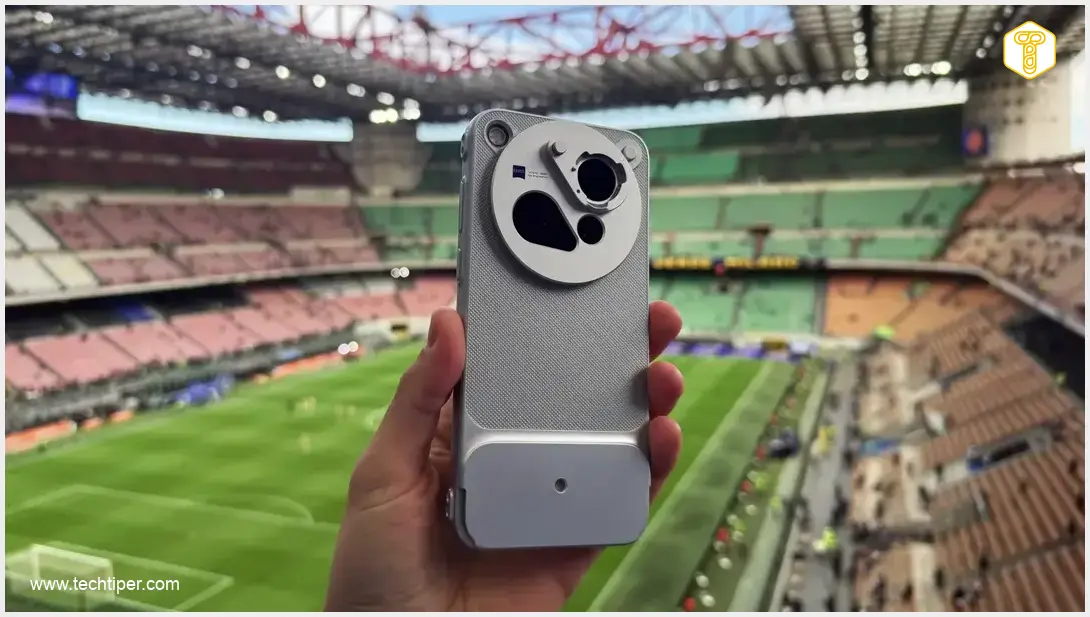
Vivo X500 Pro Max Review
-
400mm Teleconverter Performance
-
Teleconverter Portability
-
High-Contrast Scene Handling (LOFIC)
-
Image Capture Speed
-
Video Recording Quality
-
Overall Portability & Value
A Trustworthy Imaging Powerhouse for Mobile Photography
The Vivo X500 Pro Max, especially when paired with its 400mm teleconverter, offers a compelling and highly capable solution for mobile photography enthusiasts, particularly for sports and distant subjects. Its advanced camera system, robust video capabilities, and impressive portability make it a strong contender against traditional camera setups for many users, delivering phenomenal photographic and videographic capabilities in a compact package.
Advantages
- Excellent 400mm teleconverter performance for sports and distant subjects.
- Teleconverter is remarkably compact and portable, fitting easily into a pocket.
- Effective LOFIC technology in the main sensor handles high-contrast scenes, preserving detail.
- Impressive speed of image capture, making photos ready for social media quickly.
- Exceptional 4K video recording capabilities with flat log profile for post-production flexibility.
- Versatile camera setup including 50 MP main, 200 MP telephoto, and 50 MP ultrawide lenses.
- Offers film simulations for creative and retro photographic effects.
- Significantly more portable and convenient than dedicated camera setups with comparable telephoto lenses.
- Produces compelling stills suitable for personal archives and social media sharing.
Disadvantages
- Unusual appearance of the external teleconverter may require explanations to security personnel.
- Native telephoto lens alone may not be sufficient for capturing intricate details at very large venues without the external teleconverter.
- Represents a significant investment, costing approximately $2,250 USD.
- May not fully match the ultimate image quality, autofocus speed, or low-light performance of high-end professional DSLR or mirrorless cameras.
Contents
Vivo X500 Pro Max: A Deep Dive into its Teleconverter Performance at Italian Football Matches
Telephoto lenses are indispensable tools, especially when it comes to wildlife and sports photography, allowing photographers to capture distant subjects with incredible detail. This article explores how the Vivo X500 Pro Max, equipped with a powerful 400mm teleconverter, stood up to the challenge of photographing top-tier Italian Serie A football matches.
I put this flagship smartphone through its paces at two distinct venues: the intimate Stadio Giuseppe Sinigaglia, home to Como 1907, and the iconic Stadio Giuseppe Meazza, where Inter Milan electrifies its massive fanbase. The goal was to assess its capabilities in demanding, real-world sports environments.
The Vivo X500 Pro Max: More Than Just a Vacation Companion
My Vivo X500 Pro Max has been a reliable companion on several international trips. Recently, it was my sole camera device during a city break in Milan, Italy. This choice underscored my confidence in its photographic prowess, even when facing varied and challenging photographic scenarios.
Unpacking the Vivo X500 Pro Max Camera System
The Vivo X500 Pro Max boasts a robust camera setup designed for versatility and high-quality imaging:
- Main Camera: A bright 50 MP sensor (24mm equivalent, f/1.6) featuring LOFIC technology, which is crucial for managing high-contrast scenes.
- Telephoto Lens: A powerful 200 MP lens (85mm equivalent, f/2.7) designed for detailed zoom shots.
- Ultra-Wide Angle: A 50 MP ultra-wide lens, perfect for sweeping landscapes and architectural shots.
The native camera application further enhances the creative process, offering film simulations that impart a captivating retro feel to photographs. These modes proved particularly effective for capturing the architectural grandeur of Milan and even lent a unique aesthetic to images taken at the historic Stadio Giuseppe Meazza.
The Ultimate Test: The 400mm Teleconverter
My primary interest lay in evaluating the performance of the 400mm teleconverter in the challenging conditions of live sports. I opted for the largest available external lens, which provides a full-frame equivalent focal length of 400mm.
Despite its significant focal length, the teleconverter remains remarkably compact, fitting easily into a pocket. However, its unusual appearance did necessitate explanations to security personnel at stadium entrances. Fortunately, I was granted access to both venues without issue, ready to capture the action.

Matchday One: Como 1907 at Stadio Giuseppe Sinigaglia
The first stop was the picturesque Stadio Giuseppe Sinigaglia, nestled by Lake Como, home to Como 1907. Despite the absence of team star Nico Paz, the sunny weather and the passionate chants from the Curva Como tribune more than compensated, creating an electric atmosphere.
Given the intimate size of the stadium, I frequently relied on the phone’s built-in camera array without the teleconverter. The bright overhead sun at Stadio Giuseppe Sinigaglia truly highlighted the effectiveness of the LOFIC technology in the main sensor, effectively mitigating overexposure and preserving highlight detail.
Teleconverter in Action at Como
Attaching the teleconverter transformed the photographic experience, bringing the action incredibly close. The 400mm equivalent on such a compact stadium felt immensely powerful, allowing for immersive shots that made me feel right on the pitch. The speed of image capture was also impressive.
While the algorithms worked to process and sharpen images post-capture, photos were ready for social media sharing within moments, demonstrating the phone’s capability to deliver shareable content quickly.
Matchday Two: Inter Milan at Stadio Giuseppe Meazza
Day two brought the thrill of an Inter Milan match at the colossal Stadio Giuseppe Meazza, with its capacity for over 70,000 spectators. The sheer scale of this architectural marvel was perfectly captured by the ultra-wide-angle lens, while the telephoto lens meticulously rendered the details of its modernist structure.
Capturing the Action with Inter
At a venue as vast as the San Siro, attempting to photograph on-pitch action without the teleconverter proved nearly impossible. The phone’s native telephoto lens brought subjects considerably closer, but capturing intricate details like jersey numbers remained out of reach without further magnification.
This is where the 400mm teleconverter, combined with digital zoom capabilities, truly showcased the Vivo X500 Pro Max’s potential. While my primary focus at this stage shifted towards video recording (more on that below), I successfully captured several compelling still frames from the game. Although the results might not rival professional camera setups, these photos are more than suitable for a personal archive and social media sharing.
Flagship Video Capabilities: The Vivo X500 Pro Max Shines
During my initial review, I highlighted the Vivo X500 Pro Max’s exceptional video recording capabilities. For these football matches, I recorded all footage in 4K, predominantly utilizing a flat log color profile to maximize post-production flexibility. The most captivating moments, including a goal by Piotr Zieliński, were perfectly captured, demonstrating the phone’s ability to handle fast-paced action with clarity and detail.
Conclusion: The Vivo X500 Pro Max – A Trustworthy Imaging Powerhouse
Today’s flagship smartphones, like the Vivo X500 Pro Max, offer far more than just raw performance and stunning displays. They represent a paradigm shift in portable imaging, delivering phenomenal photographic and videographic capabilities that make carrying a separate camera increasingly redundant for most users.
During my trip, I also brought along a compact Lumix S9 with a 40mm prime lens. However, it remained largely unused, underscoring the Vivo X500 Pro Max’s versatility and convenience.
Testing the smartphone in the demanding environment of live football matches truly showcased its strengths. The joy of mobile photography, particularly with such advanced equipment, is palpable. While the Vivo X500 Pro Max, paired with its teleconverter, represents a significant investment—costing approximately $2,250 USD—the flexibility it offers is unparalleled. A dedicated camera setup with a comparable telephoto lens could easily cost twice as much and occupy a substantial portion of one’s carry-on luggage. The Vivo X500 Pro Max provides a compelling, high-performance, and compact alternative.
For those interested in how other devices tackle advanced mobile photography, consider exploring innovations like the Vivo X300 Ultra’s flagship camera features or the potential of devices such as the Oppo Find X9 Ultra with its rumored built-in teleconverter, pushing the boundaries of what smartphones can achieve.
Frequently Asked Questions (FAQ)
The Vivo X500 Pro Max handles high-contrast scenes effectively, thanks to its main 50 MP camera featuring LOFIC (Lateral OverFlow Integration Capacitor) technology. This technology helps manage bright highlights and deep shadows, ensuring balanced exposures even under harsh stadium lighting or bright sunlight, as observed during the Como 1907 match.
While the 400mm teleconverter is compact enough to fit in a pocket, its primary utility lies in specialized scenarios requiring significant reach, such as sports, wildlife, or distant landscape photography. For everyday casual photography, the phone’s built-in telephoto and main lenses are more than sufficient. The external teleconverter truly shines when you need to bridge significant distances to your subject.
The Vivo X500 Pro Max with its 400mm teleconverter offers an incredibly convenient and capable alternative for sports photography, especially for enthusiasts and social media sharing. While it may not fully match the sheer image quality, autofocus speed, and low-light performance of high-end professional DSLR or mirrorless cameras with dedicated telephoto lenses, it provides remarkable results in a compact package. Its strength lies in its portability, versatility, and the quality of images and videos it produces for its form factor.
Source: Original article. Opening photo: Krzysztof Wilamowski
About Post Author