

Smartphone manufacturers invest heavily in ensuring their devices are safe for users and the environment. Yet, a peculiar tech myth has circulated, claiming that a regular smartphone flash can create a hole in thin material. As part of our commitment to debunking tech myths and exploring real-world applications, we put this intriguing claim to the test.
Contents
The Smartphone Flash Experiment: Can It Really Burn a Hole?
The myth specifically suggests that the powerful flash found in virtually every modern smartphone camera has the capability to scorch or burn through thin plastic materials. Given how easy it is to replicate this scenario, we decided to investigate this claim firsthand.
Setting Up the Test
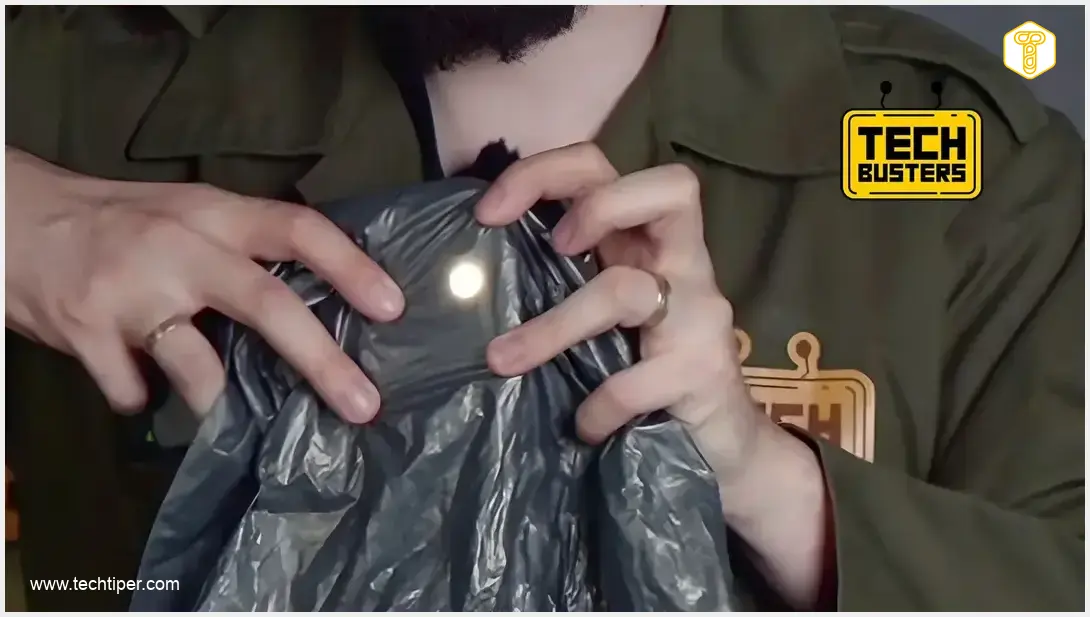
Our team conducted a simple yet effective experiment. We took a standard, dark polyethylene trash bag and stretched it taut. A modern smartphone was then pressed directly against the stretched bag, and a photograph was taken with the camera’s flash activated. The result was genuinely surprising: a small, distinct hole did indeed appear in the trash bag.
Understanding the Phenomenon: Why Did the Flash Create a Hole?
The seemingly improbable outcome of our experiment can be attributed to a combination of specific factors. It’s not a magical property of the smartphone flash, but rather a perfect storm of conditions that allowed a tiny amount of energy to cause localized damage.
Key Factors at Play:
- Heat Emission: While primarily designed to emit light, a camera flash, especially a powerful LED flash, generates a small burst of heat during its operation. Although minimal, this heat energy was sufficient under the right circumstances.
- Material Absorption: The choice of material was crucial. The dark, tightly stretched trash bag directly absorbed the emitted light and heat energy. Darker colors are known to absorb more thermal energy than lighter colors, which reflect more. This efficient absorption concentrated the energy in a very small area.
- Material Properties: Most trash bags are made from thin polyethylene film. Polyethylene has a relatively low melting point. The concentrated heat from the flash, coupled with the material’s thinness and low heat resistance, caused the plastic to rapidly soften and then tear at the point of impact.
Consider a counter-example: if we had used a white trash bag or a thicker material, the results would likely have been different. A white surface would reflect much of the light and heat, dispersing the energy rather than absorbing it. This is similar to why wearing a white shirt feels cooler in the sun than a black one. We’ve observed similar principles in other tests, such as when comparing how different materials react to light and heat, which you can read about in our article on old vs. new smartphone camera comparisons.
In essence, a very low amount of energy encountered an exceptionally susceptible target. This unique combination allowed the myth to become a reality in our controlled test. However, it’s important to emphasize that in 99% of everyday scenarios, your smartphone’s camera flash poses no threat of damaging objects. The conditions required to replicate this effect are highly specific and not typically encountered during normal phone use. For more insights into unusual tech phenomena, check out our ranking of technology gadgets that sound like a joke but are real.
Frequently Asked Questions (FAQ)
No, under normal circumstances, using your smartphone’s flash is perfectly safe and poses no risk of damaging objects or causing burns. The conditions required to burn a hole in material are extremely specific, involving a very thin, dark, and highly heat-absorbent material pressed directly against the flash for a concentrated burst of light and heat.
Dark-colored materials, especially black, are highly efficient at absorbing light and heat energy. When the flash emitted a burst of light and heat, the dark trash bag absorbed this energy directly into a very small area. White materials, conversely, reflect much of the light and heat, dispersing the energy and preventing localized heat buildup that could cause damage.
While specific conditions are rare, any device emitting concentrated light or heat could potentially affect highly susceptible materials. For instance, high-powered lasers or industrial heat guns are designed to cut or melt materials. A smartphone flash is not designed for this, but its concentrated, albeit low, energy output combined with an extremely thin, dark, and heat-sensitive material (like a polyethylene trash bag) can produce a surprising result. It’s a testament to how specific material properties interact with energy.

Source: Our Own Research. Opening photo: Krzysztof Rojek / Androidcompl
About Post Author
