
Contents
Alpine A290 GTS Review: An Electric Hot Hatch That Delivers on its Promise
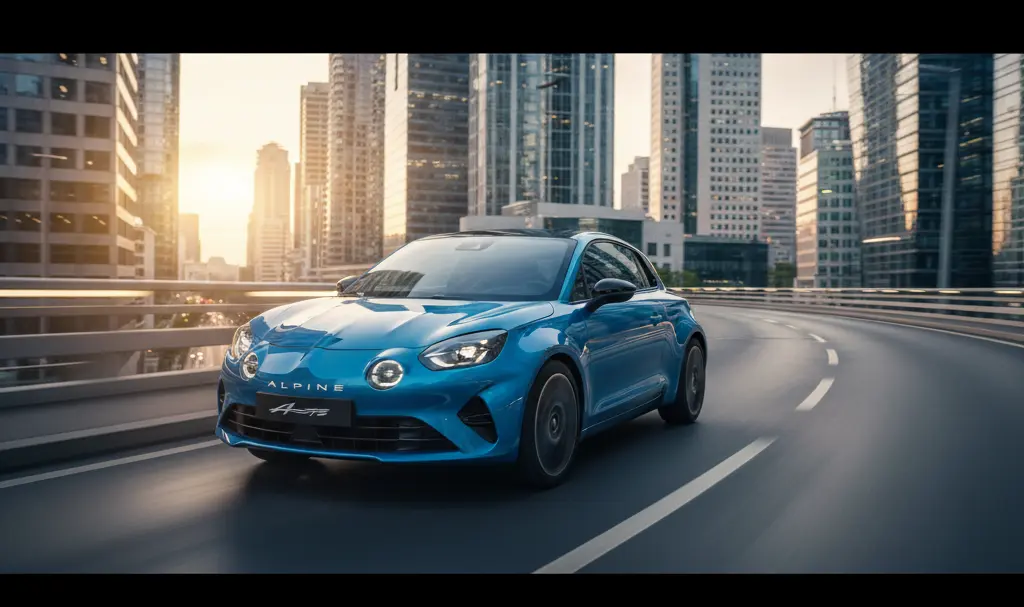
We embark on a comprehensive test of the Alpine A290 GTS, the most powerful and smallest electric offering from the esteemed French marque. While it’s clear this vehicle is a modified Renault 5 E-Tech, it undeniably carries the distinctive Alpine character. This car evokes strong emotions, challenging the vision previously set by the A110 model. Let’s delve into what ultimately emerged from the concept of building an electric hot hatch. We warmly invite you to read this review of the Alpine A290 GTS.
Overview: The Alpine A290 GTS
The Alpine A290 GTS represents a bold step into the electric future for a brand synonymous with agile, lightweight sports cars. It’s built on the foundation of the acclaimed Renault 5 E-Tech but meticulously re-engineered by Alpine to deliver a truly engaging driving experience. This isn’t just an electric city car; it’s an electric hot hatch designed to put a smile on your face, whether on winding roads or urban streets.
Price and Trim Levels
Alpine offers the A290 with two powertrain options, closely linked to four distinct trim levels. As of this review’s publication, the pricing (converted to USD for clarity) is as follows:
- GT (180 HP): Approximately $42,425 USD
- GT Premium (180 HP): Approximately $45,900 USD
- GT Performance (220 HP): Approximately $45,900 USD
- GTS (220 HP): Approximately $48,950 USD
It’s important to note that while the GT Performance and GT Premium trims share a similar price point, they offer different specifications. The GT Premium boasts richer equipment, while the GT Performance prioritizes a more powerful engine. Potential buyers should examine the specific differences to choose the variant that best suits their needs.
The standard warranty for the Alpine A290 is 2 years with unlimited mileage, with options to extend it by 1, 2, or 3 years. The traction battery is covered by a separate warranty of 8 years or up to 100,000 miles (160,000 kilometers).
Estimated Insurance Costs
Based on current data, insuring the tested A290 for a driver with several years of experience could be approximately $110 – $150 USD per month for basic liability coverage. This cost can vary significantly based on location, driver history, and chosen coverage.
The tested Alpine A290 is the top-tier GTS variant, starting at approximately $48,950 USD. Additional packages can further customize the vehicle:
- Driving Package (includes automatic parking, Stop&Go cruise control, additional driver assistance systems): Approximately $1,075 USD
- Blue Alpine Vision Paint + Noir Etoile (black roof): Approximately $975 USD
- 19-inch Iconic Diamante Wheels: Approximately $475 USD
- Safety Package (includes safe exit function, blind-spot monitoring): Approximately $325 USD
- Blue Emblems (wheel caps): Approximately $175 USD
- French Flag on C-pillar: Approximately $100 USD
- Blue Alpine Logo on Steering Wheel: Approximately $100 USD
Factoring in these optional extras, the final price for our tested Alpine A290 GTS was approximately $52,600 USD. Alpine emphasizes personalization, offering various color combinations and accent options, allowing buyers to spend considerable time tailoring their vehicle in the configurator. Charging accessories and transport options, including a tow hitch, are also available.
Technical Specifications of the Alpine A290 GTS
The Alpine A290 is fundamentally a re-engineered Renault 5 E-Tech. Even its least powerful version significantly outperforms Renault’s offering. It also consistently comes with a larger battery, though it remains a city car, so expansive interior space isn’t its primary focus. Nevertheless, the trunk capacity might pleasantly surprise you.
On paper, an electric car with 220 horsepower might not sound exceptional. However, Alpine has always demonstrated that raw power isn’t the sole crucial aspect in sports cars. Weight is paramount, but electric batteries add considerable mass, bringing the A290’s weight to around 3,260 lbs (1,479 kg). Therefore, it’s important to remember that the A290’s prowess primarily stems from its extensively modified suspension and steering systems.
Key Specifications for Alpine A290 GTS (220 HP):
- Powertrain: Single electric motor, front-wheel drive
- Max Power: 220 HP (162 kW)
- Max Torque: 300 Nm
- 0-60 mph (0-100 km/h): 6.4 seconds (tested 6.3 seconds)
- Top Speed: 105 mph (170 km/h)
- Battery Capacity (Net/Gross): 52 kWh / 55 kWh
- Curb Weight: 3,260 lbs (1,479 kg)
- Length: Approximately 13.5 ft (4.13 m)
- Width: Approximately 5.8 ft (1.78 m)
- Height: Approximately 4.9 ft (1.49 m)
- Trunk Volume: 300 liters (with Devialet sound system) / 326 liters (standard)
- Turning Circle: 33.5 ft (10.2 m)
A Brief History of Alpine
Alpine is a French brand with deep historical ties to Renault. Its journey began with modifying Renault models, eventually evolving to create its own distinct vehicles known for their lightness, balance, and superb handling. The brand ceased operations at the end of the last millennium but was revived in 2016 as a full-fledged marque within the Renault Group.
The first modern Alpine was the A110 (see also: Alpine A110 GTS review), which successfully captured the brand’s spirit, drawing heavily from its predecessor in design and engineering principles, combined with Renault’s technological advancements.
However, all things evolve, and the current generation of the A110 is gradually phasing out by 2026. Details on its successor are yet to be fully confirmed, largely due to significant changes in environmental regulations over the past decade.
This shift explains why Alpine has wholeheartedly embraced electrification. In 2024, the A290, the subject of this review, was unveiled. Unlike previous models, it doesn’t directly reference a historical car.
Instead, it’s a modified version of the Renault 5 E-Tech, a model that has been warmly received in the market and was even named the European Car of the Year 2025. As mentioned, Alpine has equipped it with more powerful engines, revised suspension, and infused it with its signature design character.
The Alpine A290 operates in the B-segment (subcompact) but with a distinct sporty flair. Its closest competitor is arguably the MINI John Cooper Works E, which starts at a similar price point. Other more exotic rivals, not widely available in all markets, include the Lancia Ypsilon HF and, arguably, the Abarth 500e/600e.
Infotainment System: A Technological Leap
In contrast to the Alpine A110, where technological novelties focused on software were not a priority, the tested A290 drastically changes the situation. We are presented with a modern system based on Android Automotive, complete with Google Services.
This represents a significant advancement, translating into both the quality of the multimedia offered and the overall operation of the car. Furthermore, the entire system performs exceptionally well in practice.
The Alpine Portal software, as the manufacturer calls its Android variant, is displayed on a 10.1-inch central screen. Additionally, there’s a 10.25-inch digital instrument cluster. Both displays are standard, with differences between trim levels primarily limited to the sound system.
Central Display: Modern Android Integration
Renault Group’s decision to utilize Android as the operating system platform for its infotainment systems is one of its best moves, and the Alpine A290 benefits fully from it.
With Google services bundled, users can connect their accounts and gain access to refined solutions and a range of applications useful in an electric car. Moreover, numerous personalization options are a significant highlight in the reviewed vehicle.
The interface is built around a side section for quick access to specific system modules. The top features a pull-down notification bar with selected shortcuts. The bottom consistently displays climate control settings, most of which are managed via a separate panel with physical buttons. The main dashboard greets us with navigation and two widgets that can be customized to individual needs.
Naturally, the Google Assistant is on board, proficiently recognizing commands, including those directly related to vehicle settings. While a full owner’s manual isn’t present, Alpine adds an intriguing section dedicated to the A290’s sporty aspects. The Alpine Telemetrics section also appears, which we’ll cover in more detail later.
In terms of comfort, the Alpine A290 offers a relatively generous array of features, a significant improvement over the A110. Many options relate to central locking, wipers, and more. Extensive lighting options are also available, including ambient lighting integrated with the car’s dominant color theme.
While climate control is managed via a separate panel, heated seats and a heated steering wheel are also present, along with an air purification function. A customizable button on the steering wheel, to which specific actions can be assigned, is a welcome addition.
For connectivity, a complete suite of modules is included: LTE, Wi-Fi (with hotspot), and Bluetooth. This allows logging into the Play Store to access a large number of useful multimedia and driving applications. The performance of these various solutions is consistently impressive.
Our tested top-trim GTS variant featured the premium audio system from Devialet. This is a distinguishing feature compared to the Renault 5 E-Tech, which offers Harman Kardon as an option. The A290’s 9-speaker system delivers a truly enjoyable sound quality, with excellent band separation and a strong sense of spatiality.
Exceptional Navigation, Android Auto, and Apple CarPlay
With Google services onboard, Google Maps serves as the default navigation system in the Alpine A290. This means you get the excellent, familiar solution from smartphones: a superb map database, seamless and fast route planning, hazard warnings, and full integration with charging stations and range prediction.
While Google Maps is the default, users are free to download other navigation apps from the Play Store, such as Waze. For an EV, apps like PlugShare can also be very useful. The wide range of choices available in the Alpine A290 is a definite advantage.
For those who prefer their smartphone interface, wireless Android Auto and Apple CarPlay are readily available. Both platforms function flawlessly, and maps displayed through them (e.g., Waze) are fully mirrored onto the digital instrument cluster. This seamless integration is executed perfectly.
Simple and Clear Digital Instrument Cluster
Alpine has subtly restyled Renault’s overall system design, most noticeably in the digital instrument cluster, which features different graphics with a dominant Alpine theme. Functionally, the A290 loses nothing; everything remains clear and easy to operate. Customization options are, of course, included.
Users can choose from a set of main digital instrument cluster themes, including comprehensive variants (with maps or driver assistance system views) and simplified ones. The former offers full integration with the central screen, meaning data from external navigation systems is completely mirrored (full route display).
The only minor complaint is the performance of certain animations. A noticeable delay is evident when switching between menus, which should ideally not occur in a vehicle of this caliber.
Another element for personalizing the Alpine A290’s digital instrument cluster is the widget carousel. This area displays the trip computer, multimedia information, and other indicators.
As always with electric models from the Renault Group, the software’s precise indication of the available range is commendable. These realistic figures accurately reflect whether you plan to drive in the city or on highways.
Interior: Renault 5 Foundation with Alpine Flair
Alpine is a sports brand, but not necessarily one associated with the premium segment when it comes to interior finishes, at least based on the A110, which could be seen as luxurious or spartan, but rarely drew criticism for its materials.
In the tested A290, the situation changes drastically, as this is a car that can undeniably be considered practical and fully adapted to daily duties.
Consequently, the interior of the Alpine A290 features pleasant-to-the-touch materials, though without an excess of soft padding. The manufacturer had to save weight somewhere, a constant priority for the brand.
Nevertheless, the overall quality and fit-and-finish are commendable. From a practical standpoint, it also performs well, especially when considering its sporty aspirations.
Alpine employs the familiar keyless entry system from the Renault Group. A card-shaped remote control communicates directly with the A290, locking and unlocking the central mechanism simply by approaching or moving away from the car. While there are no sensors on the door handles, the remote control buttons remain an option.
An interesting feature is the ability to locate the car by repeatedly pressing the light button, causing the Alpine A290 to flash its lights and emit a distinctive sound, making it easy to find in a parking lot. The trunk is opened manually, with its lock naturally supported by the aforementioned system.
Front Row Experience: Well-Designed Solutions
Opening the doors reveals a substantial sill, both in width and height. This is partly due to Alpine’s modifications and the placement of the batteries beneath the A290’s floor. Despite this, the seating position is low, making ingress and egress acceptable for a city hot hatch, especially since the doors open very wide.
The door panel is an excellent example of Alpine’s focus on quality materials. Most surfaces are very pleasant to the touch, though without excessive padding, yielding only minimally under pressure. Ergonomically, it’s simply correct. The door storage compartment is relatively small.
Seats with Alpine Upholstery
Comparing the Alpine A290 seats to those in the Renault 5, one must look closely for differences. It’s largely the same design, but in the tested model, the improved lateral support is noticeable. It’s not overdone, striking a perfect balance for both relaxed and sporty driving, while also being genuinely comfortable.
When choosing an Alpine A290 variant, it’s worth noting the available adjustments. Not all offer height adjustment, which is a crucial factor for second-row comfort. However, our tested GTS model, being the top trim, provides identical conveniences for both driver and passenger.
This includes manual fore/aft, recline, and height adjustment, along with electric lumbar support. Seat heating is also present, and the passenger side features Isofix mounts.
Alpine Steering Wheel with a Crucial Addition
At first glance, the Alpine A290’s steering wheel appears quite substantial. However, you quickly adapt to its size, finding it comfortable. Its ergonomic profile not only adds character but genuinely allows the driver to enjoy the precise steering system. Adjustment remains manual and two-way, and the rim is heated, primarily along its side sections.
The manufacturer has reorganized some of the A290’s controls compared to the Renault 5, though the same physical switch clusters on the spokes remain. These are convenient, though they tend to get dirty fairly quickly.
The left section manages cruise control, while the right handles the digital instrument cluster. Typically French, the separate stalk for multimedia controls is intuitive in the long run.
What truly distinguishes the Alpine A290? Primarily, the prominent red “OV” (Overtake) button, which instantly delivers maximum power. Additionally, there’s a blue “RCH” (Recharge) dial, replacing traditional paddles for controlling recuperation. A standard drive mode selector button completes the setup.
Near the driver’s left knee, additional buttons allow switching driver assistance systems to “Perso” mode (more on this later), deactivating traction control, and adjusting headlight beam height.
Alpine A290 Dashboard: Blending French Characters
A quick glance at the A290’s dashboard immediately reveals its Renault 5 E-Tech origins. However, Alpine has made significant contributions, modifying the center console, for instance. Not only are the badges and colors different, but functionality has also been enhanced. Overall, the finish aligns with previous observations: pleasant to the touch, though not necessarily soft.
The speakers of the excellent Devialet system stand out in the A-pillars, and a backlit badge proudly proclaims “Alpine” in front of the passenger. Further ahead, the panel with displays and the car’s start button catches the eye. There are even more physical buttons, with basic multimedia controls mounted above the central screen, though these are likely to be used less frequently.
However, the climate control panel will be used very often. No touch-sensitive buttons, no unnecessary complexities—just a series of highly convenient switches. The climate control is single-zone, and the only instances where you’ll need to reach for the touchscreen are to control the heated seats and steering wheel.
The redesigned center tunnel is a hallmark of all Alpine models. It houses the drive selector buttons, which are far more convenient than the stalk-mounted shifter used by Renault.
However, this comes at the expense of practicality, as there are no cup holders whatsoever in the entire car. On the plus side, there’s an inductive charging pad, two USB-C ports, and dedicated spaces for small items.
The armrest looks good but is quite firm and non-adjustable. Nevertheless, it didn’t bother us excessively, even on longer journeys. Lifting it reveals a moderately sized storage compartment.
A slightly larger storage space is available in front of the passenger. Above the headliner, you’ll find an auto-dimming rearview mirror.
Second Row: Primarily for Children
To access the rear seats of the Alpine A290, you pull a handle hidden near the C-pillar. Opening the door reveals an acceptable entry space and a door panel similar in quality to the front but without larger storage compartments.
B-segment cars are not limousines, so the Alpine A290’s second row is primarily designed for transporting children. Measuring 5’11” (1.8 meters) myself, I could fit behind my own driving position, but just barely.
It’s important to remember that the traction battery is located beneath the floor, precisely at the height of the rear bench, resulting in a raised leg position. This directly correlates with the front seats; if the occupant in front lowers their seat fully, there won’t be space for feet underneath.
Alpine provides a basic set of amenities for the rear passengers. These include a 12V socket, seatback pockets, and Isofix mounts behind convenient, hinged covers. There’s no space for an armrest, let alone USB-C ports.
Lighting: Pleasant Up Front, Functional Overall
The Alpine A290 is quickly recognizable by its exterior lighting, particularly the front lamps. Beyond that, the manufacturer has not added anything further to avoid unnecessarily increasing the vehicle’s weight.
The interior also features a minimalistic approach to lighting. Basic illumination is sufficient. Ambient lighting, on the other hand, consists of a few strips and ambient fields within the front row only.
Surprisingly Spacious Trunk
It’s undeniable that body styling played a crucial role in the design of the Alpine A290 (and before that, the Renault 5 E-Tech), which is reflected in the trunk loading aperture of the tested vehicle.
The trunk itself is adequately sized, and the lid lifts high (manually), but the loading sill is notably high, requiring careful consideration when loading items.
On the other hand, the Alpine A290 boasts a surprisingly large trunk for a B-segment city car, offering 326 liters of capacity. In our tested vehicle, this was reduced to 300 liters due to the presence of the Devialet audio system. Nevertheless, it remains a significant space, oriented towards height.
To expand the space, the rear seatbacks can be folded down (40:60 split, no pass-through), yielding approximately 1100 liters. This doesn’t create a flat load floor. Beneath the floor, there’s additional space for mandatory equipment, small items, and the subwoofer of the aforementioned sound system.
For convenience, Alpine includes a removable organizer (with Velcro fasteners) and two hooks. It’s worth noting that the A290 does not have a front trunk (frunk), so organizing charging cables requires thought. Another interesting option for this model is the ability to install a tow hitch.
Driving Impressions: The Alpine A290’s Key Selling Point
For an electric car, the Alpine A290 isn’t groundbreakingly fast on paper. However, it delivers immense daily driving pleasure, proving to be a brilliant modern hot hatch. The manufacturer has successfully blended sporty emotions that can be summoned whenever desired. For everyday use, it’s a car that’s never tiring, allowing for effortless driving in the city, for shopping, or even on longer trips.
The steering system works exceptionally well with the driver. Every input is confidently and precisely transferred to the wheels, actively encouraging playful driving. Coupled with the Alpine A290’s excellent balance, you feel invincible on any corner. Maneuverability is also commendable, with a turning circle of 33.5 feet (10.2 m) combined with its roughly 13-foot (4-meter) body, making parking a breeze anywhere.
The suspension also exhibits a sense of stiffness, partly due to the short wheelbase and relatively large 19-inch wheels. The Alpine A290 feels glued to the asphalt, even on the damp roads prevalent during our tests.
Rapid maneuvers are met with absolute confidence and a complete absence of unexpected behavior. While the A290 is undoubtedly firm, its ability to absorb road imperfections remains at an acceptable level.
Alpine also deserves credit for prioritizing low weight and good weight distribution (53:47) despite it being an EV. Without a driver, the A290 weighs 3,260 lbs (1,479 kg), barely gaining any weight compared to its progenitor (Renault 5 E-Tech), while being larger (2.7 inches longer, 1.9 inches wider) and better equipped. Paired with Brembo brakes, this further enhances the sporty driving experience.
Driving Dynamics: Where More Than Just Power Matters
The tested A290 is technologically based on the Renault 5 E-Tech, but as you now know, the suspension and steering system have been significantly refined by Alpine. The same applies to the motors. Renault caps its configurator at 150 HP, while Alpine starts at 180 HP and goes up to 220 HP. Naturally, power is delivered exclusively to the front axle.
Our reviewed model is the more powerful 220 HP variant, which on paper achieves 0-60 mph (0-100 km/h) in 6.4 seconds. For an electric car, this isn’t an outstanding figure, but for a city car and the driving impressions mentioned, it’s perfectly sufficient. We even managed to improve this time (with Launch Control) to 6.3 seconds on a less-than-ideal surface.
The A290 offers four driving modes: Save, Normal, Sport, and Perso. While there isn’t a dramatic difference between them, throttle response and overall available power change. The steering also feels somewhat stiffer. Each profile can also be given a unique character through customizable colors or even sounds from the speakers.
The “Save” mode, essentially Eco, stands out the most. When engaged, there’s a noticeable reduction in power, and the top speed is limited to 80 mph (130 km/h) (compared to 71 mph/115 km/h in Renault). However, kickdown can always be used to temporarily override these restrictions. Theoretically, the Overtake button could offer the same, but it’s not active in Save mode.
The Alpine Telemetrics system truly deserves a dedicated mention. It’s part of the software but requires an additional payment in some versions. This is an excellent solution for those who genuinely want to exploit the A290’s sporty characteristics.
Primarily, it provides a range of indicators, including G-forces and energy utilization. You also gain insight into tire sensor data and component temperatures, covering the battery, motor, and brakes.
Another component of Alpine Telemetrics consists of challenges, which are, of course, designed to be performed on a track. Delving into these can provide immense fun with the A290, and that’s the best part about this car, as it perfectly aligns with its core character. Furthermore, it incorporates a learning aspect (Coaching) that helps you understand the principles of sporty driving and how various systems behave under specific conditions. For us, it’s simply brilliant.
Despite its track capabilities, the Alpine A290 is not a car solely for the circuit. On the contrary, it excels in everyday driving—for commuting, shopping, and various other purposes. Naturally, its ideal environment is the urban jungle, where its agility, compact size, and the immediate dynamics of an electric motor offer a significant advantage. Driving it is thoroughly enjoyable, without any of the fatigue often associated with sports cars.
There’s no obstacle to taking the Alpine A290 on highways as well. Here, you’ll find that the bodywork is only moderately effective at dampening wind noise, but aside from that, there are no complaints regarding overall comfort. It feels stable, confident, and you always sense a reserve of power, even though the top speed is limited to 105 mph (170 km/h). The “Overtake” mode, providing a temporary power boost, efficiently aids in passing.
Of course, let’s not forget the recuperation system available in the Alpine A290, with its power controlled by a dedicated “RCH” dial on the steering wheel. The implementation offers four levels of energy recovery (including off), but without full one-pedal driving, meaning the driver is responsible for final braking to 0 mph.
Similarly, there are no intelligent or adaptive recuperation solutions. Nevertheless, the system’s operation at its maximum setting is very predictable, and you can quickly learn to use it effectively. This is particularly valuable in the context of the next category: energy consumption.
Energy Consumption and Range: A City Car’s Strength
The tested car is a typical urban EV, meaning a large traction battery couldn’t fit within its relatively small body, or rather, chassis. Its net capacity is 52 kWh (55 kWh gross), and the Alpine A290 comes standard with a heat pump. During our measurements, the ambient temperature was around 41 degrees Fahrenheit (5 degrees Celsius).
In the city, the Alpine A290 excels, demonstrating that this is its natural habitat. Daily commutes typically concluded with an average consumption of 15.5 kWh/100 km (approximately 205 miles of range).
Actively using recuperation is highly recommended, as without it (and with a dynamic driving style), consumption can exceed 20 kWh/100 km. Conversely, on empty roads and driving without haste, you can achieve as low as 13 kWh/100 km.
For suburban driving, the Alpine A290 requires about 16 kWh/100 km (approximately 199 miles of range) with relatively consistent driving at 50 mph (80 km/h). When venturing onto highways, expect the following readings from the trip computer:
- 62 mph (100 km/h): 19.5 kWh/100 km (approx. 162 miles range)
- 75 mph (120 km/h): 26 kWh/100 km (approx. 124 miles range)
- 80 mph (130 km/h): 29 kWh/100 km (approx. 105 miles range)
- 87 mph (140 km/h): 33.5 kWh/100 km (approx. 93 miles range)
Remember that driving on the highway at the maximum allowed speed necessitates switching out of Save mode. Despite this, the achieved results are… high.
Even for a sporty city car, it’s clear that it has been optimized primarily for urban driving. Therefore, long journeys will be tiring due to frequent stops, although we did observe that as spring approached, energy consumption began to noticeably decrease.
Charging Capabilities
Regarding battery charging, the Alpine A290 offers standard performance. The maximum DC fast charging power (CCS) is 100 kW. This means the tested car can be charged from 20% to 80% in approximately 40 minutes, but only if the battery has been adequately pre-heated. Otherwise, you’ll have to wait quite a while before the Alpine accepts its full charging power.
For home or hotel charging, using the onboard AC charger (Type 2), it can accept 11 kW. This is standard for city cars, and in the A290’s case, it means the battery will reach 100% charge in just under 6 hours.
Further enhancing charging convenience, the manufacturer has implemented Plug&Charge services for automatic station connection. Moreover, the Alpine A290 supports V2L (Vehicle-to-Load) and V2G (Vehicle-to-Grid) technologies, enabling it to supply power from its traction battery to external devices (230V, 3.6 kW). However, users must provide their own appropriate adapter.
Advanced Driver-Assistance Systems (ADAS)
In previous Alpine models (e.g., the A110), driver assistance systems were kept to an absolute minimum. However, with the tested A290, a comprehensive suite of solutions comes into play. Some of these are due to changed regulations, while others are inherited from the Renault 5 E-Tech.
All settings are sensibly organized and well-described. Crucially, they can be quickly personalized, and all settings can be activated with a single button press (Perso mode).
The Alpine A290 reads road signs and warns of potential speed limit infringements. The system itself works quite well, though it occasionally makes mistakes. Consequently, a beeping sound may occur from time to time, but it’s not irritating. Nonetheless, the aforementioned button allows for quickly muting any notifications that could potentially distract the driver.
The mirrors in the tested car are of acceptable size. Given that it’s a small car, visibility during maneuvering shouldn’t be an issue. While slightly larger mirrors might have been appreciated, their current size offers a good balance for aerodynamics. The suite is naturally complemented by blind-spot monitoring and rear cross-traffic alert systems.
Similarly, an advanced adaptive cruise control system with Stop&Go functionality (part of the optional Driving Package) is included. Everything operates as expected, with acceleration and deceleration reactions occurring smoothly.
There is no jarring or jerking, making the Alpine A290 a truly comfortable car in this regard. Furthermore, the cruise control can adapt to road conditions, including recognized speed limits.
In addition, a lane-keeping assist system functions quite well. It takes a moment to orient itself with lane markings but then maintains consistent distances between them without issue. Its behavior is very confident at both lower and higher speeds.
Headlights in city cars often take a backseat, but not in the Alpine A290. Naturally, their styling (especially in parking/daytime running light mode) is the first thing to catch the eye, undeniably adding charm and serving as a key differentiator from the Renault.
Beyond their appealing appearance, they offer good quality. We were very positively surprised by the spread and range of the light beam. Brightness is also above average compared to other city cars, allowing for confident night driving outside urban areas. Only the consistency of the light thrown sometimes falters, but one can adapt to this.
On the other hand, we secretly hoped for the presence of a matrix high-beam mode, especially after seeing the unlocking animations. While it’s not present, automatic high-beam switching is included. This works correctly but occasionally makes mistakes, potentially dazzling other drivers, so manual management might be preferable.
Finally, a reversing camera supported by parking sensors in the front and rear bumpers is available. The quality of the image provided is perfectly adequate, and given the small rear window, it’s a convenient addition. While we don’t get outstanding resolution or detail reproduction, no hazards should pose a threat.
The system is complemented by automatic parking, but frankly, we would advise against using it for such a small car. Parking the Alpine A290 between two vehicles or within painted lines is incredibly simple in any conditions.
Our Verdict on the Alpine A290 GTS
We conclude our test of the Alpine A290 GTS, a car that initially approached with skepticism. However, we ultimately became convinced that it embodies the Alpine spirit—lightness and a pursuit of the best possible driving characteristics. There’s no blind chase for high power here, yet what’s available is entirely sufficient. Agility and a certain cleverness are the key advantages of the A290.
Of course, it’s a souped-up Renault 5 E-Tech, and in this context, we consider that an advantage. After all, Alpine now offers a versatile car that can be used effortlessly every day, complete with excellent systems. What’s more, coupled with Alpine Telemetrics, you gain even more.
Where are the drawbacks? Primarily, we must remember that it’s predominantly a city car, and high speeds deplete the battery too quickly. It’s also undeniable that some might expect more interior space at this price point. However, the Alpine A290 is, surprisingly, not significantly more expensive than the top-tier variants of the Renault 5 E-Tech.
Therefore, the French brand should primarily refine the digital instrument cluster’s operation, and perhaps address the energy consumption on highways.
Pros
- Modern, future-proof multimedia (Google services)
- Exceptional Devialet sound system
- Surprisingly spacious trunk
- Brilliant handling that adapts to your needs (sport/comfort, city/highway)
- Doesn’t feel like an electric car lacking “power”
- Well-functioning assistance systems with a “Perso” mode
Cons
- Digital instrument cluster reacts with a delay
- Don’t expect vast spaciousness from a B-segment car
- High trunk loading sill
- Primarily a city car due to high energy consumption at high speeds
Frequently Asked Questions (FAQ)
Is the Alpine A290 GTS a fully electric vehicle?
Yes, the Alpine A290 GTS is a fully electric hot hatch, based on the Renault 5 E-Tech platform.
What is the approximate range of the Alpine A290 GTS?
In city driving, it offers approximately 205 miles (330 km) of range. On highways, range decreases significantly, for example, to about 124 miles (200 km) at 75 mph (120 km/h).
How much does the Alpine A290 GTS cost?
The Alpine A290 GTS (220 HP) starts at approximately $48,950 USD, with additional packages increasing the price.
Is the Alpine A290 GTS suitable for long-distance travel?
While capable of highway speeds, its high energy consumption at those speeds means frequent stops for charging, making it less ideal for very long journeys compared to its urban performance.
What are the key differences between the Alpine A290 and the Renault 5 E-Tech?
The Alpine A290 features more powerful engines (180-220 HP vs. Renault’s max 150 HP), a larger standard battery, extensively modified suspension and steering for sportier handling, and a distinctive Alpine design character and interior touches, including the “Overtake” button and “Telemetrics” system.
Source: Internal analysis. Opening photo: Gemini
About Post Author
