
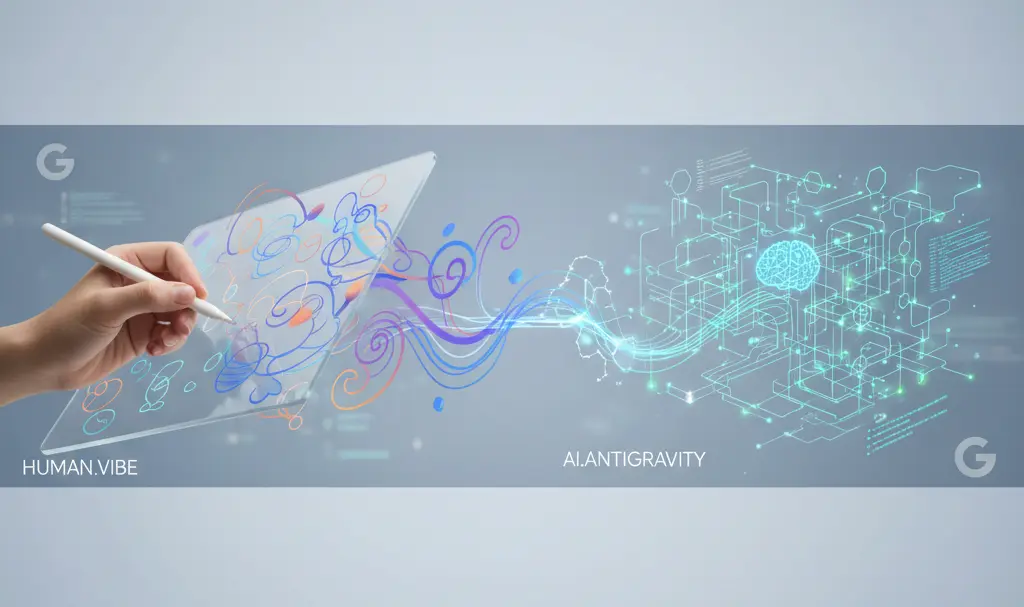
Vibe coding is transitioning from being just a buzzword bridging programming and art into a tangible tool in the hands of creators. Recent updates in Google AI Studio have significantly streamlined this approach, making it more accessible than ever. With just an application idea, artificial intelligence can now build it from the ground up.
Contents
The Rise of Vibe Coding: Revolutionizing App Development with AI
Vibe Coding Transforms the IT Landscape
The term “vibe coding,” popularized by Andrej Karpathy, co-founder of OpenAI, describes a new paradigm where programmers evolve from writing code line-by-line into creative directors. In this model, communication with the machine primarily occurs through natural language. The human’s main role is to convey the application’s vision or “vibe,” along with iteratively refining the results generated by the language model.
This approach emphasizes rapid experimentation and a fluid creative process, eliminating the frustrations often associated with battling syntax errors or compilation issues. Thanks to vibe coding, anyone can create an application, and with the refreshed Google AI Studio, this process becomes even more straightforward.
Google AI Studio: Empowering All Creators
Google AI Studio takes a significant leap forward by integrating vibe coding with powerful backend tools. This enables the creation of fully functional software without requiring deep technical knowledge of cloud infrastructure.
Here are the key enhancements introduced with the latest update:
- AI Retaining Project Context: Unlike previous AI models with short-term memory, the new agent analyzes and understands the entire project. It tracks logic, identifies its own errors, and actively supports the iterative development process. This allows for more coherent and complex application builds.
- Creation of Advanced Applications: Moving beyond static demonstrations, it’s now possible to create applications with robust server-side functionality (backend), such as e-commerce platforms that process payments or tools designed for managing user data securely.
- Automated Server Management: Complex server operations have been entirely automated. The AI manages infrastructure and deployment, eliminating the need for manual configuration file editing or command-line interface usage. This dramatically reduces the operational burden on developers.
- One-Click Deployment Readiness: Thanks to seamless integration with Google Cloud, immediately after development is complete, the application becomes active and accessible via a shareable URL. The barrier between “finished” and “deployed” has been virtually eliminated.
Antigravity: The Smart Agent Behind the Scenes
What once demanded weeks of meticulous backend architecture work now occurs effortlessly in the background, thanks to Google’s Antigravity agent. This intelligent system comprehends the entire project’s structure and can independently install necessary packages, construct server-side logic, and manage the application’s state in real-time.
Theoretically, entire web applications can be created without writing a single line of code. Users simply describe the desired outcome – for instance, a multiplayer online game or a simple collaborative panel – and Antigravity handles the rest. It suggests code snippets, installs required add-ons, and connects various parts of the application based on natural language instructions like “add a dark theme and Google login.” Crucially, it understands the user’s needs and intentions.
This makes the development process far more intuitive, akin to having a conversation with a UI designer. The assistant can self-correct errors, add necessary elements, and prepare the application for launch in the Google Cloud environment.
A key element that streamlines the entire building process is the integration with Google Cloud, which enables one-click deployment of the finished product to the web. This effectively transitions “vibe coding” into “vibe deploying,” as complex containerization and infrastructure scaling processes are automatically managed by the platform.
Frequently Asked Questions (FAQ)
What exactly is “vibe coding”?
“Vibe coding,” popularized by OpenAI co-founder Andrej Karpathy, shifts the traditional role of a programmer from writing line-by-line code to acting as a creative director. Instead of focusing on syntax, the developer communicates their vision or the “vibe” of an application using natural language, with AI handling the actual code generation and iterative refinement. This approach emphasizes rapid prototyping and creative flow.
How does Google AI Studio’s new “context-aware” AI improve the development process?
Unlike AI models with short-term memory, the updated Google AI Studio agent analyzes and understands the entire project’s context. This means it can track application logic, identify and correct its own errors, and support a more seamless iterative development process. It helps build more robust and complex applications by maintaining a comprehensive understanding of the project’s goals and existing structure.
What is Google Antigravity, and how does it contribute to app development?
Google Antigravity is an intelligent agent designed to automate complex backend architecture tasks that previously required extensive manual effort. It understands the entire project’s structure, autonomously installs necessary packages, generates server-side logic, and manages the application’s state in real-time. This allows creators to build sophisticated web applications, such as multiplayer online games or collaborative tools, by simply describing the desired outcome in natural language, significantly reducing the technical barrier to entry.
Source: Google Blog
Opening photo: Google
About Post Author
