

A New Era in Immunity: Stanford Researchers Develop Broad-Spectrum Vaccine
Imagine a single vaccine that could protect you not just from a specific virus, but from a wide range of infections, bacteria, and even allergies. Researchers in the USA, specifically from Stanford Medicine, are working on just that. Instead of constantly updating vaccines for new mutations, they’ve proposed a radically different approach: a vaccine designed to unleash the body’s natural defense mechanisms at an entirely new level.
Beyond Targeting Specific Pathogens
Most vaccines we’re familiar with operate on a simple principle: they introduce a fragment of an enemy (like a virus) to the immune system, teaching it to recognize and fight that specific threat. The challenge with this method is that viruses mutate, bacteria evolve, and our protection often needs continuous updates. A team of researchers from Stanford Medicine decided to explore a completely different path, and their promising results have been highlighted in publications like Rzeczpospolita and Science.
A Vaccine That Activates Your Body’s Own Alarms
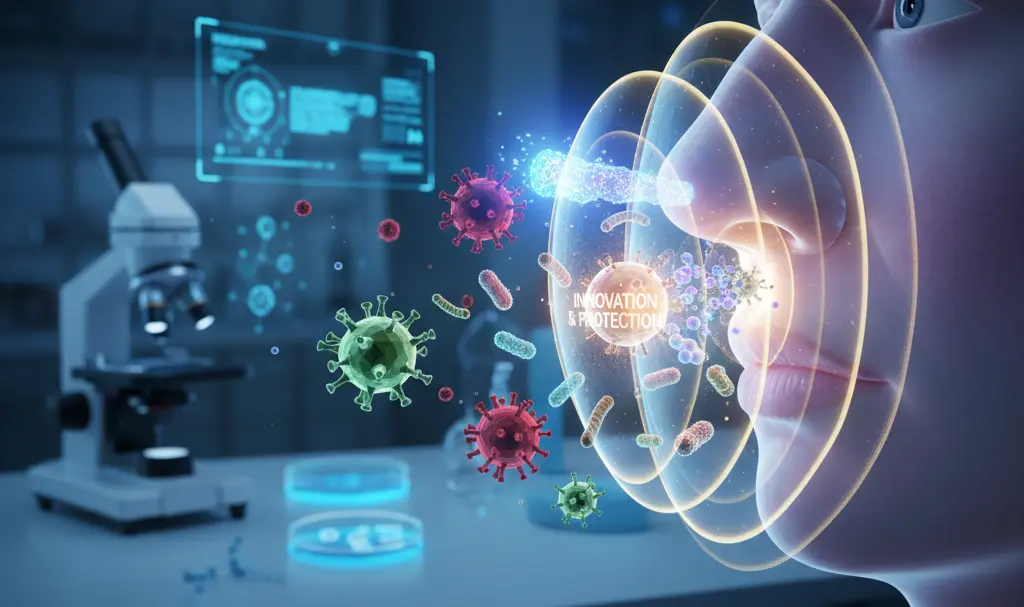
Instead of mimicking pathogen elements, the Stanford scientists focused on understanding how the body communicates internally during an infection. The new vaccine developed by their team doesn’t “pretend” to be a virus. Instead, it simulates the immune system’s internal alarm signals. This triggers a broad defensive reaction, independent of any specific virus or bacterium. This activation of “innate immunity” is a fundamental, rapid-response system present from birth, offering a general defense against a variety of threats.
Nasal Delivery for Front-Line Defense
Interestingly, this innovative preparation is administered nasally. This is a deliberate choice, as the respiratory tract is the primary entry point and first line of defense against seasonal infections. Studies conducted on mice demonstrated that this form of immune stimulation could provide significant protection in the lungs for several months.
From Serendipitous Observation to Potential Revolution
The genesis of this research wasn’t a futuristic vision but rather a well-known medical anomaly. For years, scientists observed that the tuberculosis (BCG) vaccine could reduce the risk of death from causes not directly related to tuberculosis itself. For a long time, the underlying reasons for this broad protective effect remained unclear.
More recently, it was discovered that in such cases, the BCG vaccine leads to a long-term activation of innate immunity, supported by components of the adaptive immune system. This mechanism—the sustained boosting of the body’s natural, non-specific defenses—became the foundational principle for the new Stanford vaccine. In laboratory tests, it protected mice not only against various respiratory viruses but also against dangerous bacteria and allergic reactions.
Surprising Results Against Allergies
Particularly striking were the findings concerning allergies. Vaccinated animals did not experience severe inflammatory reactions or airway obstruction, suggesting a potential role in mitigating allergic responses. These results, published in the esteemed journal *Science*, offer a glimpse into a future where allergy management could be revolutionized.
What’s Next?
It’s important to note that these are currently animal studies, a point emphasized by the authors themselves in their *Science* publication. However, if subsequent stages of research prove successful, the first human trials could commence within a few years. In the most optimistic scenario, such a vaccine could potentially enter clinical practice within five to seven years. This could genuinely transform our approach to combating infections and allergic diseases, offering a single solution where previously multiple, constantly updated interventions were required.
Frequently Asked Questions (FAQ)
What is unique about this new vaccine?
Unlike traditional vaccines that target specific pathogens, this new vaccine from Stanford Medicine activates the body’s innate immune system to trigger a broad defense against a wide range of threats, rather than focusing on one specific virus or bacterium.
How does this vaccine work?
Instead of mimicking parts of a virus, the vaccine imitates the body’s internal alarm signals that the immune system uses during an infection. This prompts a general, non-specific protective response from the innate immune system.
What results have been observed so far?
In studies on mice, the vaccine provided protection against various respiratory viruses, dangerous bacteria, and surprisingly, even allergic reactions by preventing severe inflammation and airway obstruction.
When might this vaccine be available for humans?
If ongoing research is successful, human trials could begin within a few years. In an optimistic scenario, the vaccine might be available for clinical use in five to seven years.
What inspired the development of this vaccine?
The research was inspired by observations that the tuberculosis (BCG) vaccine offered non-specific protection against other diseases, leading scientists to investigate the long-term activation of innate immunity.
Source: Rzeczpospolita, Science, Stanford Medicine. Opening photo: Generated by Gemini
About Post Author
