Contents
Samsung Galaxy S26 Ultra: A Deep Dive into its Telephoto Camera Changes
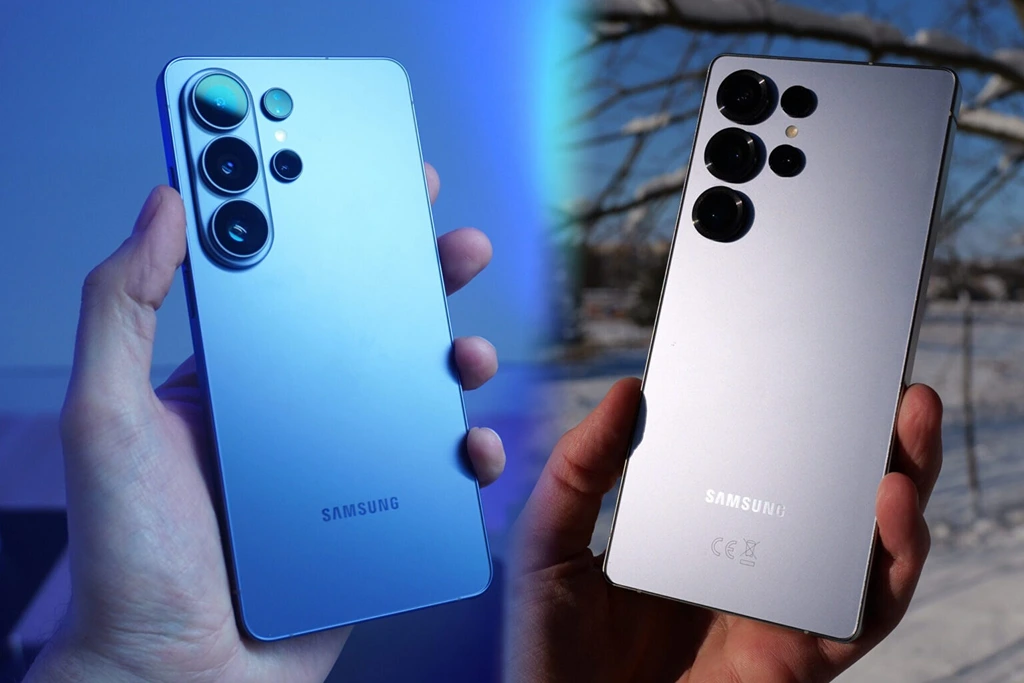
The launch of the Samsung Galaxy S26 Ultra was undoubtedly one of the most significant events in the tech world this year. While bringing various advancements, the phone introduced a notable change to its camera system that has garnered considerable attention: the removal of the periscope telephoto lens. This decision, while accompanied by brighter optics, presents a trade-off, particularly impacting the device’s telephoto capabilities.
The Periscope Advantage: What the Galaxy S25 Ultra Offered
For context, its predecessor, the Samsung Galaxy S25 Ultra, which many users, including myself, had the opportunity to test extensively, featured a comprehensive camera array. A standout component was its 5x telephoto lens, which utilized a periscopic design. This innovative structure incorporates a prism that bends light by 90 degrees, allowing for a longer focal length within a compact phone body without the lens protruding excessively. This design was crucial for achieving excellent zoom capabilities with a close minimum focus distance, offering users significant flexibility in their photography.
Galaxy S26 Ultra’s New Telephoto Design: A Shift in Strategy
With the latest Galaxy S26 Ultra, Samsung opted for a different approach for its 5x telephoto lens. The new model features a classic telephoto lens design, which means it no longer includes the prism mechanism characteristic of periscope lenses. This controversial change has led to a significant limitation, as highlighted by expert reviews from GSMArena.
The Challenge of Focus Distance
To quantify the impact of this design alteration, GSMArena conducted a practical experiment. They measured the minimum distance at which both the Galaxy S25 Ultra and S26 Ultra could achieve sharp focus using their respective telephoto lenses. The results were striking:
- Samsung Galaxy S25 Ultra: Capable of focusing at a minimum distance of just 26 centimeters (approximately 10.2 inches).
- Samsung Galaxy S26 Ultra: Required a minimum distance of 52 centimeters (approximately 20.5 inches) to achieve focus.
This experiment revealed a twofold difference in the minimum autofocus distance, indicating that the S26 Ultra’s telephoto lens requires subjects to be significantly further away to achieve a clear shot. This limitation can make it challenging to capture close-up telephoto shots or macros that were easily achievable with the S25 Ultra.
Potential for Higher Quality Photos Despite Limitations
Despite the setback in minimum focus distance, there’s a strong possibility that the newer Galaxy S26 Ultra will deliver higher overall image quality. Samsung has equipped the S26 Ultra with brighter optics across key cameras:
- Main Camera: Upgraded to an f/1.4 aperture from the S25 Ultra’s f/1.7.
- Telephoto Lens: Features an f/2.9 aperture, an improvement over the S25 Ultra’s f/3.4.
A wider aperture allows more light to reach the sensor, which is crucial for enhancing image quality in challenging lighting conditions, such as low-light environments. This improvement could translate to brighter, cleaner photos with less noise, potentially offsetting some of the versatility lost with the periscope’s removal.
Frequently Asked Questions (FAQ)
Why did Samsung remove the periscope lens from the Galaxy S26 Ultra?
Samsung has not officially provided a detailed reason for this specific change. However, manufacturers often make such design decisions to optimize for factors like device thickness, cost, or to integrate new sensor technologies that may not be compatible with the periscope mechanism.
What is the main disadvantage of losing the periscope telephoto lens?
The primary disadvantage is a significantly increased minimum focus distance for the telephoto lens. This means users will need to be further away from their subjects to capture a sharp image with the 5x zoom, limiting its utility for close-up telephoto shots or specific macro photography.
Does the Galaxy S26 Ultra’s camera still offer improvements?
Yes, despite the telephoto’s focus limitation, the Galaxy S26 Ultra features brighter optics (wider apertures) for both its main and telephoto cameras. This allows more light to enter the sensor, potentially leading to better overall image quality, especially in low-light scenarios, compared to its predecessor.
How does the S26 Ultra’s telephoto focus distance compare to the S25 Ultra?
The Galaxy S26 Ultra requires a minimum of 52 cm (20.5 inches) to focus with its telephoto lens, whereas the Galaxy S25 Ultra could focus as close as 26 cm (10.2 inches). This is a twofold difference, making the S25 Ultra more versatile for closer telephoto shots.
Source: GSMArena, Internal Research. Opening photo: Gemini
About Post Author