
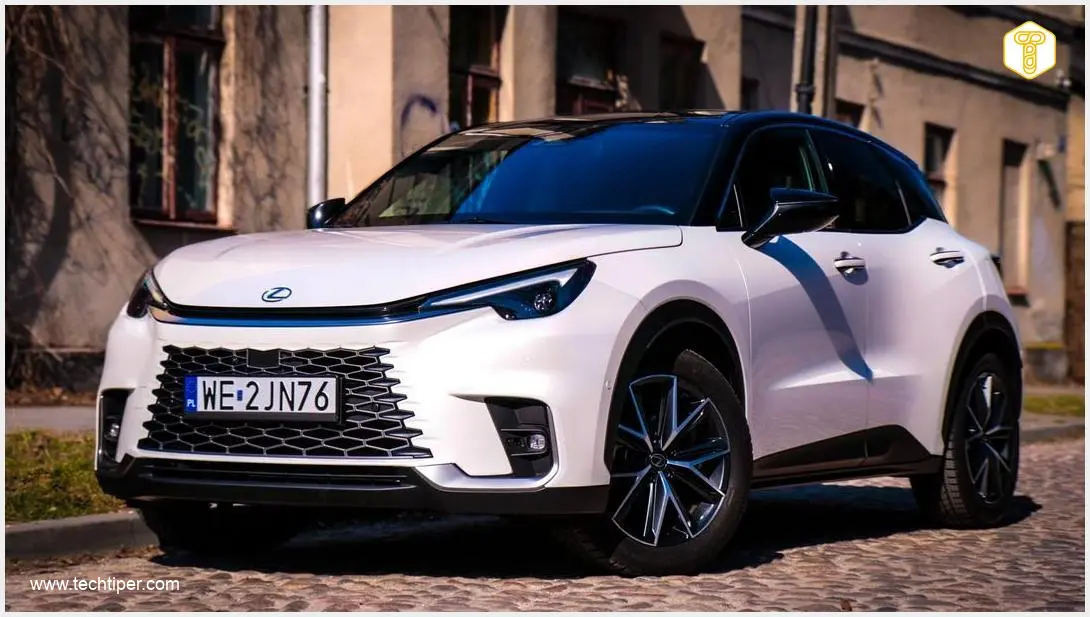
We’re embarking on a comprehensive review of the Lexus LBX, specifically the top-tier version equipped with the E-FOUR all-wheel-drive system. This urban crossover has quickly become a sales phenomenon within the Japanese brand’s portfolio. In theory, this success is hardly surprising, as Lexus has taken the impeccably proven and popular Toyota Yaris Cross platform and elevated it with premium-segment solutions.
The result is a significantly enhanced finish, increased comfort, and a higher price point, all while retaining the same fundamental powertrain. The crucial question is: does this combination truly deliver? Join us as we delve into this Lexus LBX review, exploring its advantages, disadvantages, and the key differences from its Toyota counterpart.
Contents
Lexus LBX: An Overview
The Lexus LBX distinguishes itself as a unique offering in the compact premium crossover segment. Built on a well-established platform, it aims to deliver a refined urban driving experience with an emphasis on quality and comfort. However, its urban focus means certain compromises might become apparent when venturing beyond city limits.
Key Advantages:
- A distinctive premium experience in a compact, urban package.
- User-friendly and intuitive software system.
- Exceptional build quality and ergonomic interior design.
- Light and agile handling perfectly complements its hybrid nature.
- Highly fuel-efficient powertrain.
- Effective and practical driver assistance systems.
Key Disadvantages:
- Limited space in the rear passenger seats.
- Interior noise insulation is not optimal at higher speeds.
- Noticeable power limitations on longer journeys.
- The E-FOUR all-wheel-drive system offers minimal real-world benefits in most situations.
Our Verdict on the Lexus LBX
Regardless of how often we mention the Lexus LBX’s close ties to the Toyota Yaris Cross – essentially a Yaris Cross in a more luxurious suit – this kinship brings significant advantages. It delivers a vehicle that stands out in its segment, offering a premium feel that competitors struggle to match, particularly excelling in urban environments. At almost every turn, the quality of the implemented solutions is palpable. However, its primary purpose is crucial: outside the city, you’ll encounter limitations such as a noticeable lack of power. Furthermore, it’s worth carefully considering whether the additional cost for the E-FOUR all-wheel-drive system is justified, as it adds considerable cost while providing minimal practical benefits.
Lexus LBX Pricing and Trim Levels
The tested vehicle represents the smallest offering in Lexus’s entire lineup. The manufacturer provides the LBX in several trim levels, referred to as ‘atmospheres,’ and with two drivetrain options: front-wheel drive (FWD) or E-FOUR all-wheel drive. The LBX commands a price approximately 30,000 to 50,000 currency units higher than its Toyota Yaris Cross equivalent, resulting in the following approximate prices (all figures in thousands of currency units):
- LBX (FWD): 156.4
- Elegant:
- FWD: 173.4
- E-FOUR: 195.4
- Emotion:
- FWD: 177.4
- E-FOUR: 199.4
- Relax:
- FWD: 194.4
- E-FOUR: 204.4
- Cool:
- FWD: 198.4
- E-FOUR: 208.4
- Vibrant:
- FWD: 199.9
- E-FOUR: 209.9
It’s important to note that the Vibrant version is a limited, time-sensitive edition featuring additional visual enhancements. The configurator also offers various option packages, but customers should always look out for regular promotions. At the time of this review’s publication, discounts of up to 30,000 currency units were available on selected models.
Lexus offers a 3-year warranty for the entire LBX and a 5-year warranty for the electrical components of the hybrid powertrain. Both warranties are limited to 100,000 kilometers (approximately 62,000 miles). Additionally, customers can opt for ‘Relax’ packages that extend the warranty for up to 10 years. The vehicle also comes with a 3-year paint protection warranty and a 12-year warranty against body perforation.
Estimated Insurance Costs for the Lexus LBX
Based on market data, comprehensive insurance for the tested LBX model for a driver with several years of experience could cost approximately 8,500 currency units annually for a full package including collision coverage. Basic liability insurance might be around 870 currency units.
The Lexus LBX reviewed here is the highest ‘Cool’ trim level (excluding the limited Vibrant variant) with E-FOUR all-wheel drive and nearly all available options from the configurator. Therefore, to the base price of 208,400 currency units, the following additions apply:
- Advanced Package (includes cross-traffic alert, Mark Levinson audio system, HUD, 360-degree cameras): 17,000 currency units
- Premium Package (includes full LED lighting with adaptive high beams): 6,000 currency units
- Metallic Paint: Sonic Quartz Bitone: 4,500 currency units
The total cost of this reviewed model comes to approximately 235,900 currency units. While this is a substantial price for a small urban crossover, it reflects its positioning within the premium automotive segment.
Lexus also offers a range of accessories for the LBX, primarily related to cargo transport, such as a tow hitch, various roof racks and boxes, and protective elements like floor mats, mudguards, cargo liners, and side moldings.
Lexus LBX Technical Specifications
While the Lexus LBX shares much of its underlying technology with the Toyota Yaris Cross, numerous significant changes have been implemented. The powertrain, however, is essentially transplanted 1:1 from the most powerful Yaris Cross variant. It’s crucial to understand that opting for the E-FOUR version does not equate to a full-time, robust four-wheel-drive system. Instead, the rear axle is driven by a small additional electric motor, producing just 4.7 horsepower and 52 Nm of torque. Its primary role is to provide supplementary traction in less favorable conditions, rather than significantly boosting performance – the overall performance remains perfectly adequate for urban driving.
The most noticeable changes in the LBX are its dimensions; Lexus has slightly widened and lengthened the model and thoroughly redesigned the interior, particularly the dashboard. This is where the premium segment characteristics truly come to life, thanks to superior finishes and advanced technologies. Despite these enhancements, it remains firmly categorized as an urban crossover.
A Brief History of the Lexus LBX
The Lexus LBX is a relatively new addition to the manufacturer’s lineup, having been unveiled in 2023. It expands the brand’s range of elevated models, serving as its smallest representative. Interestingly, it is only the second vehicle in Lexus’s history to feature a three-letter name, the first being the iconic LFA supercar.
As previously mentioned, the Lexus LBX inherits all its core technologies, including its platform, from the Toyota Yaris Cross (and the standard Yaris). Since its debut, it quickly became apparent that the market, especially in Europe, had a strong demand for such a vehicle. When examining Lexus’s overall sales figures, the LBX has rapidly climbed to the top of the brand’s sales charts.
The Lexus LBX falls into the B-segment, classifying it as an urban crossover. When searching for its closest direct competitors, one might look at MINI’s offerings, though primarily the all-electric Aceman. While the MINI Countryman could theoretically be considered, it is a distinctly larger vehicle, as are models like the BMW X1, Mercedes-Benz GLA, or Audi Q3. However, rivals such as the Alfa Romeo Junior and DS 3 are more comparable. This relatively small number of direct competitors has undoubtedly contributed to the LBX’s strong sales performance.
Lexus LBX Multimedia System: Intuitive and Refined
The software in the Lexus LBX naturally inherits much from Toyota, which is a positive aspect as it results in a clear and user-friendly system. Familiarizing oneself with all its features takes little time, although in some areas, additional descriptions for specific switches would be beneficial. In terms of performance, there’s little to fault; everything operates as expected for this segment.
Regardless of the trim level, the central display is a 9.8-inch panel that offers good resolution and image quality. In the tested LBX model, a 12.3-inch screen handles the digital instrumentation. Lower-cost models feature classic analog gauges that emulate a virtual counterpart. A head-up display (HUD) remains an optional feature across all variants.
User-Friendly Central Display
Lexus allows for the integration of a driver profile, primarily designed to work with a mobile application that provides real-time vehicle status. However, it’s not a mandatory feature for unlocking the full capabilities of the operating system itself, which is a refreshing approach compared to some other premium brands.
The core interface of the Lexus LBX’s multimedia platform features a sidebar with tabs for various software modules, enabling quick navigation to specific sections. There are no hidden gestures or complex drop-down menus; the system’s design prioritizes simplicity and ease of use. While a pull-out menu for shortcuts exists, it’s clearly indicated by an icon. Minor inconsistencies in font sizes are present in some areas, but overall legibility remains excellent.
Regrettably, there’s no built-in user manual, which could be a drawback for new Lexus owners who might have to discover certain functions through trial and error or by searching online. However, a basic voice assistant is available, limited to controlling the most essential LBX functions.
Regardless of what is displayed on the central screen, two rows of climate control settings are always accessible at the bottom. Crucially, basic parameters like temperature are managed by physical switches, which is a welcome feature. The software itself offers a comprehensive range of climate settings, including the nanoe X air purification filter and an electrically heated front windshield.
An interesting feature is the automatic heating mode for the seats and steering wheel, where the software intelligently decides when to activate them. Beyond this, Lexus provides standard settings common in this segment for lights and central locking. However, premium touches like comfortable entry/exit features and advanced door handles that prevent improper opening are highly appreciated additions.
Almost the final module of the Lexus LBX’s central display concerns connectivity, an area where the manufacturer has not held back. The car is continuously connected to the network, and users can also utilize Wi-Fi (though without a hotspot function) and, of course, Bluetooth. All mobile connectivity primarily supports system updates or Miracast. Surprisingly, the tested vehicle does not include a web browser application. In addition to wireless connectivity, multimedia can also be connected via USB.
One feature that distinctly sets the Lexus LBX apart from its Toyota counterpart is the audio system. The tested model was equipped with the Mark Levinson sound system, comprising 13 speakers and an additional 12-channel amplifier with a total output of 1800 W.
Paired with the improved interior finishes, the system delivers remarkably clean and enjoyable sound. For a premium urban segment vehicle, the listening experience is fully commendable, with excellent balance across different frequency bands being its greatest strength. It’s worth noting, however, that the sound balance is noticeably biased towards the front row, regardless of settings.
Navigation, Android Auto, and Apple CarPlay Integration
The navigation system in the tested Lexus LBX was not activated. However, it is a well-known solution from other Japanese models, offering straightforward and clear maps with basic functionalities. There have been no reported significant issues with database updates.
Naturally, support for Android Auto and Apple CarPlay is included. Both platforms operate wirelessly and function flawlessly, though Apple CarPlay offers a slightly more convenient experience as it allows the side menu bar with tabs to remain visible.
Digital Instrument Cluster and Head-Up Display: Japanese Simplicity
While digital instrument clusters in Toyota vehicles often serve as a central point for managing key car functions, Lexus primarily focuses on providing the driver with essential information. However, this doesn’t mean customization options are absent.
The LBX’s digital instrument cluster offers three distinct themes, adjustable from the central screen. These visualizations can be broadly categorized by the number of visible dials. The most comprehensive setup simulates classic speedometer and tachometer/energy flow gauges. The intermediate option centrally displays the energy flow, while the minimalist theme entirely replaces physical pointers with digital readouts.
Within the settings, drivers can choose whether to display the tachometer or prefer the energy flow view. The latter is, of course, more relevant in a hybrid Lexus for monitoring when the internal combustion engine engages, which is a crucial aspect for optimizing fuel efficiency.
Beyond the three main themes for the digital instrument cluster, drivers can customize what appears within three widget sections, with three saved settings. The central area allows for the display of driver assistance systems or two map variants (when navigation is active).
The side sectors offer the same set of visualizations, additionally showing multimedia information and various trip computer readouts. Naturally, all these elements can be switched off to minimize the information presented on the digital display.
If you enjoy choices in threes, the optional head-up display (HUD) also offers three themes, allowing you to decide the level of detail presented. The HUD itself is large, colorful, and perfectly clear. It’s straightforward yet highly effective for its intended purpose. Beyond its primary functions, the windshield also displays a preview of what the steering wheel buttons currently control, a feature we’ll discuss shortly.
Lexus LBX Interior: A Touch of Premium from the Outset
The most significant improvement over the Toyota Yaris Cross, the LBX’s predecessor, was the often plastic-heavy and somewhat creaky interior finish. Lexus, understandably, could not afford to replicate this. In reality, the reviewed vehicle boasts very pleasant-to-touch materials and exceptional fit and finish. At every turn, the premium segment feel is evident. Simultaneously, the manufacturer has not overlooked practicality, which also performs quite well.
The LBX features a keyless entry system with Lexus’s typical implementation. The car doesn’t react simply by your proximity; instead, grabbing one of the front door handles unlocks the central locking. Locking occurs similarly by touching the visible grooves on the handle.
The electric tailgate of the LBX is also part of the keyless access system, and importantly, it can be closed along with the entire car. In fact, you can even close it when the car is already locked, as an additional button is located on the exterior. However, it does not feature a foot-motion gesture for opening under the bumper.
First Row: Unique and Innovative Door Latches
For years, Lexus has promoted its unconventional electric door latches, also known as e-latches. Instead of physically pulling them, you press a button on the interior side, and electronics release the lock. The situation is similar inside, although a classic pull-lever option remains as a backup. This system allows for advanced features, such as blocking the doors if sensors detect a potential hazard.
Once the doors are open, the ease of entry is appreciated. Notably, the doors cover the sills, preventing concerns about dirty trousers. The elevated body and wide range of hinge movement simply facilitate effortless ingress and egress from the LBX.
The door panels make an excellent impression, with a suede-like fabric dominating, which is very pleasant to the touch. Even the upper section, though plastic and firmer, yields slightly under pressure. Rigid plastic is only found in the lower part, where there’s also a modestly sized storage compartment suitable for smaller bottles.
Comfortable Seating, Especially for the Driver
Despite the tested Lexus LBX being an urban crossover, I experienced no discomfort on longer journeys. The seats, though relatively firm, can be well-adjusted to one’s body. There’s even decent lateral support, despite the car not having overtly sporty aspirations.
In terms of available features, the driver significantly benefits. Primarily, the driver’s seat is electrically adjustable and includes 2-way lumbar support and seat cushion tilt. Building on this, Lexus has incorporated a comfortable entry/exit function, though rear passengers should be mindful of the limited space in the second row. Additionally, seat memory settings are provided.
On the passenger side, basic manual adjustment is available, including height. A shared feature for both front seats is 3-stage heating. It’s a minor oversight that Lexus didn’t consider an additional Isofix mounting point, which would be highly beneficial in an urban car of this segment.
Steering Wheel: Classic Lexus Design
Moving to the Lexus LBX’s steering wheel, we encounter another characteristic feature of this manufacturer: its unique controls, which we’ll discuss shortly. The steering wheel rim itself is heated (2-stage) and leather-wrapped but relatively thin. Adjustment in this case is manual (2-way) with a limited range, though I (at 1.8m tall) had no trouble finding a suitable driving position.
The aforementioned controls consist of physical buttons that are also haptic-sensitive – you can assign specific functions to them. While not available in all trim levels, this solution is generally convenient. The meaning of the arrows on both spokes can be changed on the fly and adjusted in the settings.
The primary role of the left section is multimedia control, while the right section manages the cruise control. One needs to develop the habit of not pressing the button immediately; instead, wait for the software to recognize the touch before performing the assigned action. This slight delay could certainly be improved.
Behind the steering wheel, you’ll find paddle shifters, which, of course, offer a simulated gear change experience with the e-CVT continuously variable transmission equipped in the Lexus LBX. You won’t find yourself using them regularly. However, I have no complaints about the driver attention monitoring system, whose sensors are located at the top of the steering column.
Near the driver’s left knee are buttons responsible for seat memory, adjusting the brightness of the digital instrument cluster, and selecting the type of mileage display. Additionally, there are switches for opening the fuel filler flap and the tailgate.
Dashboard: Practical Luxury in the Cabin
The fact that the LBX is not merely a rebadged Yaris Cross is most evident in its thoroughly redesigned dashboard, tailored to Lexus’s distinct style. This comes hand-in-hand with exquisite materials, and many will also appreciate its ergonomics, particularly the lower-set display that doesn’t protrude above the dashboard itself.
At the very top, you’ll find a component of the Mark Levinson audio system, as well as the projector for the head-up display. Integrated into the strip separating the plastic from the suede-like material are the air vents and the engine start button.
Below this, the aforementioned display is accompanied by a series of physical switches for climate control and a rotary knob for multimedia volume. Further down, you’ll find buttons useful for parking, and on the other side, two USB-C ports. At the very bottom, there’s a storage compartment with a wireless charging pad. Its design isn’t ideal, as a smartphone placed there tends to protrude and can easily slide off the charging coil.
Another, much larger storage compartment is available between the seats on a lower level, offering an additional USB-C connector and a 12V socket. The surface is lined with rubber, which helps prevent heavier items from sliding around. Returning to the upper section, there’s space for what could be described as 1.5 cupholders, as it realistically accommodates one cup and some small items (e.g., a key). Moving further back, a comfortable drive mode selector appears, along with buttons for the electronic parking brake and driving modes.
Looking for a second cupholder? It’s cleverly hidden under the armrest, which can be slid backward to reveal a slightly less convenient spot for beverages. If it’s not needed, it can be removed entirely. The armrest itself is comfortable but not adjustable in any other way. Of course, it can also be opened to reveal a fairly spacious and deep storage compartment, also with a rubber lining.
Another storage compartment is naturally located in front of the passenger, but it’s not excessively large and is made primarily of plastic. Near the headliner, touch-controlled interior lights and an auto-dimming rearview mirror (with an off switch) are present.
Second Row: Primarily Designed for Children
Opening the rear doors of the LBX immediately reveals some cost-saving measures. While the door panel still features pleasant-to-touch upholstery, there’s significantly more plastic, and exclusively of the hard variety. Nevertheless, primary contact points still utilize soft materials, and the electric door latches are retained. The storage compartment is tiny, and the space revealed upon opening the doors is not particularly generous.
The rear bench seat is primarily designed for children. Sitting behind a front seat adjusted for a 1.8-meter (5’11”) adult, I fit snugly, meaning short city trips are feasible. In the LBX’s second row, children or teenagers will undoubtedly feel much more comfortable. Therefore, the convenient Isofix mounting points, hidden behind easily removable covers, are highly appreciated, though care must be taken not to lose them.
For enhanced travel comfort, rear passengers can utilize two USB-C ports and a seatback pocket behind the front passenger seat. There are also coat hooks, and that’s largely it. It’s a pity that Lexus didn’t even include a simple armrest with a single cupholder here.
Interior Lighting: A Colorful Experience
Regarding the lighting in the tested Lexus LBX, which is the highest trim variant, there are no additional external light sources. Upon opening the doors, similarly, nothing illuminates the ground, so you rely on your vision to spot potential mud or puddles.
Inside, the situation improves, as the basic lighting is adequately effective. This is complemented by ambient lighting, which focuses exclusively on the first row within two zones. In wealthier trims, Lexus allows choosing from one of 50 colors – simple, without extravagance. Interestingly, the manufacturer does not offer a sunroof option.
Cargo Area: Optimized for City Errands
The electrically operated rear tailgate of the tested Lexus LBX features an option to select its opening height. Once fully open, it reveals a generous loading aperture with a relatively high sill. A significant advantage is the ability to close the tailgate simultaneously with locking the central doors.
Opting for an LBX with the additional electric motor on the rear axle (E-FOUR) means accepting a noticeably smaller cargo area. The basic capacity in this configuration is just 255 liters (approximately 9 cubic feet), whereas the front-wheel-drive version offers 332 liters (approximately 11.7 cubic feet) due to a lowered floor. Incidentally, the subwoofer takes up an additional 3 liters and is located on the tailgate itself.
Nevertheless, Lexus states that when packed to the roof, the reviewed model offers 317 liters (approximately 11.2 cubic feet) of capacity. With the rear seatbacks folded (40:60 split, no ski pass-through), the total cargo volume expands to 994 liters (approximately 35.1 cubic feet), which is ample for suitcases or larger shopping items. Due to the raised floor in the E-FOUR version, a flat loading surface is also achieved.
Among the clever solutions in the LBX’s cargo area is a double floor, concealing space for smaller items. A welcome addition is a 12V socket and well-organized wheel arches, though hooks are notably absent. However, attachments for cargo nets are present. A tow hitch, available in the configurator, provides the option to tow a trailer.
Lexus LBX Driving Impressions: Emphasizing Agility
Considering the Lexus LBX primarily as a vehicle for urban driving, one will undoubtedly appreciate its straightforward handling. A sense of lightness is present at every turn, particularly with the steering system. The LBX also earns a reputation for comfort, though not without caveats, as the suspension can exhibit stiffness at times.
Regarding the suspension, it absorbs road imperfections quite well, but I would expect it to operate more quietly. Larger potholes or significant speed bumps result in audible noise, especially from the rear. Simultaneously, the suspension is adequately firm to keep the short, elevated body in check. The overall driving character is quite pleasant – certainly not boring.
For the steering system, Lexus has opted for its preferred electric power steering in the LBX, which has both advantages and disadvantages. A nuance to adapt to is the limited feedback from the wheels, even though it’s not a drive-by-wire system. On the other hand, the manufacturer has successfully implemented distinctly different behaviors depending on the speed.
Consequently, in the city, and particularly in parking lots, you’ll experience incredible lightness when turning the steering wheel. The turning circle is fully acceptable at 10.4 meters (approximately 34.1 feet). When slowly navigating stop-and-go traffic, there isn’t a noticeable increase in steering weight, which, while requiring adjustment, isn’t particularly difficult. On high-speed roads, however, the system gains appropriate precision.
Driving Dynamics: Tailored for the Urban Environment
The tested Lexus LBX is not a speed demon; its powertrain is specifically designed for urban excursions. We’re discussing a self-charging hybrid (HEV) system based on a 1.5-liter, 3-cylinder internal combustion engine producing 92 horsepower and 120 Nm of torque. This is paired with a front electric motor (94 horsepower), resulting in a total system output of 136 horsepower and 185 Nm of torque.
The inclusion of a second electric motor on the rear axle as part of the E-FOUR drive system does not translate to better performance; quite the opposite. This motor generates less than 5 horsepower and is primarily useful only when experiencing traction issues on slippery surfaces. However, the entire system adds approximately 80 kg (about 176 lbs) to the vehicle’s weight (total 1415 kg or 3119 lbs), meaning the 0-100 km/h (0-62 mph) acceleration time is 9.6 seconds on paper (0.4 seconds slower than the FWD version). This figure accurately reflects the LBX’s real-world capabilities.
Lexus wisely refrained from overloading the LBX with numerous drive modes. Between the front seats, you’ll find only an ‘Eco’ button, which subtly alters throttle response and reduces air conditioning efficiency. In this setting, the car doesn’t feel significantly restricted compared to standard mode, and it more readily utilizes the electric motor.
While it’s possible to force EV mode under suitable conditions (a charged battery) for a brief period, preventing the internal combustion engine from starting, this typically only lasts a few kilometers. From a driver’s perspective, the best approach is to learn how to encourage the LBX’s computer to automatically switch to electric-only driving. This involves accelerating efficiently to a desired speed, briefly lifting off the accelerator, and then maintaining the energy flow indicator within the first quarter.
The available system power of the tested Lexus LBX is perfectly sufficient for urban driving, and in this scenario, the hybrid system excels. I have no complaints regarding the car’s behavior, as its role is to provide comfortable transportation for daily commutes, shopping, or picking up children from daycare or school. Essentially, it’s a premium car designed to offer a calming experience.
Naturally, there’s nothing preventing you from taking the LBX onto a highway or expressway for longer distances. However, in such cases, the LBX’s weaknesses, including its power deficiency, become more apparent. The car noticeably struggles with acceleration at 140 km/h (approximately 87 mph), doing so with minimal dynamism. At the same time, issues with engine noise insulation emerge; the cabin becomes louder, also from tire noise. For optimal comfort, it’s best to drive calmly, up to around 120 km/h (approximately 75 mph).
With a Lexus, it’s always advisable to keep the cruise control engaged (not necessarily active), allowing the radar systems to continuously support the regeneration system. Upon detecting a slower vehicle ahead, the LBX will smoothly decelerate and recover energy. This solution is easy to use, efficient, and convenient. There’s no alternative, meaning you cannot, for example, manually adjust the specific strength of electric motor braking.
Fuel Consumption and Range: Nearly Flawless Efficiency
An urban crossover like the Lexus LBX theoretically doesn’t require a large fuel tank. Consequently, the tested vehicle can hold 36 liters (approximately 9.5 gallons) of fuel. This capacity is certainly not conducive to long-distance travel, yet the Japanese hybrid doesn’t entirely rule out such journeys. During the tests, the ambient temperature was around 15°C (59°F).
Unsurprisingly, the best fuel economy figures are achieved in the city, where the Lexus LBX consistently consumes very little fuel regardless of the driving scenario. My personal best was 3.4 liters per 100 kilometers (approximately 69.2 miles per gallon) with very calm driving, but most often – in moderate urban traffic – the onboard computer showed around 4 liters per 100 kilometers (approximately 58.8 miles per gallon), providing a range of approximately 900 km (about 560 miles). At the other end of the spectrum, around 7 liters per 100 kilometers (approximately 33.6 miles per gallon) was recorded when deliberately preventing the internal combustion engine from switching off, though this is an extreme scenario. Dynamic but sensible driving typically yields a maximum of 5 liters per 100 kilometers (approximately 47 miles per gallon).
Suburban driving with the LBX also performs exceptionally well, with consistent speeds (around 80 km/h or 50 mph) easily maintaining fuel consumption at 4 liters per 100 kilometers (approximately 58.8 miles per gallon), offering a similar range of about 900 km (560 miles). Fuel efficiency deteriorates somewhat when venturing onto high-speed roads:
- 100 km/h (62 mph): 5.4 l/100 km (approx. 43.5 mpg) – range: ~660 km (410 miles)
- 120 km/h (75 mph): 6.4 l/100 km (approx. 36.8 mpg) – range: ~560 km (348 miles)
- 130 km/h (81 mph): 6.9 l/100 km (approx. 34 mpg) – range: ~520 km (323 miles)
- 140 km/h (87 mph): 7.8 l/100 km (approx. 30.2 mpg) – range: ~460 km (286 miles)
These figures are still not alarming, but they are noticeably higher, as the internal combustion engine plays a dominant role at these speeds. It’s also important to remember the increased weight of the E-FOUR drivetrain – the decision to pay extra for this system should be a fully informed one.
Lexus LBX Driver Assistance Systems: Enhancing, Not Hindering
Lexus has approached the management of driver assistance systems in the LBX somewhat more effectively than Toyota. Gone are confusing abbreviations; instead, there are sensibly described tiles. While additional descriptions would certainly be welcome, for now, we have straightforward on/off switches. Only a few solutions allow for additional parameterization, and here, the LBX offers quite interesting customization options.
The traffic sign recognition system in the LBX performs quite averagely, frequently misreading speed limits from side roads, which results in distinct, unavoidable beeping during driving. The quickest way to deactivate it is via the pull-out shortcut menu, where the assistant appears immediately.
The mirrors in the tested Lexus are appropriately sized for the LBX’s body, providing good visibility. They also tilt downwards when reversing. Furthermore, an auto-dimming function is present. Naturally, a blind-spot monitoring system is included, complemented by front and rear cross-traffic monitoring.
Despite being an urban car, the Lexus LBX is equipped with a comprehensive adaptive cruise control system. While it lacks a Stop&Go function, the multitude of options for adjusting its operation is impressive. Similarly, the system’s performance is flawless, with only the limited power being an issue during acceleration on high-speed roads.
The cruise control is enhanced by an excellent lane-keeping assist system. Regardless of conditions and speed, it quickly recognizes lanes and maintains the car’s position within them. This is one of the better implementations on the market, as it’s also not overly sensitive about precisely holding the steering wheel.
The headlights featured in the tested Lexus LBX are the optional, highest variant, distinguished by, among other things, an adaptive high beam mode. We’ll delve into that in a moment, but the basic light beam itself is commendable. It performs flawlessly in both urban and rural environments, offering appropriate brightness, spread, and range.
The aforementioned adaptive high beam mode, while consisting of a relatively small number of segments, effectively cuts out light to avoid dazzling other road users. Moreover, I have the impression that in the Lexus, they react slightly better to other cars on the road compared to the Yaris Cross, although occasionally they were a bit slow to dim specific areas.
As if that weren’t enough, front fog lights with an active cornering illumination function are also in play, proving to be a helpful solution.
Finally, we have the 360-degree camera system, which is entirely absent in its Toyota counterpart. The cameras capture good quality images. While it’s not groundbreaking and one might theoretically expect a bit more from Lexus, a premium brand, overall, it’s not bad, and in urban conditions, it’s easy to spot any potential hazards on the road.
I particularly appreciate the Lexus software’s various camera display modes; there are many options, and even with folded mirrors, the embedded cameras remain useful. An interesting fact is that opting for the 360-degree camera system means losing the rear camera washer, which is available if you don’t purchase the additional cameras.
Among the less essential features are the automatic parking and exit assist systems. These work reasonably well but are exceptionally slow.
Conclusion: Lexus LBX Review
Our review of the Lexus LBX reveals a highly enjoyable vehicle perfectly suited for city life. It is crafted to deliver tranquility and a distinct premium feel. Compared to its predecessor, there’s a significant leap in terms of interior finish and overall quality. Furthermore, it boasts a very fuel-efficient powertrain, agile handling, and useful driver assistance technologies.
The two primary drawbacks of the Lexus LBX are its limited rear passenger space and the hybrid system’s constrained power output. Longer journeys on high-speed roads will highlight these deficiencies. Additionally, the value proposition of investing in the E-FOUR all-wheel-drive system is questionable. It’s more expensive, results in slower acceleration, and reduces cargo space, while the benefits of this solution are rarely felt in everyday driving.
Frequently Asked Questions (FAQ)
Is the Lexus LBX merely a rebranded Toyota Yaris Cross with a higher price tag?
While the Lexus LBX shares its fundamental platform and powertrain with the Toyota Yaris Cross, it undergoes significant transformations. Lexus elevates the experience with substantially improved interior finishes, higher-quality materials, enhanced comfort features, and a distinctive premium design, justifying its higher price point beyond a simple rebadge.
How does the E-FOUR all-wheel-drive system in the Lexus LBX impact performance and fuel efficiency?
The E-FOUR system in the Lexus LBX adds a small electric motor to the rear axle, primarily for supplementary traction in slippery conditions, not for enhanced performance. It adds approximately 80 kg (176 lbs) to the vehicle’s weight, making it slightly slower (0-100 km/h in 9.6 seconds for E-FOUR vs. 9.2 seconds for FWD) and marginally less fuel-efficient, especially on highways, due to the increased weight and the internal combustion engine working harder. Its benefits are minimal in everyday driving scenarios.
What are the main drawbacks of the Lexus LBX for extended road trips?
For longer journeys, the Lexus LBX’s main drawbacks include limited rear passenger space, which can be uncomfortable for adults, and a noticeable lack of power on highways, particularly at speeds above 120 km/h (75 mph). Additionally, interior noise insulation, especially from the engine and tires, becomes more apparent at higher speeds, affecting overall comfort during extended travel.
Is the premium price of the Lexus LBX justified for a compact urban crossover, or are there better alternatives?
The Lexus LBX justifies its premium price by offering a unique combination of high-quality interior materials, advanced technology, refined driving dynamics for urban environments, and a strong brand prestige that is hard to find in the compact crossover segment. While direct competitors are few, larger premium SUVs like the BMW X1 or Mercedes GLA offer more space and power but at a higher price point. The LBX carves out its niche by providing a luxurious and efficient urban experience, making it a strong contender if its primary use case aligns with city driving and premium comfort.
Source: Self-published. Opening photo: Lukasz Pajak
About Post Author
