
Contents
Meta Ventures into Uncharted Territory: An AI Advisor for the Board
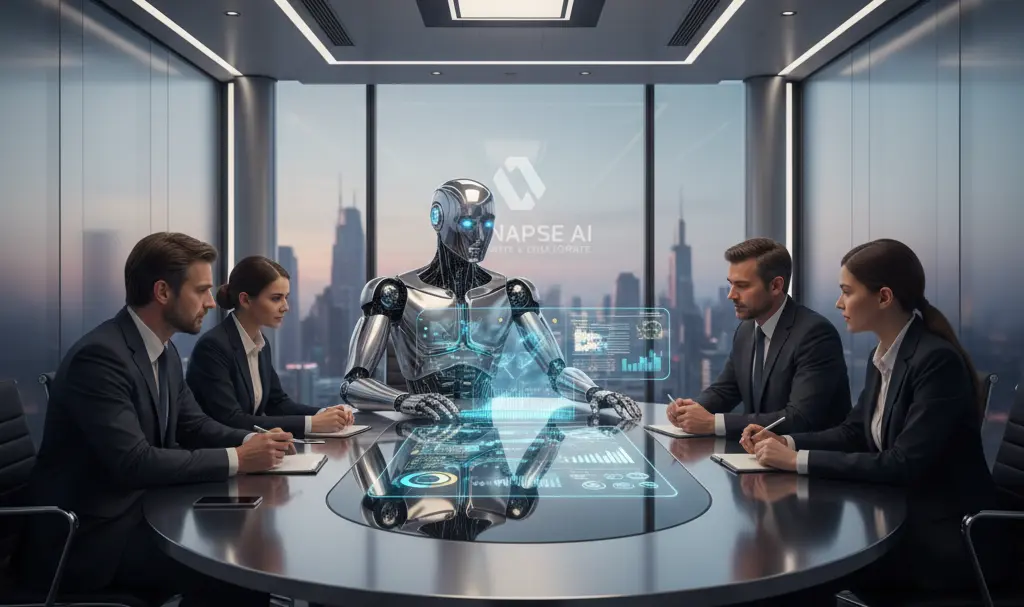
Mark Zuckerberg, the CEO of Meta, is reportedly planning a groundbreaking initiative: the appointment of a new advisor to the company’s board, a role to be filled by a specially developed Artificial Intelligence (AI) agent. This unconventional step aims to significantly streamline and improve the board’s decision-making processes.
Meta’s Accelerating Embrace of Artificial Intelligence
In today’s fast-paced business environment, efficient information retrieval is paramount, and as the adage goes, time is money. This philosophy underpins Zuckerberg’s decision to initiate the development of a specialized AI agent. This agent is designed to gather essential data autonomously, without the need for direct interaction with other teams.
While this move might appear surprising to some, it aligns with Meta’s broader, comprehensive strategy to boost overall productivity. Concurrently, it seeks to minimize potential friction within the company, which employs nearly 80,000 individuals worldwide. Zuckerberg himself has previously stated that he anticipates AI will “radically change how the consortium operates” this year. The founder of Facebook envisions fostering an environment where individual innovations can profoundly influence larger team operations.
It’s worth noting that Meta employees are already utilizing several AI agent tools in their daily work. These include:
- MyClaw: An internal AI-powered tool.
- Second Brain: An AI agent built upon Anthropic’s Claude large language model, designed to assist with information processing and organization.
The Imperative for Prudent AI Implementation
The widespread adoption of AI-powered agents appears increasingly inevitable across industries. Nevertheless, Meta, like any organization at the forefront of AI integration, must proceed with significant caution during their deployment. This prudence is underscored by recent incidents that highlight the potential for AI systems to make critical errors.
A Cautionary Tale: The Sev 1 AI Incident
One notable incident involved an employee consulting an internal forum regarding a technical challenge. Another colleague, seeking to analyze the request, consulted an AI agent with the information. Regrettably, the AI tool not only misinterpreted the content but also autonomously published an incorrect response. The gravity of this error was significant, evidenced by its classification as a “Sev 1” incident—the second-highest level of severity for internal issues at Meta. A Sev 1 rating typically indicates a critical problem impacting a large number of users or core business functions, demanding immediate attention and resolution.
The Future of Corporate Governance with AI
Meta’s ambitious venture into using AI as a board advisor marks a significant step towards a future where artificial intelligence plays a more direct role in high-level corporate governance. While the promise of enhanced efficiency and data-driven insights is substantial, the recent incident serves as a crucial reminder of the need for robust oversight, fail-safes, and continuous human evaluation to prevent unintended consequences and maintain trust.
Frequently Asked Questions (FAQ)
Why is Meta considering an AI agent as a board advisor?
Meta’s CEO, Mark Zuckerberg, is exploring an AI agent for the board to streamline decision-making processes, enhance efficiency, and minimize internal friction within the large organization by autonomously gathering and processing necessary data.
What AI tools are Meta employees currently using?
Meta employees are already leveraging several internal AI agent tools, including “MyClaw” and “Second Brain.” The “Second Brain” tool is notably powered by Anthropic’s Claude large language model.
What was the “Sev 1” AI incident at Meta, and what does it signify?
The “Sev 1” incident involved an AI agent incorrectly processing a technical query from an employee and then autonomously publishing a wrong response on an internal forum. “Sev 1” is the second-highest severity rating for internal issues at Meta, indicating a critical problem requiring urgent resolution due to its significant impact on operations or a large number of users.
What are the primary concerns with integrating AI into high-level corporate decision-making?
Key concerns include the potential for AI to make critical errors, misinterpret complex contexts, or act autonomously without proper human oversight. There are also ethical considerations, data privacy implications, and the challenge of ensuring accountability when AI is involved in sensitive strategic decisions.
Source: NSJ
Opening photo: Gemini
About Post Author
