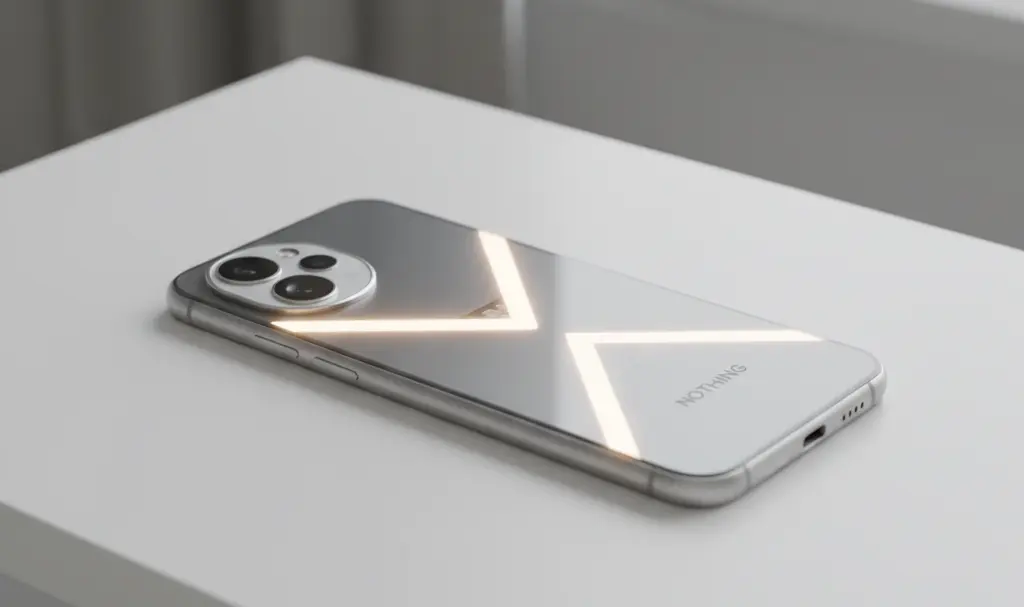
Nothing Phone (4a) Review: Value Beyond the Aesthetics
Welcome to our in-depth review of the Nothing Phone (4a), the most affordable smartphone in Nothing’s lineup (excluding the CMF brand). Right from the start, it’s unmistakably a Nothing device, and its low price point is particularly commendable. What truly stands out is that you’re not paying a premium solely for its original design; the unique aesthetic doesn’t come at the expense of other crucial aspects like performance. Join us as we explore all the advantages and disadvantages of the Nothing Phone (4a) in this full test.
Nothing Phone (4a) Review: Table of Contents
- Unboxing, Technical Specifications, and Price
- Design and Build Quality
- Display and Image Quality
- Battery Life and Charging
- Cameras: Photo and Video Quality
- Software and Performance
- Conclusion and Our Opinion
The Nothing Phone (4a) was provided for review by Nothing. The manufacturer had no influence on the content of this material.
Advantages
- Excellent value for money and features
- Unique, instantly recognizable Nothing design
- Useful Glyph Interface
- Display with above-average resolution and image quality
- Main camera performs exceptionally well
- Unique, yet uncluttered software experience
Disadvantages
- Wide-angle camera significantly underperforms compared to others
- Minor specification omissions (e.g., no eSIM)
Nothing Phone (4a) Review: Our Opinion
True to its brand identity, Nothing takes promising components and integrates them into a distinctive chassis, adding unique features like the Glyph Interface and Essential Space. This formula continues to impress. The Nothing Phone (4a) is a unique smartphone that offers a lot for its price, performing exactly as expected. This holds true unless you’re expecting a flagship-level camera, as night photography (especially with the wide-angle lens) reveals its weaknesses. Nevertheless, it’s a smartphone that effectively challenges much larger competitors in the market.
Unboxing, Technical Specifications, and Price of the Nothing Phone (4a)
The Nothing Phone (4a) arrives in a sleek, glossy black outer packaging, which houses the actual box containing the accessories. Even at this stage, the thoughtful organization of individual elements is evident; everything has its place, and nothing feels cramped.
As we’ve come to expect, the number of accessories isn’t extensive. However, a pleasant addition to the Phone (4a) package – alongside a 1-meter USB-C to USB-C cable, documentation, and a SIM tray ejector tool – is a protective case. Furthermore, a screen protector is pre-applied to the phone’s display.
The included rubber case snugly fits around the camera island and slightly protrudes from the front surface, offering basic but effective protection. It adheres well to the device, addressing key vulnerabilities. One minor drawback is that it tends to attract fingerprints quite easily.
As mentioned, the Nothing Phone (4a) is the brand’s most affordable offering, denoted by the “a” in its name. The price naturally varies depending on the storage configuration. In the US, you can typically find it in two main variants:
- 8 GB RAM / 128 GB Storage: Approximately $400 USD
- 12 GB RAM / 256 GB Storage: Approximately $475 USD
Our review unit is the higher-end version. Other markets may offer an intermediate 8 GB RAM / 256 GB storage option. You can find the full specifications below, but keep in mind that Nothing frequently offers various promotions on its models, so prices may vary.
Nothing Phone (4a) Technical Specifications
| COMPONENT | DETAILS |
|---|---|
| Display | 6.78-inch OLED, 1.5K+ resolution (2720×1224, 20:9, 440 ppi), 87.2% screen-to-body ratio, up to 4500 nits peak brightness, 120 Hz refresh rate, 10-bit color (1.07 billion colors), HDR10+ support |
| Processor | Qualcomm Snapdragon 7s Gen 4 (4 nm lithography); CPU: 1x Cortex-A720 (2.7 GHz), 3x Cortex-A720 (2.4 GHz), 4x Cortex-A720 (1.8 GHz); GPU: Adreno 810 |
| RAM | 8 or 12 GB LPDDR4X RAM |
| Storage | 128 or 256 GB UFS 3.1 |
| Cameras | Front: 32 Mpx (f/2.2, Samsung S5KKD1) Rear:
|
| Battery | 5080 mAh; 50 W wired charging (USB PD3.0) |
| Connectivity | Dual SIM (5G, 2x Nano SIM), Wi-Fi 6 (802.11ax), Bluetooth 5.4, NFC, USB-C (2.0) |
| Other Features | In-display fingerprint reader, IP64 splash resistance, Stereo speakers, Glyph Interface |
| Operating System | Android 16 (Nothing OS 4.1) |
| Dimensions | 165 × 77.6 × 8.6 mm |
| Weight | 204.5 g |
| Materials | Front: Corning Gorilla Glass 7i; Frame: Plastic; Back: Glass |
| Color Options | White, Black, Pink, Blue |
Design and Build Quality of the Nothing Phone (4a)
The unconventional, unique, and simply original design of Nothing devices is a key selling point that draws users in. While you could always encase the smartphone in an opaque cover, doing so would negate a significant part of its appeal, for which you’ve effectively paid.
Beyond the subjective aspect of design, let’s focus on the build quality. The Nothing Phone (4a) combines two glass surfaces with a plastic frame, which is entirely understandable for its price segment. Fingerprints become visible over time but are easily wiped away.
The front of the Nothing Phone (4a) embraces a classic aesthetic. The bezels around the display aren’t record-breakingly thin but are consistently sized, maintaining full symmetry, including the centrally placed selfie camera and the earpiece grille. Incidentally, the selfie camera performs quite well. Similarly, I have no complaints about the in-display fingerprint reader, which operates smoothly and reliably.
Naturally, the rear of the phone is where things get significantly more interesting. The glass back, which isn’t specified with a particular brand, does collect fingerprints. However, what truly captivates attention is what lies beneath it. Despite the intricate design, a sense of practicality prevails; the camera island is centrally located, preventing any wobbling when the smartphone is placed flat on a surface.
It’s also worth noting that Nothing officially holds an IP64 certification, meaning splash resistance. However, Nothing’s own tests have shown that the Phone (4a) can withstand being submerged in water up to 25 cm (approximately 10 inches) for 20 minutes. While this is beyond the official rating, it indicates a robust build.
Simplified, Yet Useful Glyph Interface
The Glyph Interface, a signature feature of Nothing phones, is naturally present in the Nothing Phone (4a). In this particular model, it has been significantly simplified, consisting of a single light strip. This strip comprises 64 LEDs, divided into 6 individual zones. A red LED located below further complements the system, used, for example, to indicate when video recording has started.
Functionally, the Glyph Interface on the Nothing Phone (4a) fulfills all essential needs, such as notifying about incoming calls, displaying notifications, showing a countdown timer, and indicating various metrics (e.g., sound intensity, battery level). Undoubtedly, this is the most minimalist version of Glyph, but we know that Nothing has gone much further with its higher-end models (e.g., Nothing Phone (3)).
Edges with an Additional Button
Finally, let’s examine the edges of the Nothing Phone (4a) to fully understand its construction. At first glance, the sides of the smartphone might resemble aluminum, but in practice, it’s well-finished plastic. The following elements are located on its various surfaces:
- Top: Secondary microphone and additional speaker grille.
- Bottom: SIM card tray, main microphone, USB-C port, main speaker.
- Left side: Dedicated Essential Space button.
- Right side: Power/lock button and volume control buttons.
I appreciate the sensible arrangement of all buttons and the decision to dedicate a separate edge to the Essential Key, along with its rounded design. This is a convenient improvement compared to models like the Nothing Phone (3). The Essential Space itself is an advanced notepad/diary feature, which we’ll discuss further when covering the software.
Regarding audio, the Nothing Phone (4a) offers decent stereo speakers. They are sufficiently loud, but don’t expect deep bass or other exceptional characteristics. For this price segment, the audio quality is perfectly acceptable.
Display and Image Quality of the Nothing Phone (4a)
On paper, the Nothing Phone (4a)’s display is nearly on par with higher-end models. First and foremost, I must commend the increased screen resolution to 1.5K (2720 × 1224 pixels), although it’s worth noting that this is a larger smartphone overall, featuring a 6.78-inch display.
Regarding brightness, Nothing even mentions up to 4500 nits, though they clarify this refers to peak brightness in HDR content. The realistic maximum brightness of the Phone (4a)’s screen is around 1600 nits, and in my tests, I managed to achieve 1530 nits. This refers to conditions with strong external light. In standard environments, the review unit reaches approximately 750 nits. These are excellent results for this price segment.
In terms of color reproduction, Nothing tends to slightly boost saturation and enhance colors, but it’s all kept within reasonable limits (deltaE: ~2.3). If you find this bothersome, you can always switch the display’s color settings to “standard” to reduce this deviation.
The display’s refresh rate goes up to 120 Hz and is adaptive. While it doesn’t offer seamless, fluid transitions found in higher-priced devices, the software dynamically switches settings between 60, 90, and 120 Hz. Unfortunately, in most games, the lowest value (60 Hz) is automatically applied.
Nothing Phone (4a) Battery: Life and Charging
Some sources indicate that the Nothing Phone (4a) might offer a battery capacity of either 5080 mAh or 5400 mAh. This is quite a significant difference, but in most international markets (including Europe and the US), expect the smaller 5080 mAh cell. The larger battery typically appears in regions like India, where Nothing omitted NFC, which is less essential there, allowing for a bigger battery. Nevertheless, the 5080 mAh battery, combined with well-optimized components and software, comfortably allows for two days of moderate use.
If you engage in gaming or more demanding tasks, you will feel some warmth on the casing, and the battery will drain noticeably faster. This is partly linked to the increased display resolution, but even with intensive use, achieving approximately 5 hours of screen-on time on a single charge is still easily possible.
For charging, Nothing has opted for 50 W power delivery, achievable with popular technologies, including USB Power Delivery. With this, a full recharge of the Phone (4a)’s battery takes approximately 1 hour, while the first 30 minutes can replenish about 65% of the energy. These aren’t record-breaking figures but are entirely acceptable for this device category.
Nothing Phone (4a) Cameras: Photo and Video Quality
Diving into the camera application of the Nothing Phone (4a), I found it to be quite comprehensive for a mid-range smartphone. Nothing has crafted a simple interface that hides a wealth of features, including predefined settings. This is an interesting community-driven element, allowing users to upload and share various settings from other device owners. Beyond this, the interface remains straightforward, intuitive, and convenient.
The Nothing Phone (4a) supports video recording at the following resolutions:
- 1080p at 30 and 60 fps
- 4K at 30 fps
Given that this is an affordable smartphone, you can only utilize all lenses simultaneously in the basic video settings. When shooting at 60 fps or 4K, you can select the telephoto lens, but only before you start recording. Once recording begins, only the main sensor remains active if you started with it, which means the lens switchers can be somewhat misleading.
The Main Lens Dominates on the Nothing Phone (4a)
I have a generally positive impression of the camera setup Nothing has included in the Phone (4a). There isn’t a single camera that feels purposeless; in fact, you get quite a lot. Alongside the main lens, there’s a wide-angle and a periscope telephoto lens, with most even boasting optical image stabilization (OIS).
Undoubtedly, the wide-angle lens performs the weakest of the trio. It features an aging Sony IMX 355 sensor (8 Mpx, f/2.2), and its limitations are noticeable. It clearly lags behind the other cameras, which are brighter, offer significantly higher detail, and handle smooth shots better. It might serve as an emergency option when you can’t distance yourself from the subject, but it’s advisable to focus on the Phone (4a)’s other cameras.
The telephoto lens, supplied by Samsung (50 Mpx, f/2.9, S5KJN5), left a very positive impression. It clearly performs comparably to the main unit. Naturally, it’s a slightly darker lens, which is entirely understandable. By default, it offers 3.5x optical zoom, which Nothing hybridly boosts to 7x. I must admit, the quality offered at 7x zoom is surprisingly good, especially for this price segment.
Meanwhile, the main camera (50 Mpx, f/1.9, Samsung S5KGN9) performs brilliantly, regardless of the conditions. Of course, we are still evaluating it through the lens of the Nothing Phone (4a)’s price, but for everyday use, you genuinely don’t need anything more. Only at night might you occasionally need to hold the phone still for longer than indicated for the system to actually save the photo, a minor issue that will likely be addressed in future updates.
For video recording, hybrid image stabilization is present, with optical stabilization for the main and telephoto cameras. The video quality is decent, but it’s evident that Nothing primarily focused on the basic resolution (1080p 30fps). In higher resolutions, issues with contrast and accurate color reproduction begin to appear.
Nothing Phone (4a) Software and Performance
Just as Nothing devices boast a unique aesthetic, so too does Nothing OS, their operating system. It strikes a balance between simplicity and distinctiveness, characterized by its unique colors, fonts, and functionalities. Increasingly, Nothing is emphasizing community integration. Beyond that, features like Essential Space – an advanced diary/notepad – stand out. With a single button, you can save a screenshot with an additional description, and even use voice input. The OS also includes various mentions of AI integration, with ChatGPT taking a prominent role.
The Nothing Phone (4a) launched with Nothing OS 4.1, based on Android 16. Nothing guarantees three years of Android OS updates for the Phone (4a), meaning it will be supported up to Android 19. Additionally, Nothing plans to release security patches for six years. This represents a sensible and competitive support policy for a smartphone in this price bracket.
In terms of performance, I never felt that the Nothing Phone (4a) was the cheapest smartphone in the lineup. The components, spearheaded by the Snapdragon 7s Gen 4, handle daily tasks and even more demanding games exceptionally well. Naturally, complex operations might take slightly longer, but users with such specific needs typically opt for flagship models. The Nothing Phone (4a) isn’t a flagship, but it certainly punches above its weight when it comes to everyday smoothness and responsiveness.
Nothing Phone (4a) Review: Conclusion and Our Opinion
We’ve reached the end of our review of the Nothing Phone (4a), a smartphone distinguished by its exceptional value for money. When you factor in its unique design and innovative solutions, you get a truly one-of-a-kind device. It is, without a doubt, a sufficiently powerful and excellently performing piece of technology that strives to be above average in every aspect.
This brings us to the drawbacks, which… are virtually nonexistent in a direct sense. True, the wide-angle lens doesn’t perform to its full potential, and some might expect a little more from the specifications. However, considering the price point and Nothing’s regular promotions, the Nothing Phone (4a) simply emerges as an outstanding choice, offering a compelling blend of design, features, and performance that few others can match in its category.
Frequently Asked Questions (FAQ)
What is the Nothing Phone (4a)?
The Nothing Phone (4a) is the most affordable smartphone offered by Nothing, known for its distinctive transparent design, unique Glyph Interface, and competitive specifications for its price point. It aims to offer a premium-like experience without the flagship price tag.
What are the main advantages of the Nothing Phone (4a)?
Key advantages include its excellent value, unique design, useful Glyph Interface for notifications and indicators, a high-resolution OLED display, a capable main camera, and a clean, unique software experience (Nothing OS).
Are there any significant drawbacks to the Nothing Phone (4a)?
The main drawbacks are the underperforming wide-angle camera, especially in low light, and some minor omissions in specifications like the lack of eSIM support (though dual physical SIM is available).
How long will the Nothing Phone (4a) receive software updates?
Nothing promises three years of Android OS updates for the Phone (4a), meaning it will be supported up to Android 19. Additionally, it will receive six years of security patches, ensuring long-term usability and security.
How does the Glyph Interface work on the Nothing Phone (4a)?
On the Phone (4a), the Glyph Interface is a simplified light strip with 64 LEDs, divided into 6 zones. It lights up for notifications, calls, charging status, and can visualize sound intensity. A red LED also indicates video recording. While more minimal than other Nothing phones, it remains a useful and distinctive feature.
Source: Internal analysis. Opening photo: Gemini
About Post Author