

Contents
Sam Altman Debunks Myths About AI’s Environmental Impact
The rapid advancement of artificial intelligence (AI) has sparked a global conversation, not just about its capabilities, but also its environmental footprint. Amid growing concerns, Sam Altman, CEO of OpenAI, has stepped forward to clarify misconceptions, particularly regarding AI’s resource consumption. Speaking at an event hosted by The Indian Express, Altman challenged popular narratives that, in his view, often misrepresent the true environmental cost of AI.
Addressing the AI Water Consumption Myth
One of the most frequently cited concerns involves the supposed massive water consumption by AI systems. Altman specifically targeted claims circulating online that a single query to ChatGPT could consume dozens of liters of water. He dismissed these figures as “completely detached from the facts.”
Altman acknowledged that significant water usage was indeed an issue years ago when data centers primarily relied on evaporative cooling technologies. However, he emphasized that this technology has largely been phased out in modern facilities. This technological shift means that many current concerns are based on outdated information, leading to what Altman describes as unnecessary panic and misinformation.
Humans vs. AI: A Broader Energy Perspective
To put AI’s energy consumption into perspective, Altman drew a compelling parallel to human development:
“Raising a human also requires enormous energy. It takes about 20 years of life and all the food consumed during that time to become wise. Moreover, to create a human, extensive evolution of 100 billion people who ever lived was needed, who learned how not to fall victim to predators and how to understand science and other fields of knowledge.”
— Sam Altman, in conversation with The Indian Express
This analogy underscores his point that energy and resource consumption are inherent to the development of complex intelligence, whether biological or artificial. Altman argues that sensationalizing individual AI query costs without considering the broader context of human intelligence and its historical energy demands can be misleading.
The Real Challenge: Global Energy Consumption, Not Single Queries
While debunking specific myths, Altman was clear that not all environmental concerns surrounding AI are unfounded. He conceded that the global energy consumption of AI systems is indeed on the rise. However, he stressed that the real problem should not be reduced to the cost of a single query, but rather the overall energy demand of the AI industry.
According to Altman, the critical focus should be on:
- **Transitioning to Renewable Energy Sources:** Accelerating the shift from fossil fuels to clean energy.
- **Adopting Nuclear Energy:** Exploring advanced nuclear solutions to meet the growing power needs of AI infrastructure.
This perspective shifts the conversation from micro-level, often exaggerated, impacts to macro-level, systemic solutions necessary for sustainable AI growth.
Transparency and Data Gaps
As noted by TechCrunch, a significant challenge in accurately assessing AI’s environmental impact is the lack of mandatory disclosure. Technology companies are not currently required to publish data on their energy and water consumption. This absence of official data often leads researchers to independently estimate these values, which can vary widely.
Furthermore, the increasing energy demands of data centers are frequently cited as a contributing factor to rising electricity prices globally, highlighting a tangible economic consequence of AI’s energy footprint.
Debunking the iPhone Charging Analogy
Another popular comparison suggests that a single ChatGPT query consumes as much energy as charging an iPhone multiple times. Altman firmly refuted this claim, stating that such calculations are “greatly exaggerated.” He mentioned a conversation with Bill Gates, further reinforcing the idea that these comparisons are often based on flawed or inflated metrics.
Frequently Asked Questions (FAQ)
Does AI consume more planet resources than humans?
Sam Altman argues that the energy required to “raise” a human, including years of life and evolutionary development, represents a vast energy consumption. He suggests that comparisons should consider this broader perspective rather than isolated AI metrics.
Does ChatGPT use dozens of liters of water per query?
Sam Altman states that claims of dozens of liters of water per ChatGPT query are “completely detached from the facts.” He clarifies that while older data centers used water-intensive evaporative cooling, modern facilities have largely abandoned this technology.
What is the real environmental challenge of AI, according to Sam Altman?
Altman believes the real challenge is the overall global energy consumption of the AI industry. He advocates for a rapid transition to renewable energy sources and increased reliance on nuclear power to meet AI’s growing energy demands sustainably.
Are tech companies transparent about their energy and water usage?
Currently, technology companies are not mandated to disclose their energy and water consumption data. This lack of transparency makes it difficult for researchers to accurately assess the environmental impact of AI and data centers.
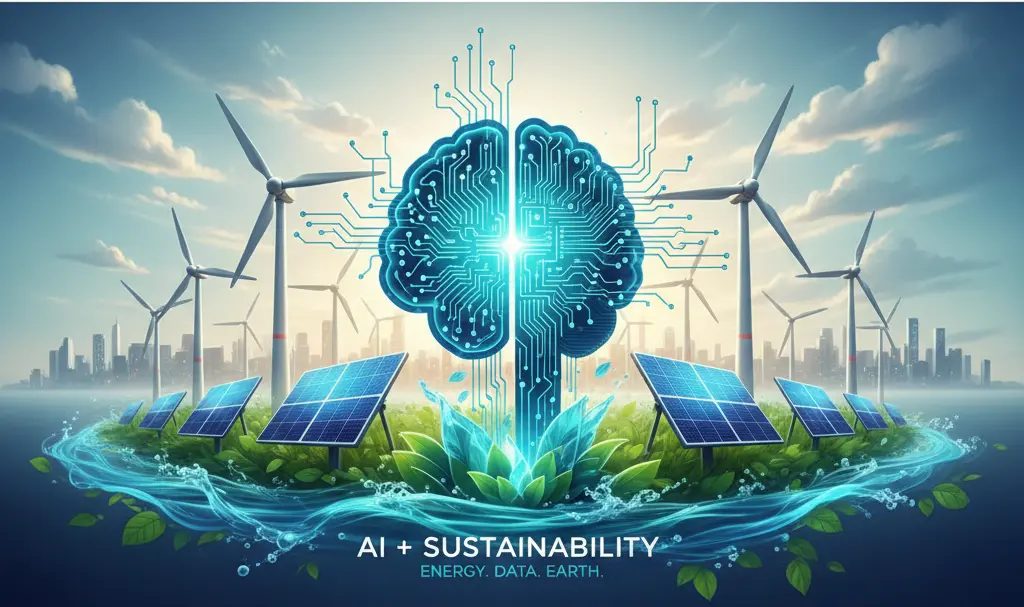
Source: TechCrunch, original reporting. Opening photo: Generated by Gemini
About Post Author
