
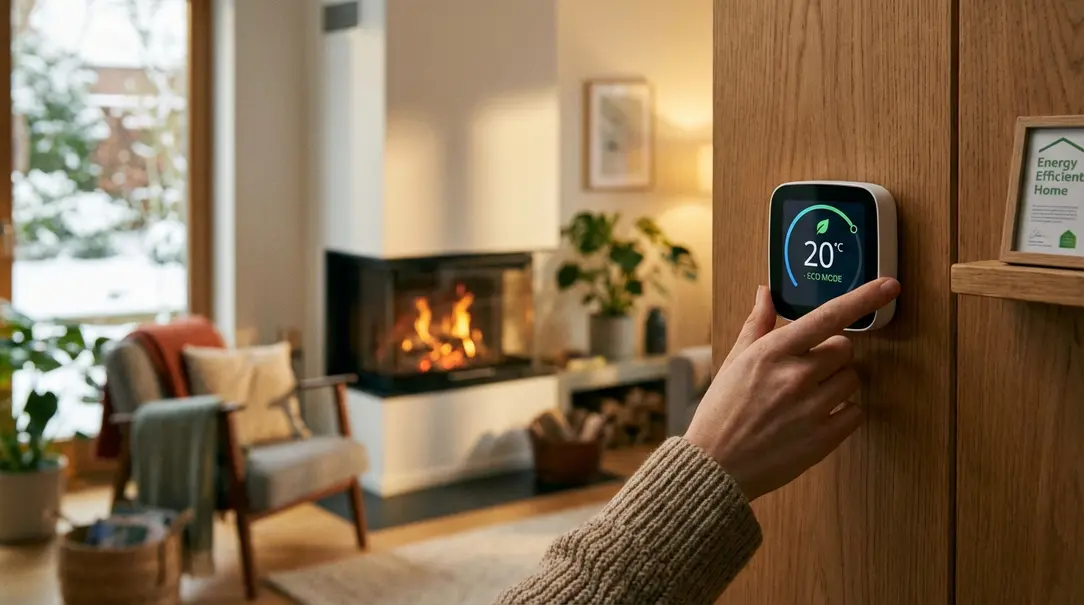
In recent years, the cost of heating homes and apartments has risen significantly, a burden keenly felt by households everywhere. Increasing energy prices mean that even minor errors in setting your heating can lead to higher bills over the entire heating season. The good news is there are effective ways to save money without costly renovations or system replacements – simply by adopting a few straightforward habits.
Contents
Smart Heating: Avoid These 5 Common Mistakes to Lower Your Energy Bills
1. Each Degree Less Means Real Savings
One of the most frequent mistakes is maintaining an unnecessarily high temperature at home, often “just in case,” even when most residents are out for many hours. However, lowering your thermostat by just 1 degree Celsius (or 1.8 degrees Fahrenheit) can reduce heating energy consumption by approximately 1-3%, depending on the building and its heating system.
In practice, reducing the temperature from 72°F (22°C) to 70°F (21°C) means most people won’t notice a significant difference, yet their bills could be noticeably lower over the heating season. Furthermore, setting a lower temperature for a few hours daily, such as overnight or when you’re away, can lead to annual savings of up to 10%.
2. How to Ventilate Efficiently Without Wasting Heat
Another major source of heat loss is improper ventilation, particularly leaving windows slightly ajar for extended periods while radiators are on. Instead, practice short, intensive ventilation: fully open windows for 5-10 minutes. This method allows for a complete air exchange without excessively cooling down walls and furniture, which absorb and retain heat.
During ventilation, it’s crucial to turn down your thermostats. This prevents the heating system from attempting to compensate for the sudden temperature drop in the room, which only increases energy consumption.
3. Maintain Consistent Thermostat Settings Throughout Your Home
Many people try to save energy by completely turning off the radiator in one room, such as a rarely used home office. However, this often has the opposite effect: adjacent rooms must “overheat” to warm the chilled room through shared walls. This forces radiators in other parts of the apartment (or even neighboring apartments) to work harder.
A much more effective strategy is to set a similar temperature in all rooms, perhaps slightly lower in areas you use less frequently. A stable heat distribution improves comfort, helps the heating system operate more efficiently, and reduces the risk of dampness and mold growth in cooler, closed-off rooms.
4. Avoid Common Space Arrangement Errors That Increase Bills
Another costly mistake is blocking radiators with heavy curtains, built-in enclosures, or large furniture like sofas or dressers. Often, this is done for aesthetic reasons, as radiators are not always the most attractive decorative elements. However, attempts to hide them can cause the radiator to primarily heat the air directly around it, with warmth accumulating behind the furniture instead of circulating throughout the room. This forces your heating system to work longer and harder.
Additionally, a blocked thermostat receives inaccurate readings. In a small “pocket” of trapped heat, it quickly reaches the set temperature and shuts off the hot water supply, while the rest of the room remains underheated. The result is higher energy bills.
The path to savings is simple. Moreover, you can enhance the efficiency of your heating units by installing special reflective screens made of aluminum foil with insulating properties behind them. These screens help direct heated air more effectively into the room and can generate significant savings – potentially 20-25% annually.
5. Shorten Your Shower by a Few Minutes
A significant portion of household thermal energy expenses can be attributed to heating domestic hot water, primarily for baths and showers. Shortening your daily shower from approximately 10 to 5 minutes significantly reduces hot water consumption and, consequently, the energy required to heat it.
Various analyses indicate that cutting down on bathing time by even a few minutes daily translates into noticeable annual savings, which will depend on your utility tariffs and the type of heating source.
Simple Habits for Immediate Savings
Experts agree: the greatest potential for savings lies not in expensive modernizations, but in daily habits – how you set your radiators, how you ventilate your home, and how long you spend in the shower. Even minor adjustments to temperature settings or shower duration can lead to savings of hundreds of USD annually.
Frequently Asked Questions (FAQ)
How much can I save by lowering my thermostat by one degree?
Lowering your thermostat by just 1 degree Celsius (1.8 degrees Fahrenheit) can reduce heating energy consumption by approximately 1-3%, depending on your building and heating system. Significant savings, up to 10% annually, can be achieved by lowering the temperature when you’re away or at night.
What is the best way to ventilate my home to save energy?
Practice short, intensive ventilation. Fully open your windows for 5-10 minutes to quickly exchange air without excessively cooling walls and furniture. Remember to turn down your thermostats during ventilation to avoid wasting energy.
Can blocking radiators with furniture increase my heating bills?
Yes, absolutely. Blocking radiators with heavy curtains or large furniture traps heat around the radiator, preventing it from circulating effectively throughout the room. This forces your heating system to work harder and longer, leading to higher energy bills. It can also cause thermostats to get false readings and shut off prematurely.
About Post Author
