
Contents
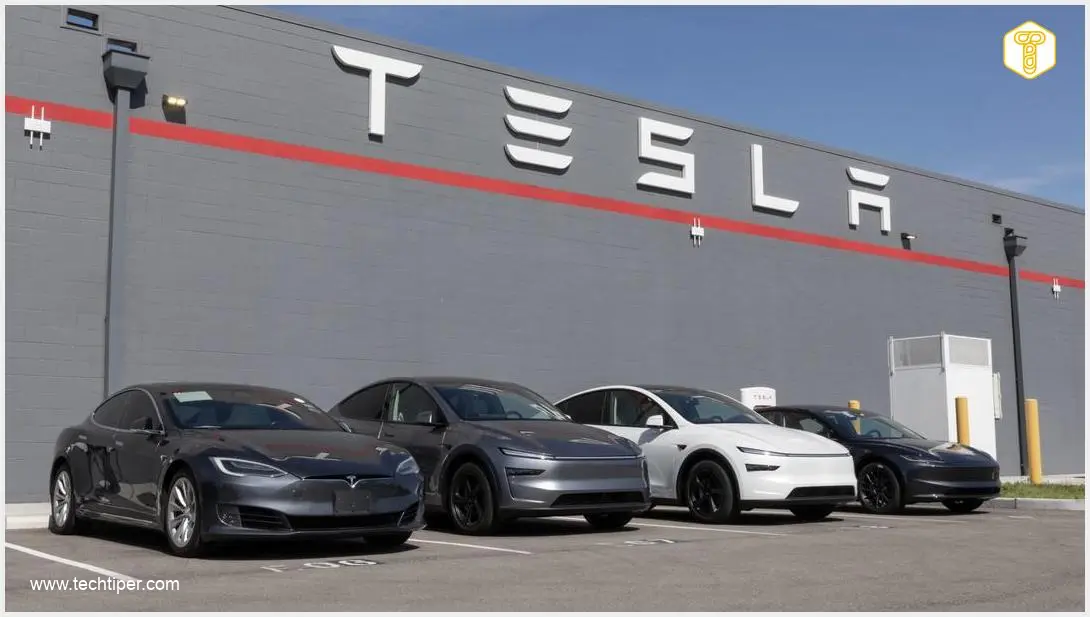
Tesla Bids Farewell to the Iconic Model S and Model X
Tesla is officially halting production of two groundbreaking models that played a pivotal role in establishing its dominance in the electric vehicle market. The Model S and Model X no longer fit into the innovative strategies of Elon Musk’s company, marking the end of an era for these once-revolutionary EVs.
The End of an Era: Tesla Retires Model S and Model X
Tesla is closing one of the most significant chapters in its history. Elon Musk confirmed that the company has concluded production of the Model S and Model X. Customers can no longer place new, custom orders for these vehicles. This decision effectively means that sales are drawing to a close, now limited exclusively to the remaining inventory vehicles.
Musk alluded to this shift with a public statement:
“Custom orders of the Tesla Model S & X have come to an end. All that’s left are some in inventory. We will have an official ceremony to mark the ending of an era. I love those cars. This was me at production launch 14 years ago.”
This announcement underscores a significant pivot for the automaker, signaling a decisive move away from its foundational models.
Legacy of Innovation: The Impact of Model S and Model X
The Model S was instrumental in shaping Tesla’s trajectory and reputation. This vehicle was crucial in positioning the company as a leading manufacturer of modern, desirable premium electric cars. Its blend of performance, range, and cutting-edge technology set new benchmarks for the automotive industry.
Similarly, the Model X, with its distinctive ‘Falcon Wing’ rear doors, showcased that electric mobility could be not only practical but also spectacularly innovative and visually striking. Both models became synonymous with Tesla’s early success and its vision for a sustainable future.
Tesla’s Strategic Evolution: Beyond Car Sales
Tesla is increasingly moving away from a traditional business model focused solely on vehicle sales. The company is dedicating more resources and attention to advanced autonomy, ride-sharing services, and ambitious projects such as the humanoid robot Optimus. A portion of the production capacity at Tesla’s Fremont factory is expected to be repurposed to support these new directions of development.
This strategic shift highlights Tesla’s ambition to evolve beyond a mere car manufacturer into a broader technology and energy company. The future of electric mobility is also seeing other significant developments, such as the introduction of new battery technologies like semi-solid-state batteries in vehicles like the MG4 Urban, pushing the boundaries of range and efficiency. Meanwhile, infrastructure is advancing with BYD deploying megawatt EV charging solutions across Europe, demonstrating the industry’s collective drive towards faster and more widespread adoption of electric vehicles.
Limited Availability and a Challenging Farewell
Reports from Electrek indicate that only approximately 600 new units of both models remain available worldwide. The vast majority of these vehicles are located in the United States, with new car inventories in Europe and Canada already depleted. Prospective buyers can no longer custom-configure these vehicles from scratch on Tesla’s website; instead, they can only browse pre-built units available for immediate purchase.
Even a refresh in 2025, which introduced several stylistic and technical updates, failed to reinvigorate sales, especially as it coincided with price increases. In an increasingly competitive landscape, Tesla found it challenging to maintain the Model S and Model X’s former market advantage against a growing number of innovative electric vehicle offerings. While they remain pivotal to the history of electric mobility, their commercial chapter has simply come to an end.
Frequently Asked Questions (FAQ)
Why is Tesla discontinuing the Model S and Model X?
Tesla is shifting its strategic focus towards new ventures like advanced autonomy, ride-sharing services, and humanoid robotics (Optimus). Discontinuing these older models allows the company to reallocate production capacity and resources to these emerging priorities and streamline its product lineup in an increasingly competitive EV market.
Can I still buy a new Tesla Model S or Model X?
New custom orders for the Model S and Model X are no longer being accepted. Sales are now limited to the remaining inventory vehicles. Availability is extremely limited, with most remaining units in the United States, and inventories in regions like Europe and Canada already depleted for new cars.
What was the significance of the Model S and Model X for Tesla?
The Model S was crucial in establishing Tesla as a leader in premium electric vehicles, demonstrating that EVs could offer superior performance, range, and luxury. The Model X further showcased Tesla’s innovation with its unique Falcon Wing doors, proving electric vehicles could also be practical and visually striking, solidifying Tesla’s reputation for cutting-edge design and technology.
How will the discontinuation of Model S and X impact Tesla’s long-term strategy?
This move signifies Tesla’s evolution beyond solely being an automotive manufacturer. By freeing up resources and production lines, Tesla can accelerate its investment and development in autonomous driving technology, energy solutions, and AI-driven projects like Optimus, aligning with its vision to become a broader technology and energy company. It also allows them to focus on higher-volume, more affordable models like the Model 3 and Model Y.
Source: Electrek, Original Reporting. Opening photo: jetcityimage / Adobe Stock
About Post Author
