
Contents
The World’s Longest Suspension Bridge: Bridging Sicily to Mainland Italy
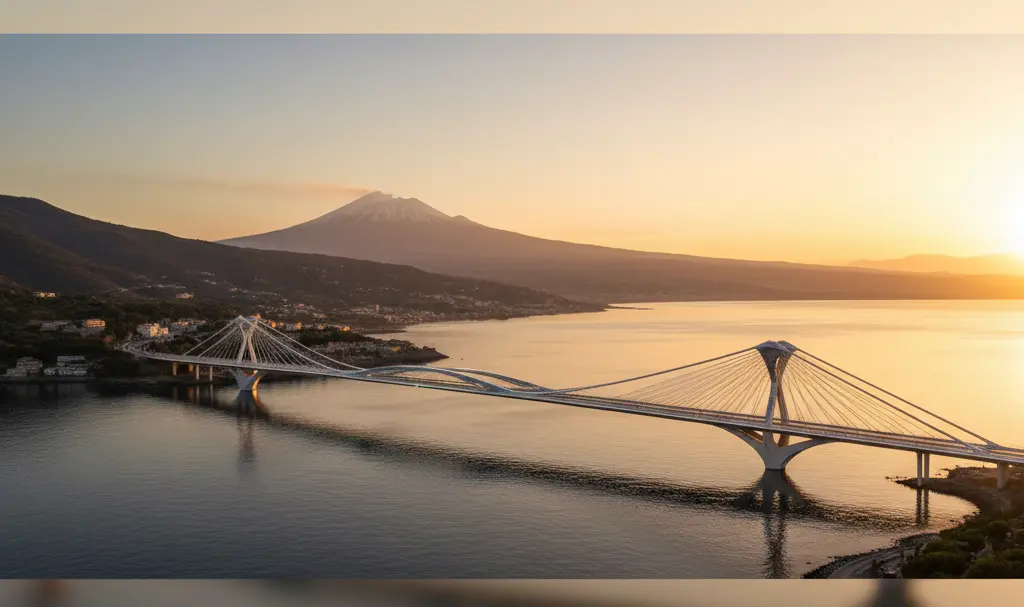
One of Sicily’s long-standing challenges has been the absence of a permanent land connection to mainland Italy. This geographical isolation has presented logistical hurdles for both residents and commerce. However, an ambitious engineering marvel aims to revolutionize this dynamic: the construction of the world’s longest suspension bridge, spanning over three kilometers (nearly two miles) across the narrow Strait of Messina. While promising a solution to a decades-old problem, the project is met with a mix of anticipation and skepticism, particularly from residents in the region of Calabria.
Will the Suspension Bridge Resolve a Decades-Long Issue?
Last year, significant progress was made when approval was granted for the construction of a 3.2-kilometer (2-mile) suspension bridge. This monumental structure is designed to forge a direct link between Sicily and Calabria, Italy’s southernmost region. Beyond the bridge itself, the comprehensive project also encompasses the development of an extensive 40-kilometer (25-mile) network of new roads and railway lines, complemented by the construction of ten viaducts. The estimated investment for this colossal undertaking is approximately 13.5 billion Euros (around 14.5 billion US Dollars, providing international context).
Proponents argue that the Messina Bridge will serve as a vital economic catalyst for both regions. It is projected to provide a significant economic boost and potentially create up to 100,000 new jobs in the long term, offering a much-needed stimulus to local economies. This substantial investment is also expected to make the region more accessible and attractive to tourists, potentially unlocking new opportunities for growth. Such development is particularly crucial given the historical disparity in living standards between Southern and Northern Italy.
However, the project is not without its critics. Many Sicilians express strong opposition, raising serious concerns about its potential environmental impact on the delicate marine ecosystem of the Strait of Messina. Furthermore, there are worries regarding the possible involvement of organized crime in the vast construction process, a concern that echoes historical challenges in large Italian infrastructure projects.
These sentiments are shared by communities in Calabria, notably in towns like Dinami, which is often cited as one of Italy’s most economically challenged municipalities. Critics argue that focusing on such a grand-scale project might merely overshadow existing, fundamental infrastructural issues, such as poor road conditions and inadequate public services. They contend that while impressive, the bridge may do little to genuinely improve the daily lives and long-term socio-economic situation of residents in Southern Italy.
The push for advanced infrastructure in Europe is not unique to Italy. For instance, the discussion around innovative urban mobility solutions continues to grow, with developments such as commercial robotaxis arriving in Europe, signalling a broader trend towards modernizing transport networks.
Discover One of Sicily’s Greatest Attractions: Mount Etna
Beyond ambitious infrastructure projects, Sicily boasts natural wonders that draw global attention. One of its most iconic tourist attractions is Mount Etna, Europe’s most active volcano. This majestic and constantly evolving natural landmark erupts dozens of times annually, offering spectacular, albeit sometimes disruptive, displays of nature’s power. A notable recent eruption occurred during last year’s Christmas period, specifically between December 26th and 27th, reminding everyone of its dynamic presence.
During such volcanic events, local authorities implement established protocols to ensure public safety. This typically involves evacuating residents from directly threatened areas, while advising those in proximity but not in immediate danger to remain indoors for their safety and to avoid potential hazards from ashfall and gas plumes.
Volcanic eruptions on Etna also release vast quantities of ash into the atmosphere. In some instances, this ash can become dense enough to pose a significant hazard to aviation, leading to flight disruptions and forcing aircraft to divert to other airports to ensure passenger and crew safety. The continuous activity of Etna underscores the unique geological landscape of Sicily and the need for robust emergency preparedness.
Frequently Asked Questions (FAQ)
What is the primary goal of the Messina Bridge project?
The main goal is to create a permanent land connection between Sicily and mainland Italy across the Strait of Messina, aiming to boost economic development, improve transport, and enhance tourism in Southern Italy.
What are the main concerns raised by opponents of the Messina Bridge?
Opponents cite concerns about the potential negative environmental impact on the Strait of Messina’s ecosystem, the immense cost of the project, potential organized crime involvement, and the belief that it distracts from more fundamental local infrastructural issues like poor road conditions.
How frequently does Mount Etna erupt, and what are its typical impacts?
Mount Etna is one of the world’s most active volcanoes, erupting dozens of times each year. Typical impacts include ashfall, which can disrupt local life and aviation, and lava flows, which are usually contained but prompt local evacuations in threatened areas.
Why is a permanent land connection to Sicily considered so important?
A permanent connection is deemed crucial for overcoming Sicily’s long-standing logistical isolation, which has hampered economic growth and tourism. It would facilitate easier movement of goods and people, fostering greater integration with the Italian mainland and wider European markets.
Source: The Telegraph. Opening photo: Gemini
About Post Author
