
Contents
Witness the Majesty: Europe Prepares for Two Total Solar Eclipses
The countdown has begun for an extraordinary series of celestial events. While the “Eclipse of the Century” in 2027, visible across Europe, Africa, and the Middle East on August 2nd, 2027, promises an unparalleled spectacle, stargazers don’t have to wait that long. A spectacular total solar eclipse is set to grace the skies on August 12th, 2026, marking the first such event over the European continent in nearly three decades. This earlier eclipse will be visible over Greenland, Iceland, and a significant portion of Spain.
The Total Solar Eclipse of 2026
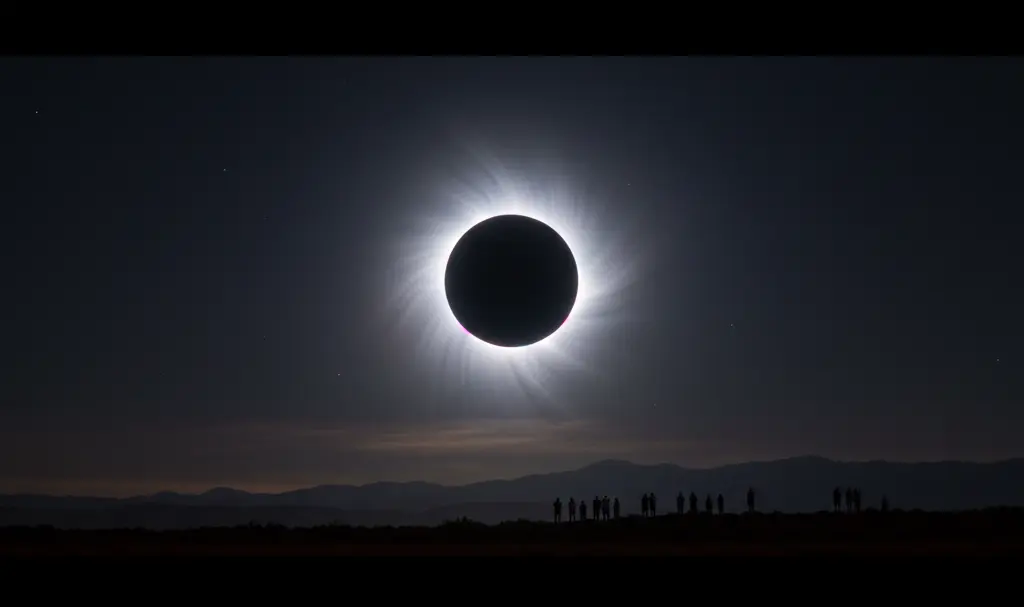
No photograph or live broadcast can truly capture the immersive, physical experience of a total solar eclipse. In the moments leading up to totality, observers often report a noticeable temperature drop of up to 10 degrees Celsius, shifts in wind patterns, and the appearance of long, shimmering shadow bands on the ground. When the Moon completely obscures the Sun’s disk, the sky darkens sufficiently for bright stars and planets to become visible. Crucially, the ethereal, pearly white corona—the Sun’s outermost atmosphere—emerges, encircling the black lunar disk. For avid eclipse chasers, this is often described as the most captivating phenomenon in the sky.
On August 12th, 2026, the path of totality will begin in the Arctic, sweep across western Iceland, and then traverse the Iberian Peninsula, concluding its journey over the Mediterranean Sea. This particular eclipse holds a special allure for observers in Spain, as it will occur in the late evening, just before sunset. This unique timing is expected to create breathtaking viewing and photography opportunities against the backdrop of the setting sun. It’s a significant event, as the last total solar eclipse visible from mainland Europe occurred in 1999.
An Unforgettable Evening in Spain
In August 2026, Spain is poised to become a prime destination for eclipse enthusiasts from around the globe. Selecting an optimal viewing location is paramount, as even minimal cloud cover can obstruct the view of the solar corona, which is only visible during the precious minutes of totality.
Cities such as Bilbao, Zaragoza, Valencia, and Palma de Mallorca will lie within the path of totality. However, the duration of the total phase will vary depending on an observer’s proximity to the centerline of the path, with many locations in Spain experiencing an impressive two minutes of darkness. Astrotourism, or travel specifically undertaken to observe celestial phenomena, has become one of the fastest-growing trends in the tourism industry in recent years, making this event a significant draw.
Unique Vistas in Iceland
Iceland is also preparing to welcome visitors, offering its dramatic, volcanic landscapes as a stunning backdrop for this cosmic spectacle. While the statistical risk of cloud cover is generally higher here than in Southern Europe, some of the most unique viewing opportunities may arise from cruise ships operating near the coasts of Iceland and Greenland. For many, the prospect of combining a solar eclipse observation with the chance to witness the Northern Lights (Aurora Borealis), which can occur in this region, represents a once-in-a-lifetime travel dream.
The 2027 “Eclipse of the Century” Preview
The 2026 eclipse will offer approximately 2 minutes and 18 seconds of totality. However, this is merely a prelude to the much-anticipated “Eclipse of the Century” on August 2nd, 2027. This later event will plunge southern Spain, Morocco, Egypt, and Saudi Arabia, among other regions, into darkness for an astonishing duration of about 6 minutes and 23 seconds. This exceptionally long period of totality is due to a nearly ideal celestial alignment: the Sun will be relatively far from Earth, the Moon unusually close, and the path of totality will track near the equator.
The 2027 eclipse is expected to be a major highlight, especially given its visibility from numerous popular tourist destinations. These include Cádiz and Málaga in Spain, Tangier in Morocco, and Jeddah and Mecca in Saudi Arabia. Luxor, Egypt, however, could prove to be the ultimate hotspot, offering a record-breaking period of midday darkness.
Future Total Solar Eclipses
If you miss the 2026 or 2027 eclipses, there are other opportunities to witness these awe-inspiring events in the coming years. Here is a schedule of upcoming total solar eclipses for the next decade:
* **July 22, 2028:** Christmas Island, Cocos Islands, Australia, New Zealand
* **November 25, 2030:** Namibia, Botswana, South Africa, Lesotho, Australia
* **November 14, 2031:** Pacific Ocean
* **March 30, 2033:** Northeastern Russia, Northern USA (Alaska)
* **March 20, 2034:** Benin, Nigeria, Cameroon, Chad, Sudan, Egypt, Saudi Arabia, Kuwait, Iran, Afghanistan, Pakistan, India, China
* **September 2, 2035:** China, North Korea, Japan
As an interesting historical note, a total solar eclipse on July 16th, 2186, is predicted to last exactly 7 minutes and 29 seconds. This would make it the longest known solar eclipse in Earth’s history, surpassing all previously recorded events.
How to Safely Observe a Solar Eclipse
Observing any part of the Sun, even during a partial eclipse, without proper eye protection can cause irreversible damage to your vision. Certified eclipse glasses with an ISO 12312-2 filter are essential. These glasses are thousands of times darker than regular sunglasses and are specifically designed to block harmful radiation.
It is only during the brief moments of a total solar eclipse, when the Moon completely covers the Sun, that it is safe to remove eye protection and admire the pearly solar corona directly. Always ensure your eclipse glasses are in good condition and come from a reputable source.
Frequently Asked Questions (FAQ)
What makes the 2027 total solar eclipse so exceptional?
The 2027 total solar eclipse, dubbed the “Eclipse of the Century,” is exceptional due to its extended duration of totality, lasting approximately 6 minutes and 23 seconds. This is a result of a near-perfect alignment where the Moon is unusually close to Earth and the Sun is relatively distant, combined with the path of totality tracing near the equator, which maximizes the obscuration period.
Why is the timing of the 2026 eclipse in Spain considered unique?
The 2026 total solar eclipse in Spain will occur in the late evening, just before sunset. This unique timing means observers will witness the eclipse against the backdrop of a setting sun, creating a visually stunning and rare photographic opportunity that adds an extra layer of beauty to the celestial event.
Can I use regular sunglasses to view a partial or total solar eclipse?
No, you absolutely cannot use regular sunglasses to view any phase of a solar eclipse. Regular sunglasses do not offer sufficient protection against the Sun’s intense radiation and can lead to permanent eye damage. You must use certified eclipse glasses or viewers that meet the ISO 12312-2 international safety standard.
What is astrotourism and how is it related to these eclipses?
Astrotourism refers to travel undertaken specifically for the purpose of observing celestial events or astronomical sites. The rarity and spectacle of total solar eclipses drive a significant amount of astrotourism, as enthusiasts travel across continents to be in the path of totality. This trend leads to increased bookings for flights, accommodations, and specialized tours in areas experiencing these phenomena.
Source: NASA, Euronews, X, Reddit, AAS.
Opening photo: rusklil / Adobe Stock
About Post Author
