

Contents
AI Unlocks 2,000-Year-Old Roman Game: Ludus Coriovalli Rules Revealed
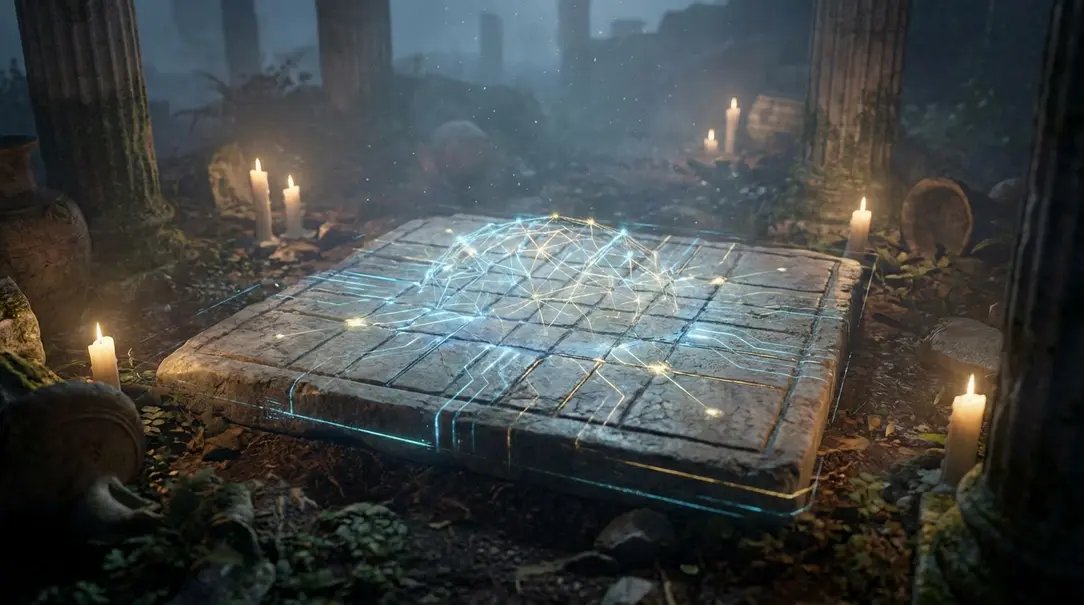
For over two millennia, the secrets of Ludus Coriovalli, an ancient Roman board game, remained hidden. A stone tablet bearing its etched playing surface was unearthed almost a century ago, yet archaeologists were baffled by its rules. Now, thanks to dedicated artificial intelligence, this captivating historical puzzle has finally been solved.
How AI Deciphered Ancient Roman Gameplay
Researchers from Leiden University employed a specialized artificial intelligence system to crack the code of Ludus Coriovalli. The AI utilized a “brute-force” approach, systematically testing approximately 100 sets of possible rules by playing countless games. The primary goal was to identify the most probable rule set, cross-referencing findings with wear patterns observed on the original ancient stone board.
The AI, driven by the Ludii software, simulated gameplay between two virtual players, allowing scientists to observe which rules produced outcomes consistent with the physical evidence. This innovative methodology ultimately pinpointed how Romans likely engaged in this intriguing game.
Ludus Coriovalli: The Game Rules
Based on the AI’s analysis, the most probable rules for Ludus Coriovalli are as follows:
- Players and Pieces: One player controls four game pieces, while the other controls two.
- Movement: Pieces can move one space diagonally or in a straight line (horizontally or vertically).
- Objective (Four-Piece Player): The player with four pieces aims to block the opponent’s two pieces, preventing any further moves.
- Objective (Two-Piece Player): The player with two pieces wins by successfully making a move during their turn for a longer duration than their opponent. This suggests a strategic game of evasion and blocking.
It’s worth noting that the generative AI identified nine potential variants of the game. The described ruleset stands out as the most probable due to its strong correlation with the wear and tear marks observed on the limestone playing surface.
A Glimpse into Roman Leisure and AI’s Potential
The discovery is particularly intriguing because Romans were not previously known to engage in such “blocking” games during this period. Similar strategic blocking games were thought to have emerged in Europe much later, during the Middle Ages. This finding suggests a richer, more diverse gaming culture in ancient Rome than previously assumed.
The original stone board for Ludus Coriovalli was found in Heerlen, Netherlands, a city once known as Coriovallum during the Roman Empire – hence the game’s name. The artifact is currently housed at the Dutch Het Romeins Museum in Heerlen.
Researchers are optimistic that AI will continue to be an invaluable tool in unraveling the mysteries of other ancient games, whose rules have been lost to history without accompanying texts or manuscripts. This innovative application of AI opens new avenues for understanding historical cultures through their pastimes.
Frequently Asked Questions (FAQ)
What is Ludus Coriovalli?
Ludus Coriovalli is an ancient Roman board game whose playing surface was discovered etched into a stone tablet. Its rules were a mystery for nearly a century until recently deciphered by artificial intelligence.

How did AI discover the rules of Ludus Coriovalli?
Scientists from Leiden University used AI, specifically the Ludii software, to simulate countless games across approximately 100 sets of potential rules. The AI’s simulations, combined with analysis of wear patterns on the ancient stone board, helped identify the most probable rule set.
Why is this discovery significant?
The discovery is significant because it reveals an ancient Roman “blocking” game, a type of game previously thought to have appeared much later in Europe (during the Middle Ages). It expands our understanding of Roman recreational activities and demonstrates the power of AI in archaeological research.
Are these the definitive rules for Ludus Coriovalli?
The AI identified nine possible variants, with the described rules being the “most probable” based on the analysis of wear marks on the original stone. While highly likely, minor variations might have existed.
About Post Author
