

Contents
The EU’s Bold New Plan to Counter Chinese Automotive Dominance
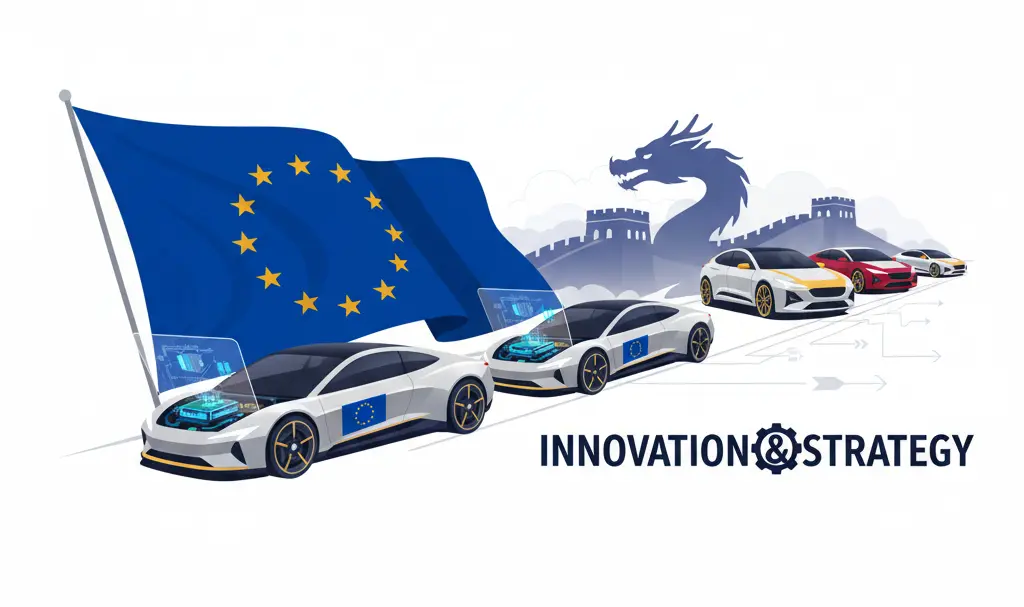
The European Union is gearing up to launch a significant initiative aimed at bolstering its domestic automotive sector and stemming the tide of imported Chinese vehicles. By February 2026, the European Commission is expected to adopt the Industrial Accelerating Act (IAA), a strategic document designed to make cars produced within Europe more desirable and competitive on the global stage.
What is the Industrial Accelerating Act (IAA)?
The Industrial Accelerating Act (IAA), often referred to by its working titles “Made in Europe” or “Buy European,” is more than just a protectionist measure. It represents a comprehensive strategy to enhance the EU’s overall industrial competitiveness. While its immediate focus includes the automotive industry, the IAA’s scope extends to other critical sectors such as semiconductors, batteries, and artificial intelligence, reflecting a broader ambition to secure Europe’s technological sovereignty.
Strengthening European Manufacturing Through Local Content
A cornerstone of the IAA strategy is a stringent local content requirement. The EU is not planning to indiscriminately disburse funds to every European car brand. Instead, access to public procurement contracts, grants, and subsidies will be contingent upon a minimum of 70% of components being manufactured within Europe. This condition is designed to:
- Incentivize car manufacturers to localize their supply chains within the EU.
- Boost employment and investment in European factories and research.
- Reduce reliance on external supply chains, particularly from non-EU countries.
- Ensure that public funds genuinely support European industry and job creation.
The Challenge: China’s Growing Automotive Presence in Europe
The expansion of Chinese automotive brands into the European market is a well-established trend, not a new phenomenon. Discussions about potential import restrictions have been ongoing since as early as 2023. The competitive landscape is stark: while the most affordable European cars currently retail for approximately $15,000, some Chinese electric vehicle models, after factoring in potential electric vehicle subsidies, can be priced as low as around $6,000. This significant price differential puts immense pressure on European manufacturers to compete.
Chinese automakers have made considerable advancements in electric vehicle technology and production efficiency, leading to highly competitive products. Vehicles like the examples seen among top Chinese automotive achievements highlight the innovation and quality emerging from the sector.
Broader Implications of the IAA
The IAA is an integral part of the EU’s larger industrial policy framework, aiming to build a more resilient and sustainable economy. It aligns with other EU initiatives such as the European Chips Act, designed to bolster semiconductor production, and the Net-Zero Industry Act, which focuses on scaling up the manufacturing of clean technologies. By fostering a strong domestic industrial base across multiple strategic sectors, the EU seeks to mitigate geopolitical risks, create high-quality jobs, and drive innovation.
Further details regarding the implementation and specific criteria of the Industrial Accelerating Act are expected to be unveiled once the document is officially adopted by the European Commission.
Frequently Asked Questions (FAQ)
What is the Industrial Accelerating Act (IAA)?
The Industrial Accelerating Act (IAA) is a new initiative by the European Union, expected to be adopted by February 2026. It aims to boost the competitiveness of European industries, particularly automotive, semiconductors, batteries, and AI, by requiring a minimum 70% European content for companies seeking public funding, grants, or procurement contracts.

Why is the EU implementing the IAA?
The EU is implementing the IAA to counter the growing market share of non-European, especially Chinese, manufacturers. It seeks to strengthen its domestic industrial base, reduce reliance on external supply chains, create jobs within Europe, and ensure that public investment supports local manufacturing and innovation.
Which industries will be affected by the IAA?
Initially, the IAA is set to impact the automotive industry, but its scope is broader, encompassing critical sectors such as semiconductors, batteries, and artificial intelligence. The goal is to improve overall EU industrial competitiveness across strategic technologies.
When will the Industrial Accelerating Act come into effect?
The European Commission is expected to adopt the Industrial Accelerating Act by February 2026. More specific details regarding its implementation will be announced once the document is officially enacted.
Source: Money.pl / Rzeczpospolita. Opening photo: Generated by Gemini.
About Post Author
