

Contents

The Reality of AI Adoption: Fewer Users Than You Think
For a long time, it seemed that artificial intelligence (AI) was ubiquitous, permeating every aspect of our digital lives. However, recent data paints a starkly different picture, challenging the narrative of widespread AI adoption. Insights shared by a prominent AI expert reveal surprising statistics about global AI usage and, crucially, how many people are actually willing to pay for advanced AI models.

Surprising Data on AI’s Reach
Damian Player, CEO of Agent Integrator—a studio specializing in advanced AI systems—recently shared compelling data on X (formerly Twitter) regarding global AI utilization. His findings offer a valuable perspective that often gets overshadowed by the hype surrounding AI advancements.
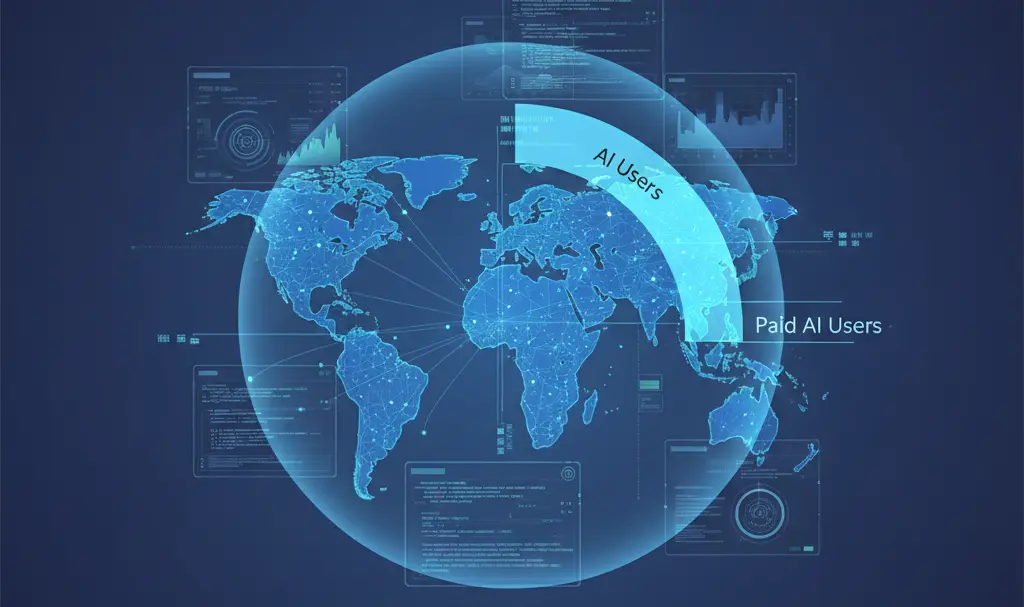
Player’s insights suggest that despite the pervasive discussion about AI, a staggering 84% of the planet’s population—nearly seven billion people—have never used any AI tools. This figure sharply contrasts with the popular notion that AI has become an integral part of everyday life for most individuals.
The tweet from Damian Player:
your timeline convinced you AI is in a bubble. talk to a boomer above the age 35 for 5 minutes.
most people don’t even know what claude is.
kind of wild when you zoom out. pic.twitter.com/fCeqxaUnpk
— Damian Player (@damianplayer) February 21, 2026
(Note: The tweet date is from the original context provided and appears to be in the future.)
Understanding Limited AI Adoption
Several factors contribute to this limited global adoption:
- Infrastructure Limitations: Many regions across the globe lack the robust digital infrastructure—such as high-speed internet and access to necessary hardware—that is commonplace in more developed areas. This creates significant barriers to accessing and utilizing AI tools.
- Demographic Factors: The global population includes a significant proportion of older individuals who may be less inclined or less familiar with adopting new technologies, including AI.
- Awareness and Understanding: For many, understanding what AI is, how it works, and its potential benefits remains limited. Tools like ChatGPT or Claude might be unfamiliar concepts outside of tech-savvy circles.
The Divide Between Free and Paid AI Usage
While general AI tool usage is low, the data further distinguishes between free and paid adoption:
- Free Chatbot Usage: Approximately 1.3 billion people (16% of the global population) have interacted with AI chatbots. This category typically includes popular, free-to-use platforms like ChatGPT’s free tier, which have seen considerable uptake due to their accessibility.
- Paid AI Model Subscriptions: The number of users paying for premium, subscription-based AI language models is strikingly low. This demographic accounts for a mere 0.3% of the global population, or roughly 20 million people. This small fraction highlights the significant hurdle of converting free users into paying subscribers, reflecting the perceived value or necessity of advanced AI features for the average user.
The Environmental Costs of Artificial Intelligence
Beyond user adoption, the growth of AI also brings environmental considerations, particularly concerning resource consumption.
AI’s Thirst for Resources: Water and Energy
The development and operation of AI models are often associated with substantial resource consumption, especially water and energy. Data centers, which house the powerful servers necessary to train and run AI, require significant cooling.
Sam Altman, CEO of OpenAI, has addressed these concerns. While acknowledging that water was indeed a major factor for evaporative cooling in data centers several years ago—a technology he now considers “archaic”—he concedes that overall, the technology sector, including AI, consumes “too much energy.” Modern data centers have evolved, employing more efficient cooling methods, but the energy demand for increasingly complex AI models continues to be a critical concern for sustainability.
Frequently Asked Questions (FAQ)
What percentage of the global population has never used AI tools?
According to recent data, a significant 84% of the global population, which translates to nearly seven billion people, has never utilized any form of artificial intelligence tools.
How many people globally use free AI chatbots?
Approximately 1.3 billion people, or 16% of the world’s population, have used free AI chatbot tools like the complimentary version of ChatGPT.
What is the adoption rate for paid AI language models?
Only about 0.3% of the global population, equivalent to roughly 20 million people, currently pay for subscription-based AI language models.
What are the main reasons for low AI adoption globally?
Key reasons include infrastructure limitations in many regions, the significant proportion of older demographics less inclined to adopt new tech, and a general lack of awareness or understanding about AI tools among the wider public.
Does AI consume a lot of energy and water?
While older data centers used significant water for cooling, modern facilities are more efficient. However, AI, as part of the broader technology sector, still consumes a substantial amount of energy, which remains a critical sustainability concern.
Source: Biznes Enter. Opening photo: Generated by Gemini
About Post Author
