Some links in this article are affiliate links. By clicking on them, you can explore offers for specific products. You won’t incur any additional costs, and at the same time, you’ll be supporting the independent work of our editorial team.
Contents
Samsung Galaxy S26 vs. Galaxy S25: A Detailed Comparison
The latest Samsung Galaxy smartphones have launched, but last year’s models from the South Korean manufacturer are still readily available. For many consumers facing a phone upgrade, a crucial question arises: is it worth spending more on the Galaxy S26 when the Galaxy S25 is a compelling alternative? This article aims to answer that by highlighting the most significant similarities and differences between these two flagship devices.
Key Similarities and Differences: Galaxy S26 and S25
At first glance, the base models of Samsung’s flagship series from this year and last year appear quite similar. However, there are subtle distinctions worth noting.
Design and Dimensions
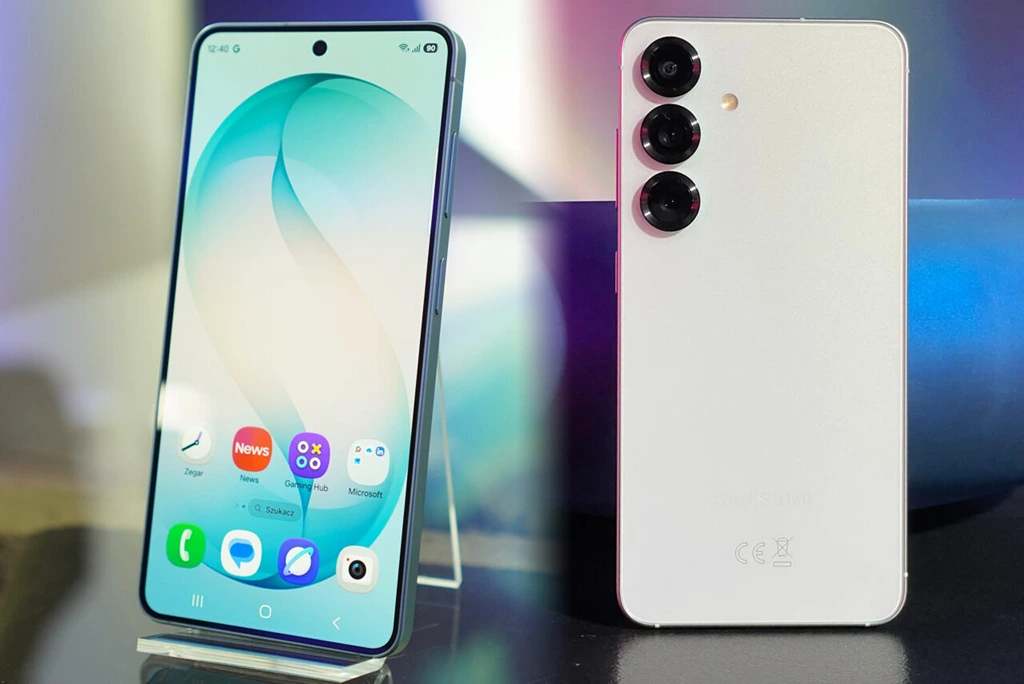
The primary design differentiator lies in the camera module. The Galaxy S26 features a slightly redesigned camera island, where Samsung has opted for a more unified element rather than individually spaced lenses, giving the overall module a subtle, refined look. Physically, the Galaxy S26 is marginally larger and heavier than its predecessor:
- Galaxy S26: 149.6 × 71.7 × 7.2 mm, weighs 167g
- Galaxy S25: 146.9 × 70.5 × 7.2 mm, weighs 162g
Display
The newer smartphone also boasts a slightly larger screen, though the difference is a mere 0.1 inches. Crucially, both models feature a stunning Dynamic AMOLED 2X display. This technology provides vibrant colors, deep blacks, and excellent contrast. Both displays offer Full HD+ resolution for sharp visuals and an adaptive refresh rate of up to 120 Hz, which ensures incredibly smooth scrolling and responsiveness by dynamically adjusting the screen refresh rate based on content.
Performance and Storage
When it comes to memory, both the Galaxy S26 and Galaxy S25 come with 12 GB of RAM, ensuring smooth multitasking. For internal storage, both phones are available in 256 GB and 512 GB variants. The Galaxy S25 also offered a 128 GB option at launch, which might still be available in some markets, providing a more budget-friendly choice.
The core difference in performance lies in their processors:
- Galaxy S26: Equipped with the Exynos 2600.
- Galaxy S25: Features the Qualcomm Snapdragon 8 Elite processor.
While Qualcomm’s Snapdragon chipsets traditionally have a strong reputation for performance and efficiency, Samsung’s Exynos processors have made significant strides in recent years, closing the performance gap. We recommend waiting for initial benchmarks and real-world comparisons to definitively assess whether one phone offers a noticeable performance advantage under heavy load. For typical daily tasks, both processors are expected to deliver excellent, lag-free performance.
Battery Life and Charging
The Galaxy S26 comes with a slightly larger battery capacity at 4300 mAh, compared to the Galaxy S25’s 4000 mAh. However, it’s important to remember that the S26 also has a marginally larger screen, which could potentially offset some of the battery gains. Definitive tests will be needed to confirm if the newer model truly offers significantly extended battery life on a single charge.

Disappointingly, the S26 continues a trend seen in recent base models of the Galaxy S series by supporting only 25W charging. This is considered a modest charging speed in today’s smartphone market and is identical to the Galaxy S25. Samsung’s labeling of this as “Super Fast Charging” can seem ironic, especially considering the premium price points of these devices.
Camera Capabilities
Evaluating camera performance requires thorough testing, and it’s too early to definitively say if Samsung has made substantial progress in the cameras of its base flagship model. On paper, many of the camera specifications for the Galaxy S26 and Galaxy S25 appear to be very similar. Real-world photo and video samples will be crucial for a complete assessment.
AI Features
The manufacturer heavily promotes new AI features across the entire Galaxy S26 series. However, it’s highly probable that many of these advanced AI capabilities will eventually become available on the Galaxy S25 through software updates, meaning this might not be a long-term differentiator.
Which to Choose: Galaxy S26 or Galaxy S25?
At the time of this publication, comprehensive evaluations of the Galaxy S26’s camera, raw performance, and precise battery endurance are still pending. However, initial observations strongly suggest that the S26 represents an iterative update rather than a revolutionary leap.
Key Takeaways on Differences:
- Size and Display: The Galaxy S26 is slightly larger with a marginally bigger screen.
- Battery: It features a 300 mAh larger battery, but the real-world impact needs further testing.
- Processor: A new processor is present, but whether it offers a significant advantage over the S25’s chip is yet to be determined.
- Design: Cosmetic tweaks have been made to the camera module.
- Charging: Samsung has not improved the 25W charging speed, which remains a weak point for both models.
Pricing Comparison
Let’s compare the approximate prices for the 12GB RAM/256GB storage variants, which are common to both models:
- Galaxy S26 (12/256 GB): Approximately $1099
- Galaxy S25 (12/256 GB): Can be found for around $849 (current market price)
This represents a price difference of approximately $250.
Recommendation
- If you own a Galaxy S25: We strongly advise against upgrading to the Galaxy S26. The incremental improvements do not justify the cost of an upgrade; you will find virtually no practical benefit in switching.
- If you do not own either phone: Is it worth paying the extra ~$250 for the Galaxy S26? Likely not. The Galaxy S25 still offers an exceptional smartphone experience, and you will be similarly satisfied with its performance and features as you would be with the latest model, while saving a considerable amount of money.
Of course, the Galaxy S26 will eventually be available through various promotions and sales. If you encounter an offer where its price is very close to that of the Galaxy S25, then opting for the newer model might be a more justifiable decision. Otherwise, the Galaxy S25 presents superior value.
Frequently Asked Questions (FAQ)
What are the main differences between the Samsung Galaxy S26 and S25?
The Galaxy S26 features a slightly larger screen (0.1 inches), a marginally bigger battery (4300 mAh vs. 4000 mAh), a redesigned camera island, and a newer Exynos 2600 processor (compared to the Snapdragon 8 Elite in the S25). Most other specifications, including RAM, storage options, display quality, and charging speed, remain largely similar.
Is the Galaxy S26’s camera significantly better than the S25’s?
On paper, many camera specifications for both models are similar. Definitive improvements, if any, will only be clear after thorough real-world tests and comparisons are conducted.
Should I upgrade from a Galaxy S25 to a Galaxy S26?
Based on current information, upgrading from a Galaxy S25 to an S26 is not recommended. The improvements are incremental, and the S25 still offers excellent performance and features, meaning an upgrade would provide minimal tangible benefits for the cost.
Is the Galaxy S26 worth the higher price if I don’t own either phone?
Generally, no. The Galaxy S25 provides comparable performance and features for significantly less money (approximately $250 less for the 12GB/256GB variant). Unless a strong promotion makes the S26’s price nearly identical to the S25, the S25 represents better value for new buyers.
Source: Internal analysis.
Opening photo: Generated by Gemini.
About Post Author