

Contents

NASA’s Bold Vision: Annual Crewed Missions to the Moon Under Accelerated Artemis Program
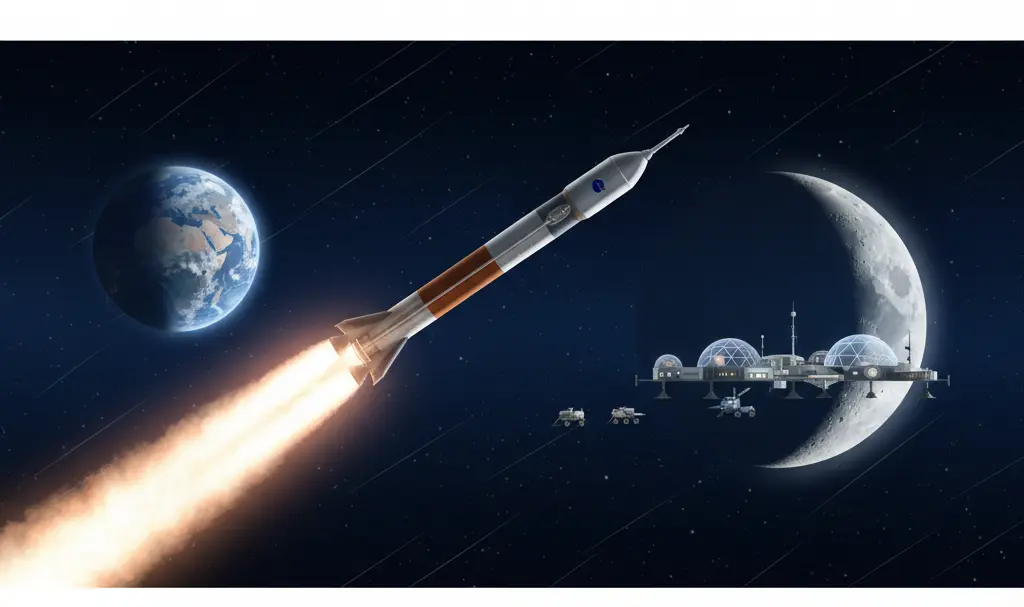
NASA is dramatically increasing the pace of its Artemis program, targeting annual crewed missions to the Moon. This ambitious new strategy aims to streamline operations and ensure a consistent human presence beyond Earth. The first of these accelerated missions is anticipated to launch within the coming months.

A New Era for Lunar Exploration: NASA’s Ambitious Artemis Program
Accelerating the Path to the Moon
The core of this new approach is simplification. NASA intends for its Space Launch System (SLS) rocket and Orion capsule to operate with greater consistency across missions, thereby speeding up preparations and reducing potential delays. This focus on repeatable processes is expected to enhance efficiency and reduce risks. An additional mission has also been announced for 2027, further solidifying the program’s increased cadence and commitment to regular lunar operations.
Upcoming Missions: Artemis II, III, and IV
- Artemis II: The immediate focus is on Artemis II, the program’s inaugural crewed flight, which will send four astronauts on a journey around the Moon. Currently, the SLS rocket and Orion capsule are back at the Kennedy Space Center’s Vehicle Assembly Building. Engineers are actively addressing issues with the helium system and conducting comprehensive safety checks, with a launch targeted for late 2024.
- Artemis III: This crucial mission will not be a traditional lunar landing. Instead, Artemis III will prioritize testing vital systems and procedures in lunar orbit and potentially other critical maneuvers, laying essential groundwork for subsequent landing missions.
- Artemis IV: The landmark Artemis IV mission, slated for 2028, is planned to achieve the first human landing on the Moon under this new, phased approach, reminiscent of the step-by-step progress of the historic Apollo program. This mission will build upon the foundational testing conducted during Artemis III.
The Pivotal Role of Commercial Partnerships
Commercial entities are central to NASA’s updated strategy for lunar exploration. The agency plans extensive docking tests and collaborations with lunar lander developers such as SpaceX and Blue Origin. These crucial trials will evaluate critical systems, including:
- Life support systems for sustained human presence.
- Advanced communication arrays to maintain contact with Earth.
- Propulsion systems for precise maneuvers and landings.
- New spacesuits, designed to offer enhanced mobility and protection for future lunar surface operations.
Beyond Scientific Discovery: Geopolitical Imperatives
NASA’s shift in strategy is driven by both profound scientific ambitions and pressing geopolitical considerations. As competition in space intensifies globally, NASA Administrator Bill Nelson has emphasized the critical need for the agency to accelerate its efforts to maintain leadership in space exploration.
This revised Artemis plan marks a significant departure from focusing on isolated, spectacular missions. Instead, it prioritizes regular flights and the incremental establishment of lunar infrastructure, including potential habitats and research facilities. Over time, this foundational work could enable even more ambitious undertakings, including pioneering crewed missions to Mars, solidifying humanity’s multi-planetary future.
Frequently Asked Questions (FAQ)
What is the primary goal of the accelerated Artemis program?
The primary goal is to establish a sustained human presence on the Moon, with crewed missions potentially occurring once a year, and to use the Moon as a crucial stepping stone for future human exploration of Mars.
When is the next crewed Artemis mission scheduled?
Artemis II, the first crewed flight, is currently targeting a launch in late 2024, which will send four astronauts on a flyby around the Moon.
Will Artemis III be a Moon landing?
No, Artemis III will focus on critical system and procedure testing in preparation for the subsequent human landing mission, Artemis IV, which is planned for 2028.
What role do commercial companies play in Artemis?
Commercial partners like SpaceX and Blue Origin are crucial for developing lunar landers and other technologies. NASA plans to conduct docking tests and collaborate on key systems, including life support, communication, propulsion, and new spacesuits.
Why is NASA accelerating the Artemis program?
Beyond scientific objectives, geopolitical factors and increasing global competition in space are driving the acceleration, pushing NASA to achieve its goals more rapidly and maintain its leadership in space exploration.
Source: NASA. Opening photo: Gemini
About Post Author
