

Contents
Robotaxis Set to Transform European Urban Transport, Starting in Zagreb
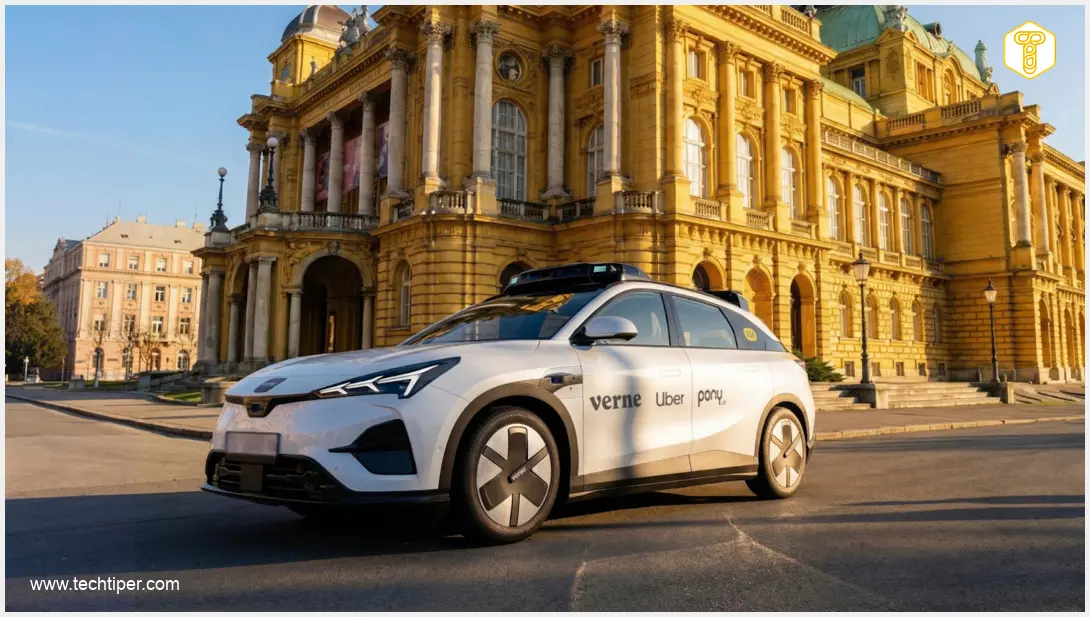
A new chapter in European urban transportation is officially opening with the announcement from Uber, Verne, and Pony.ai: Europe’s first commercial autonomous ride-hailing service is launching soon. This ambitious undertaking is poised to introduce self-driving robotaxis to city streets, fundamentally changing how people move around. The initial rollout will take place in Zagreb, Croatia, marking a significant milestone in autonomous mobility on the continent.
Zagreb: Europe’s First Robotaxi Hub
The Croatian capital, Zagreb, has been chosen as the pioneering city for Europe’s inaugural commercial robotaxi service. Road testing for Pony.ai’s autonomous vehicle fleet, which will form the backbone of the planned Uber and Verne service, has already commenced there. This is not merely another pilot program; it represents the first actual deployment of driverless transport services for commercial use in Europe.
Zagreb’s selection is strategic and well-justified. The city boasts a modern road infrastructure, a supportive regulatory environment, and a rapidly expanding mobility services sector, making it an ideal proving ground for this advanced technology.
A Collaborative Vision: Uber, Verne, and Pony.ai Join Forces
This groundbreaking commercial robotaxi service is the result of a powerful collaboration between three key partners:
- Pony.ai: Provides the cutting-edge autonomous driving system and the vehicle fleet.
- Uber: Integrates the service into its expansive global mobility platform, making it accessible to millions of users.
- Verne: Handles the operational aspects and regulatory compliance within Europe.
Together, these companies have forged a model designed for scalability, with plans to expand into numerous other cities across Europe and eventually, other regions worldwide.
Dr. James Peng, Founder and CEO of Pony.ai, emphasized the significance of this partnership:
“Partnering with Uber and Verne is a crucial step in our continued global expansion of autonomous mobility. In China, our Gen-7 system has been commercialized, and operations in Guangzhou and Shenzhen have achieved profitability. This affirms the readiness of our technology and business model. Consequently, we are prepared to accelerate our international expansion, combining our solutions with Uber’s platform and Verne’s expertise in multi-market deployments. Together, we aim to develop a scalable and sustainable autonomous mobility ecosystem.”
The Technology Behind the Ride: Pony.ai’s Expertise
Pony.ai brings its advanced autonomous driving technology and its fleet of Gen-7 Arcfox Alpha T5 Robotaxis to the table. These vehicles are specifically engineered for full autonomy, featuring an array of:
- Lidar sensors
- Radars
- Cameras
All are seamlessly integrated with Pony.ai’s proprietary Virtual Driver software. This sophisticated system enables precise navigation within dense urban environments, with its reliability already proven through millions of autonomous journeys in Asia.
Pony.ai recently announced a significant production milestone, rolling out its 300th jointly manufactured ARCFOX Alpha T5 Robotaxi. This achievement underscores the company’s trajectory toward large-scale deployment and commercialization, preparing the groundwork for its expansion into new markets like Europe.

Verne’s Operational Role and Uber’s Platform Integration
Verne plays a critical role as the operator and fleet manager for the robotaxi service. Its responsibilities include securing the necessary permits within the European Union, establishing the required infrastructure, and ensuring vehicle certification in accordance with stringent European regulations.
Meanwhile, Uber will seamlessly integrate the new service into its global ride-hailing platform. This integration will allow users to conveniently book robotaxis directly through the Uber application, just as they would a standard ride. This partnership promises a smooth and accessible transition to autonomous transportation for consumers.
Uber’s CEO, Dara Khosrowshahi, highlighted the excitement around this launch, stating, “Zagreb 👋 Europe’s first commercial robotaxi service is arriving soon with Verne x Pony AI. Let’s ride.”
Scaling Up: The Future of Robotaxis in Europe
Following its debut in Croatia, Verne and Pony.ai envision a gradual expansion of autonomous robotaxis into more cities across Europe. The ambitious goal is to establish a fleet comprising thousands of vehicles within the next few years.
Dara Khosrowshahi of Uber reiterated the importance of collaborative efforts for global scaling:
“Only a robust ecosystem of partners will enable global scaling of autonomous mobility. By combining Pony.ai’s proven autonomous transport technology, Verne’s operational experience, and the reach of Uber’s platform, we are taking a step towards making autonomous rides accessible to more users in more locations.”
While the companies have not yet disclosed specific details about the subsequent locations, industry experts anticipate that major cities such as Berlin, Amsterdam, and Madrid could be among the initial candidates. These markets are known for their receptiveness to testing and adopting intelligent transport solutions.
Frequently Asked Questions (FAQ)
What makes this robotaxi service in Zagreb different from previous trials?
Unlike previous pilot programs, the Zagreb initiative is a fully commercial deployment. This means it’s not just for testing but is intended for public use as a paid ride-hailing service, marking Europe’s first true market entry for autonomous robotaxis on a commercial scale.
How does the Gen-7 Arcfox Alpha T5 Robotaxi ensure safety and reliability?
The Gen-7 Arcfox Alpha T5 Robotaxi is equipped with an advanced sensor suite including lidar, radar, and cameras, all powered by Pony.ai’s sophisticated Virtual Driver software. This system provides precise navigation and obstacle detection, and its reliability has been extensively validated through millions of miles driven in commercial operations in Asia.
Which other European cities are likely to see robotaxi services next?
While no official announcements have been made, industry speculation suggests that cities like Berlin, Amsterdam, and Madrid are strong candidates for future robotaxi expansion. These cities often have favorable regulatory environments and receptive markets for innovative transport solutions.
What are the potential long-term impacts of commercial robotaxis on urban transportation?
Commercial robotaxis could significantly impact urban transport by reducing traffic congestion, decreasing pollution, improving road safety, and providing more accessible and affordable mobility options. They may also lead to changes in urban planning, parking infrastructure, and vehicle ownership patterns over time.
Source: Press release, Reuters, Uber. Opening photo: Uber / Press materials
About Post Author
