

Contents
Ancient “Living Fossils” Stage Remarkable Comeback on Cape Cod
For years, they seemed to have vanished almost without a trace, despite surviving hundreds of millions of years and several major extinctions. Today, horseshoe crabs are once again appearing en masse on the Cape Cod coast, becoming a powerful symbol of how effective well-planned conservation efforts can be. This success story offers valuable lessons for other large-scale environmental initiatives, akin to global projects such as the China Great Green Wall in the Taklamakan Desert which aims to combat desertification and act as a carbon sink.
The Return of a Prehistoric Species
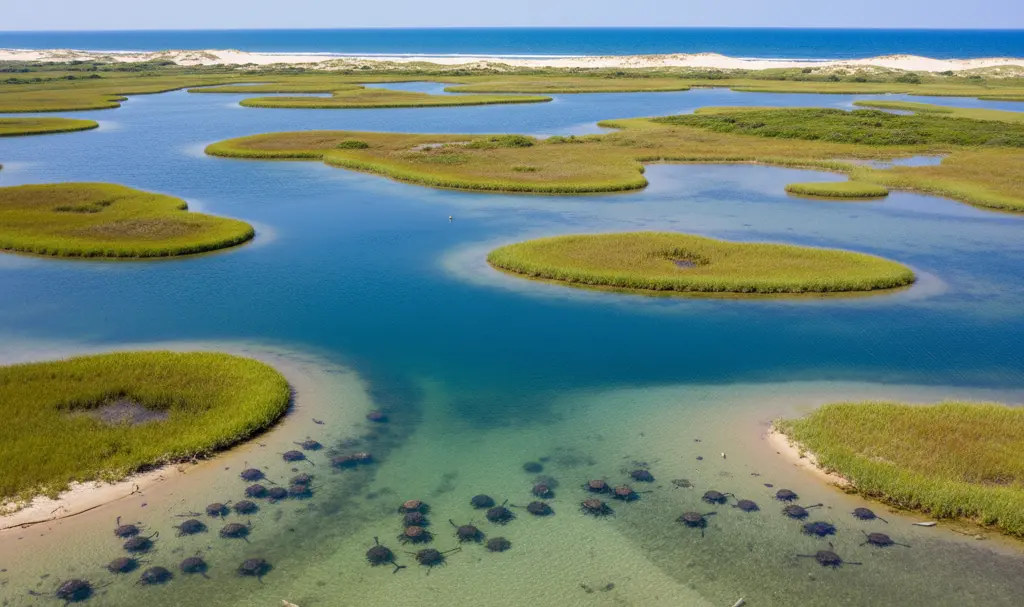
A remarkable ecological resurgence, once thought improbable just a decade and a half ago, is unfolding at Cape Cod National Seashore in Massachusetts. Horseshoe crabs, often dubbed “living fossils,” have made a significant comeback to the local ecosystem.
These ancient creatures are among the oldest species on Earth, with a lineage stretching back approximately 445 million years. This means they predate dinosaurs by hundreds of millions of years and have even endured multiple global biological catastrophes. Yet, despite such impressive resilience to planetary changes, they struggled to cope with human interference in their local environment.
Often described as intimidating due to their armored appearance, horseshoe crabs are, in fact, harmless creatures, playing a vital role in marine ecosystems.
The Human Impact That Led to Decline
Their decline was neither accidental nor due to natural processes. The direct cause was human-built infrastructure from the 19th century. A crucial problem was a dike constructed in 1868, which cut off the East Harbor lagoon from the ocean. This drastically altered water salinity and degraded the essential conditions required for the entire ecosystem to thrive. Consequently, an area that had served as a natural habitat for countless organisms for centuries ceased to function.
A Turning Point: Restoring Nature with Strategic Intervention
Fortunately, a breakthrough occurred in 2008 when the decision was made to restore the influx of seawater into East Harbor. The effects weren’t immediate, but over time, they became increasingly apparent.
The restoration process unfolded in stages:
- Initially, salt-tolerant plants and aquatic organisms began to rebound.
- Eventually, the horseshoe crabs themselves returned to the environment.
Today, their population is estimated in the thousands, and scientists now recognize the area as a fully restored habitat.
Beyond the Crab: Broader Ecosystemic Benefits
The significance of this change, however, extends far beyond the fate of a single ancient animal. Horseshoe crab eggs are a crucial food source for migratory shorebirds, and their presence signals that the entire coastal ecosystem is returning to balance. Healthier wetlands also mean better coastal protection against storms, a crucial benefit in an era of changing climates. Understanding and mitigating threats to coastal zones, as explored in articles discussing sea-level rise studies and errors in coastal threat maps, becomes paramount. This renewed balance offers greater support for fisheries and enhances natural resilience to future environmental challenges.

Frequently Asked Questions (FAQ)
What makes horseshoe crabs “living fossils”?
Horseshoe crabs are referred to as “living fossils” because their evolutionary form has remained largely unchanged for approximately 445 million years. This incredible longevity means they predate dinosaurs and have survived multiple global extinction events, offering a direct link to ancient marine life.
Why are horseshoe crabs important to the ecosystem?
Horseshoe crabs play several critical roles in coastal ecosystems. Their eggs are a vital food source for many species, especially migratory shorebirds that rely on them for energy during long journeys. Furthermore, their presence is an indicator of a healthy, balanced coastal environment, and their activities can help aerate sediments, benefiting other benthic organisms.
What was the main cause of the horseshoe crab decline in East Harbor?
The primary cause of their decline was human-made infrastructure: a dike constructed in 1868. This dike cut off the East Harbor lagoon from the ocean, severely disrupting the natural water salinity and degrading the habitat essential for horseshoe crabs and other marine life.
How long did it take for the conservation efforts in East Harbor to show results?
The decision to restore seawater flow to East Harbor was made in 2008. While the effects were not immediate, changes became increasingly apparent over time. The ecosystem began to recover gradually, with salt-tolerant plants and aquatic organisms returning first, followed by the horseshoe crabs themselves. The full return to a recognized habitat with thousands of crabs took several years after the initial intervention.
Source: Yahoo, Own Elaboration
Opening photo: Gemini
About Post Author
