

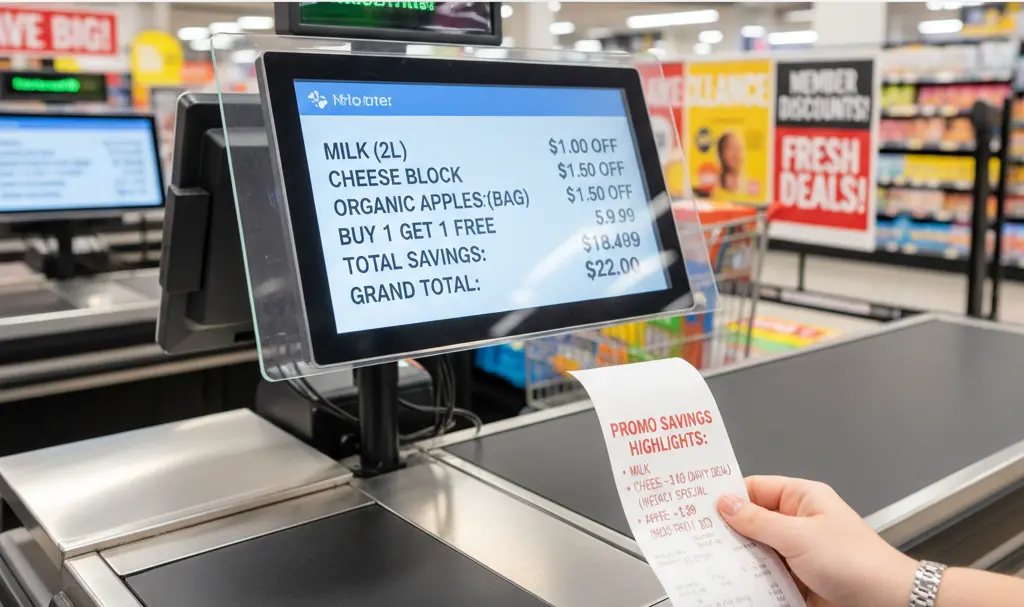
Following a significant intervention by the national Consumer Protection Office (CPO), major supermarket chains Biedronka and Lidl have been mandated to revise their methods for displaying discounts on checkout screens and customer receipts. The directive came after it was found that with multiple promotions running simultaneously, customers often struggled to easily verify whether their advertised savings were applied accurately, leading to widespread confusion and a lack of trust.
Contents
Enhancing Transparency: Major Retailers Revamp Discount Displays After Consumer Protection Office Scrutiny
This pivotal move by the CPO aims to empower consumers, ensuring they have clear, unambiguous information about pricing and promotions at the point of purchase. The changes are expected to bring greater clarity to the retail landscape, particularly where complex promotional strategies are commonplace.
The Consumer Protection Office’s Concerns: Unclear Discount Practices
The Consumer Protection Office determined that the previous systems, characterized by vague discount messages and the practice of proportionally distributing discounts across all items on a bill, effectively transformed shopping into a complex mathematical puzzle. This approach contradicted the fundamental principle of providing simple, transparent pricing information to consumers.
The CPO’s statement vividly described a typical scenario faced by shoppers in large retail chains: a single shopping cart could contain items eligible for newspaper flyer promotions, multi-buy discounts, overall basket reductions, and special offers linked to loyalty applications. In such circumstances, the clarity of information presented on the checkout screen and the printed receipt becomes paramount. It is the consumer’s only reliable way to assess their actual savings and confirm if the final price aligns with advertised promises. For more insights into how consumer purchasing decisions are influenced by economic factors, consider reading about the price war Shein and Temu threaten retailers across Europe.
Decoding Complex Promotions: Specific Issues at Biedronka and Lidl
The core problem identified at Biedronka was the collective display of discounts, often lacking a clear connection to specific products. This made it challenging for customers to understand which items received which price reduction. At Lidl, various promotional mechanisms were frequently described using the same generic phrasing, leading to ambiguous information about the applied savings.
A particularly problematic aspect was the accumulation of promotions, for instance, when a customer combined an offer from a promotional flyer with a discount applied to the entire shopping basket. Instead of clearly showing a separate percentage discount for a specific product and a distinct monetary reduction at the end of the bill, the systems in both chains would proportionally deduct a portion of the total discount from each item. This method made it virtually impossible for consumers to manually calculate and verify if all promotions had been applied according to their stated terms. The CPO highlighted that under such conditions, consumers lose the practical ability to quickly verify prices, despite regulations requiring price information to be clear, unambiguous, and not misleading.
“Promotions must be clear and understandable, free from complex conditions and exclusions. Clear and unambiguous price information is crucial. Scanning products at the checkout is the final moment for consumers to decide on a purchase. They deserve the ability to easily verify the type, number, and value of discounts granted before paying for their shopping. This is especially important when stores are running numerous price promotions simultaneously, stemming from various sources and mechanisms.”
— Tomasz Chróstny, President of the Consumer Protection Office (CPO) press release
Mandatory Changes for Clarity on Receipts and Checkout Screens
The CPO’s actions were prompted by numerous consumer complaints and earlier analyses revealing the opaque nature of discount calculations in discount stores.
As a direct result of the intervention, specific solutions aimed at improving communication clarity have been developed in cooperation with the retail chains. Jeronimo Martins Polska, the parent company of Biedronka, has implemented a new pricing visualization method. This system is designed to explicitly show the specific discount applied to each product and how all accumulated discounts are summarized to arrive at the final amount due. This enhanced transparency is critical for consumer trust and helps streamline the checkout process, whether customers choose to pay using cash vs. card payments.
Similarly, Lidl has committed to a more transparent display of discounts on both standard and self-service checkout screens, as well as on printed receipts. The goal is to eliminate any ambiguity, ensuring customers no longer have to guess the origin of the final price or which part of their bill received a reduction.

Frequently Asked Questions (FAQ)
Why are clear discount displays important for consumers?
Clear discount displays are crucial because they allow consumers to easily verify that advertised promotions have been correctly applied. Without this transparency, shoppers may overpay or be unable to confirm their savings, leading to confusion, frustration, and a lack of trust in retailers. It ensures consumers can make informed purchasing decisions based on accurate pricing.
What specific changes did Biedronka implement regarding discount visualization?
Biedronka, through its owner Jeronimo Martins Polska, has introduced a new pricing visualization system. This system is designed to explicitly show the specific discount amount applied to each individual product and clearly summarize all accumulated discounts to arrive at the final total payment. This aims to provide a direct and unambiguous breakdown of savings.
How will Lidl improve discount transparency on its checkout systems and receipts?
Lidl has pledged to adopt a more transparent method for marking and displaying discounts on both traditional and self-service checkout screens, as well as on customer receipts. The objective is to ensure that customers can clearly understand the source of their final price and precisely identify which parts of their bill have benefited from a discount, removing any need for guesswork.
How can consumers ensure they are getting the advertised discounts when multiple promotions are active?
To ensure you receive all advertised discounts, always carefully review the checkout screen as items are scanned and scrutinize your printed receipt immediately after payment. Look for clear, itemized discounts rather than just a single total reduction. If any part of the discount application remains unclear or seems incorrect, do not hesitate to ask a store employee for clarification or request a recalculation before leaving the store. Keeping copies of promotional flyers or digital offers can also help verify discrepancies.
Source: Consumer Protection Office
Opening photo: Gemini
About Post Author
