

Contents
Amazon’s Satellite Ambitions: Challenging SpaceX with a Potential Globalstar Acquisition
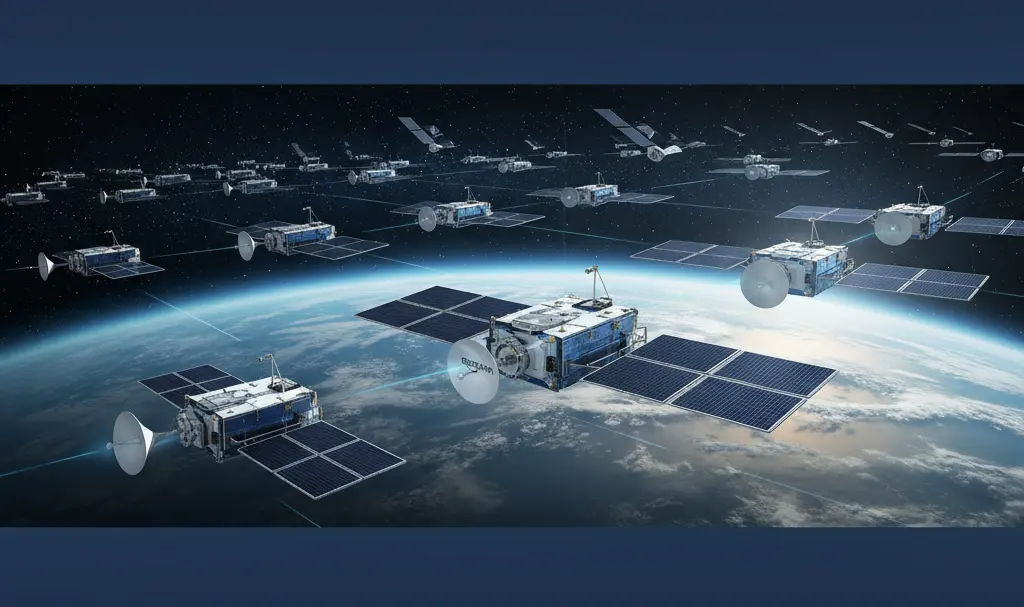
In a significant development for the global satellite industry, e-commerce giant Amazon is reportedly planning a substantial investment in satellite infrastructure. Evidence of these plans comes from ongoing discussions about a potential acquisition of Globalstar, a prominent satellite communications company. This strategic move is seen as Amazon’s direct challenge to SpaceX and its rapidly expanding Starlink project, setting the stage for an intensified rivalry in the low-Earth orbit (LEO) internet market.
A New Powerhouse in the Satellite Market?
According to information reported by Reuters, Amazon is eyeing the acquisition of Globalstar, a telecommunications firm valued at over $8 billion. The estimated transaction value for this potential takeover is approximately $9 billion. This substantial investment underscores Amazon’s commitment to expanding its presence in the burgeoning satellite internet sector.
Driving Expansion in Low-Earth Orbit
The proposed acquisition is intended to help Amazon, the company behind one of the world’s largest online retail platforms, further its expansion into low-Earth orbit. By integrating Globalstar’s assets and expertise, Amazon aims to significantly broaden its existing satellite network, which is crucial for its Project Kuiper initiative. This strategic enhancement would position Amazon to directly compete with SpaceX’s Starlink, a dominant player in providing high-speed, low-latency internet services globally.
Complex Negotiations: The Apple Factor
Interestingly, for this acquisition to proceed, Amazon must secure an agreement with Apple, which holds a 20-percent ownership stake in Globalstar. This adds a layer of complexity to the negotiations, as Apple has its own strategic interests in satellite communications. Furthermore, it’s worth noting that SpaceX itself previously considered acquiring Globalstar, highlighting the company’s attractive position within the industry.
For more insights into major players in the space industry, read about Elon Musk’s Terafab Semiconductor Factory in Texas and its implications for AI and space robotics.
Project Kuiper vs. Starlink: A Growing Satellite Constellation Race
Amazon’s satellite internet initiative, known as Project Kuiper, envisions deploying a constellation of 3,200 satellites. Currently, Project Kuiper’s operational network consists of a relatively modest 180 satellites. In stark contrast, Starlink boasts a significantly larger fleet of approximately 9,500 satellites, nearly three times the number planned for Project Kuiper. This illustrates the scale of ambition and the investment required to compete at the forefront of the LEO satellite market.
Both Amazon’s Project Kuiper and Starlink are targeting similar customer segments, including individual consumers and government institutions, for their satellite internet services. The news of Amazon’s potential acquisition was met with an immediate positive reaction in the market, with Globalstar’s shares surging by an impressive 24%.
Starlink’s Expanding Reach: New Solutions on the Horizon
While Amazon makes its move, Starlink continues to innovate and expand its services. Recent announcements indicate the upcoming launch of Starlink Mobile cellular network services in various markets. This new offering promises high-speed internet with impressive speeds, potentially reaching up to 150 Mbps, further solidifying Starlink’s position as a leading global satellite internet provider.
The development and deployment of second-generation satellites are key to Starlink’s network expansion. These advanced satellites are slated to be launched aboard SpaceX’s Starship rocket, though this is anticipated to occur around mid-2027. This timeline suggests that widespread availability of the new mobile operator services may still be some time away.

The global space industry is witnessing rapid advancements. Discover more about Poland’s contribution to the space industry and the Artemis II mission.
Frequently Asked Questions (FAQ)
What is Project Kuiper?
Project Kuiper is Amazon’s ambitious initiative to build a constellation of 3,200 low-Earth orbit (LEO) satellites. Its goal is to provide high-speed, low-latency broadband internet services to underserved communities and businesses around the world, directly competing with services like SpaceX’s Starlink.
Why is Amazon interested in acquiring Globalstar?
Amazon’s interest in Globalstar stems from its strategic goal to accelerate and strengthen its Project Kuiper satellite internet service. Acquiring Globalstar could provide Amazon with valuable spectrum licenses, existing ground infrastructure, and potentially a customer base, allowing it to rapidly expand its satellite network and enhance its competitive edge against rivals like Starlink.
How does Project Kuiper’s planned satellite fleet compare to Starlink’s current constellation?
Project Kuiper plans to deploy a total of 3,200 satellites. In comparison, Starlink currently operates a much larger constellation of approximately 9,500 satellites. This significant difference in scale highlights the varying stages of deployment and the aggressive expansion strategy employed by Starlink, though Project Kuiper’s network is actively growing.
What role does Apple play in Amazon’s potential acquisition of Globalstar?
Apple holds a 20-percent ownership stake in Globalstar, making their agreement crucial for Amazon’s potential acquisition to proceed. Given Apple’s own growing interest in satellite connectivity for its devices, its involvement introduces a significant factor in the negotiation process, as any deal would likely require Apple’s approval and could involve complex strategic considerations.
Source: Reuters
Opening photo: Gemini
About Post Author
