

Contents

Native Cross-Platform Video Calls: How RCS 4.0 Aims to Bridge Android and iOS
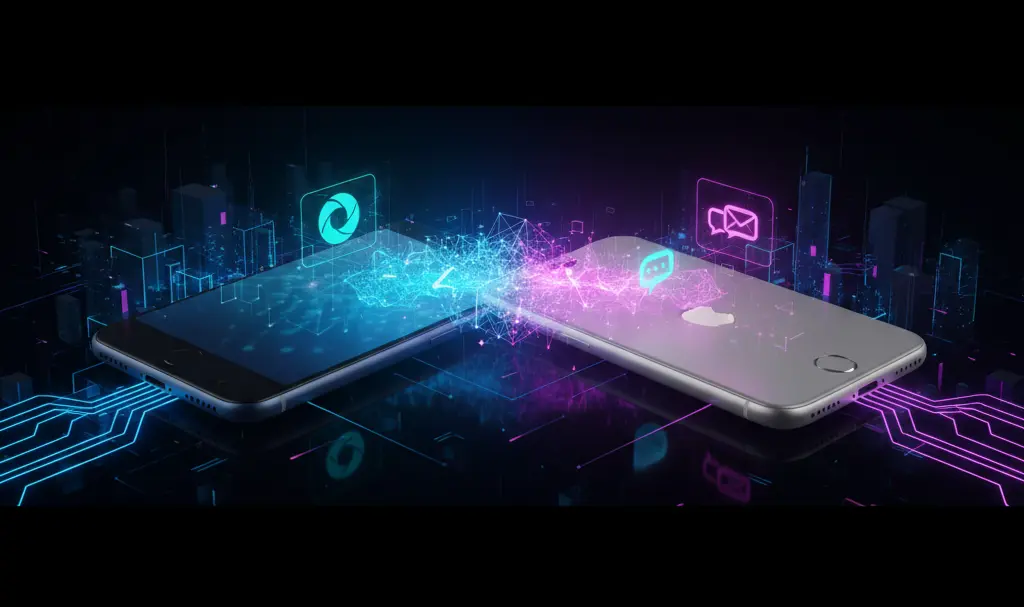
Seamless video calling between Android and iPhone users—without the need to download third-party applications—might soon become a reality. The core specification for a new mobile communication standard is officially ready. Now, the tech industry faces its final and arguably most significant hurdle: widespread implementation.

What is RCS Universal Profile 4.0?
The GSMA, the global organization representing mobile network operators, recently announced the finalization of the Rich Communication Services (RCS) Universal Profile 4.0 specification. This major update is designed to significantly expand the capabilities of default system messaging apps, enabling users to launch high-quality video calls directly from standard text threads, regardless of their operating system.
One of the most groundbreaking features introduced is Messaging-Initiated Video Calls (MIVC). This function seamlessly transitions a standard text chat into a video call between Android and iOS devices. Key benefits of the RCS 4.0 standard include:
- Direct Video Integration: Launch video calls instantly from the native messaging interface.
- Call Management: The ability to seamlessly join ongoing video calls.
- Synchronized History: Unified call logs and messaging histories across devices.
- Rich Text Formatting: Native support for bold, italics, and other text styling within standard messages.
- Advanced Media Negotiation: Devices will automatically agree on supported file formats before transferring data, effectively eliminating the severe compression issues historically associated with MMS.
The Apple vs. Google Implementation Challenge
Despite the finalized standard, the greatest obstacle remains the complex relationship between global tech giants. While Apple finally introduced basic RCS support in iOS 18, industry experts note that this decision was heavily influenced by regulatory pressures, primarily the European Union’s Digital Markets Act (DMA). Apple’s current implementation of RCS is widely considered to be basic and limited.
Historically, cross-platform communication has been a major pain point. Users have often had to rely on cumbersome workarounds, such as web-based FaceTime links—a factor frequently debated in the Google Pixel 10a vs iPhone 17e competition. Even today, with basic RCS enabled, users frequently report issues when transferring media between devices like Google Pixels and iPhones. These glitches range from messaging delivery failures to significantly degraded file quality.
Why Cross-Platform Video Calls Are Technically Difficult
Building a universal, native video calling bridge is exponentially more difficult than standardizing text messages. While text requires minimal bandwidth, real-time video calls demand robust, latency-free data synchronization. Developers must expertly manage transmission, bandwidth scaling, and end-to-end encryption across entirely different cellular networks and hardware ecosystems.
The Video Codec Dilemma
A major technical hurdle is the lack of standardized video codecs. Modern flagship smartphones boast incredible hardware capabilities, but whether you are comparing the camera of a Samsung Galaxy S26 Ultra or an iPhone 17 Pro Max, the visual quality of a cross-platform call can severely degrade without a unified software approach.
Currently, the industry is fragmented:
- Apple heavily favors standards like H.264 and H.265 (HEVC).
- Google champions open-source alternatives like VP9 and the highly efficient AV1.
Without a mutual agreement on which codecs to prioritize during the “negotiation” phase of a call, users may experience dropped frames, poor resolution, or complete compatibility failures.
Will RCS Replace Third-Party Apps?
Even if the rollout of RCS 4.0 is flawlessly executed, achieving total market dominance will be an uphill battle. Popular third-party applications like WhatsApp, Telegram, Signal, and Messenger have spent over a decade perfecting stable, encrypted, cross-platform video calls that work independently of mobile carriers.
Unlike these centralized apps, RCS relies heavily on individual carrier infrastructure and diverse backend server implementations. This structural difference means that the quality and availability of native video calls could vary drastically depending on your geographic region, your mobile network provider, and your specific smartphone model.
RCS Universal Profile 4.0 paints an incredibly promising picture of the future. However, consistently flawless, native video calls between Android and iOS still appear to be a long-term goal rather than an immediate reality.
Frequently Asked Questions (FAQ)
What is MIVC in the new RCS 4.0 standard?
MIVC stands for Messaging-Initiated Video Calls. It is a feature in the RCS Universal Profile 4.0 that allows users to seamlessly start a video call directly from a native text messaging thread, aiming to bridge the gap between Android and iOS default messaging apps.
Why does media quality drop when texting between iPhones and Androids?
Historically, cross-platform media was sent via MMS, which severely compresses files to meet outdated carrier limits. While basic RCS improves this, differences in how Apple and Google handle video codecs and file negotiation still cause quality drops and delivery errors. RCS 4.0 aims to fix this through automatic format negotiation.
Will RCS 4.0 make apps like WhatsApp or Telegram obsolete?
It is highly unlikely in the short term. Third-party messaging apps use their own centralized servers to guarantee consistent quality globally. RCS relies on individual mobile carrier infrastructure, which can lead to fragmented experiences and varying call quality depending on your location and network provider.
Source: Android Police
Opening photo: Gemini
About Post Author
